Table of Contents
- Essence vs Serum: Quick Comparison Table
- What Is an Essence?
- What Is a Serum?
- The Difference Between Toner, Essence, and Serum
- The Correct Order of Application in Your Korean Skincare Routine
- How to Choose a Serum for Your Skin Type
- Essence and Serum for Beginners: Cost, Layering, and Skin Barrier Health
- Conclusion
- Frequently Asked Questions
Last Updated: September 28, 2026
Essence vs Serum: Quick Comparison Table
Understanding essence vs serum transforms your skincare routine. Both deliver hydration and active ingredients but work differently.
Here's a quick breakdown of how essence vs serum compares:
| Feature | Essence | Serum | Best For |
|---|---|---|---|
| Texture | Lightweight, watery | Lightweight to silky | Both hydrate similarly |
| Main Function | Preps skin, hydrates | Targets concerns, concentrates actives | Essences prep; serums treat |
| Viscosity | Thin, fast-absorbing | Varies (thin to creamy) | Essence absorbs first |
| Active Ingredients | Gentle hydrators, plant extracts | Potent actives (hyaluronic acid, peptides) | Serums pack more power |
| Application Order | After toner, before serum | After essence, before moisturizer | Essence first, serum second |
| Best For Beginners | Yes, gentle entry point | Yes, but choose by skin concern | Start with essence |
What Is an Essence?
An essence is a lightweight, hydrating treatment step that preps your skin to absorb heavier products. Essences have a watery, fast-absorbing texture that delivers hydration and gentle active ingredients without feeling heavy.
Essences come from Korean skincare traditions and typically contain water-based hydrators like hyaluronic acid, plant extracts, and fermented complexes. The goal is to saturate your skin with moisture and prepare it for serums and creams, not to treat a specific concern.
Essences work best for dry, dehydrated, and dull skin, and are ideal for beginners because they're gentle. The DumiDang Black Bean Essence Toner uses black bean extract, carrot extract, and an 8-bean fermented complex to hydrate and support your skin's natural barrier.

What Is a Serum?
A serum is a concentrated treatment product designed to target specific skin concerns with potent active ingredients. Serums have a higher concentration of actives than essences and penetrate deeply into the skin.
Serums deliver targeted benefits, hydration, brightening, anti-aging, or soothing irritation, with more active ingredients per dose than essences.
The DumiDang Chickpea Serum is designed for dry, dehydrated, sensitive, and rough-textured skin with chickpea extract, squalane, hyaluronic acid complex, and panthenol. The DumiDang Mung Bean Serum targets irritation with mung bean extract, tea tree oil, and green tea extract for reactive or sensitive skin.

Serums sit between essence and moisturizer to address specific concerns, while essences provide general hydration. This distinction shapes how you choose products and build your routine.
The Difference Between Toner, Essence, and Serum
Toners are the first liquid step after cleansing. They remove residual impurities and balance pH. In K-beauty, toners are lighter and more hydrating than Western toners.
Essences come next. They're hydrating treatments that prep your skin to absorb serums and creams. The DumiDang Black Bean Essence Toner functions as both a toner and essence, removing impurities while delivering hydration and barrier support.
Serums are concentrated treatments that target specific concerns like dullness, fine lines, dehydration, or sensitivity. They sit after essence and before moisturizer.
The order matters: toner → essence → serum → moisturizer. Each step preps your skin for the next one. Toners balance pH, essences hydrate and prep, serums treat, and moisturizers lock everything in.
The Correct Order of Application in Your Korean Skincare Routine
The order of application in a K-beauty routine is non-negotiable. Products are formulated to work in a specific sequence, and applying them out of order reduces their effectiveness.
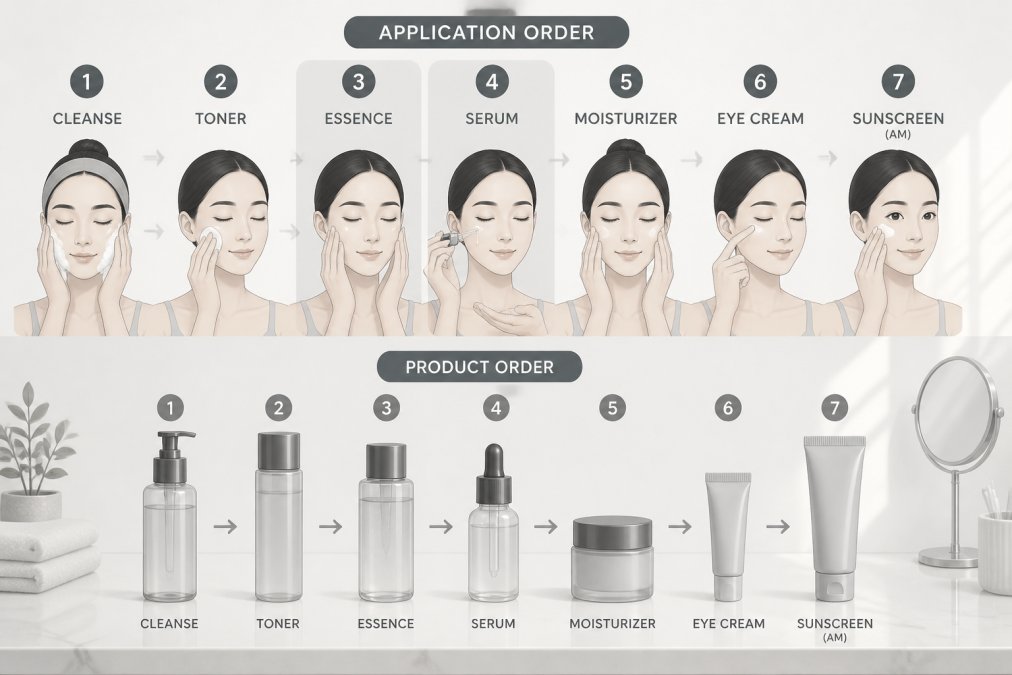
Step 1: Cleanser. Start with a gentle cleanser to remove makeup, oil, and impurities.
Step 2: Toner. Apply toner to balance pH and prep your skin.
Step 3: Essence. Apply the essence with your hands, gently patting it into your skin. Let it absorb before moving to the next step.
Step 4: Serum. Once your essence has absorbed, apply your serum. Use a few drops and gently press it into your skin.
Step 5: Moisturizer. Finish with a moisturizer or cream to lock in hydration and seal your skin barrier.
Step 6: Sunscreen (morning only). In the morning, always finish with sunscreen.
Order matters because lighter products (essences) penetrate first, while heavier products (creams) seal everything in. Reversing the order prevents lighter products from absorbing.
DumiDang Black Bean Serum (50mL) →
How to Choose a Serum for Your Skin Type
Choosing the right serum depends on your skin type and specific concerns. For beginners, the challenge is knowing which serum to prioritize when building a routine on a budget.
Matching serum to skin type.
For dry skin: Choose a serum with hydrating actives like hyaluronic acid, squalane, or peptides. The DumiDang Black Bean Serum contains hyaluronic acid and vegetable collagen to replenish moisture and support skin elasticity. Layer it with an essence, the essence hydrates first, the serum locks in and targets deeper concerns.
For sensitive or reactive skin: Look for soothing ingredients like green tea, mung bean, or centella asiatica. The DumiDang Mung Bean Serum contains mung bean extract, tea tree oil, and green tea extract to soothe irritation and replenish moisture. Choose serums with minimal fragrance and no essential oils.

For rough or textured skin: Choose a serum that improves texture and smoothness. The DumiDang Chickpea Serum contains chickpea extract and an 11-hyaluronic acid multi-complex to provide deep hydration and support a smoother complexion.
For dull skin: Look for serums with brightening actives or antioxidants. The DumiDang Black Bean Serum addresses dullness by hydrating and supporting skin elasticity. Pair it with an essence for faster results.
The beginner's serum priority framework.
If you can only afford one serum, choose based on your most pressing concern, not your skin type. A dry-skinned person with sensitivity should prioritize a soothing serum, because irritation worsens dryness. A sensitive-skinned person with dullness should prioritize a gentle hydrating serum.
Read the ingredient list and match it to your primary concern. Use one serum consistently for 4-6 weeks before assessing results. If layering two serums, introduce them sequentially: use the first for 3 weeks, then add the second for another 3 weeks.
Serum and essence synergy.
Pair your serum with an essence that complements it. If using a hydrating essence like the DumiDang Black Bean Essence Toner, pair it with a serum that targets a specific concern to avoid redundancy. The essence preps your skin's moisture baseline; the serum addresses the specific problem.
Essence and Serum for Beginners: Cost, Layering, and Skin Barrier Health
For beginners, the cost of building a routine can feel overwhelming, and the fear of damaging your skin barrier is real. Here's what you actually need and how to layer products safely.
Cost-benefit: essence vs. serum for budget-conscious beginners.
If you can only afford one product, choose a serum over an essence because it targets a specific concern and shows visible results faster. An essence is foundational but doesn't address a problem.
If your skin is very dehydrated or reactive, start with an essence like the DumiDang Black Bean Essence Toner ($35) to calm your skin. Once it stabilizes, add a serum. This two-step approach costs $70.
You don't need expensive products to see results, you need products formulated for your skin type and applied in the correct order.
Recognizing and protecting your skin barrier.
Conclusion
The difference between essence and serum comes down to function and order. Essences are lightweight hydrating steps that prep your skin. Serums are concentrated treatments that target specific concerns. Apply essence first, serum second.
Frequently Asked Questions
What should I use first, essence or serum?
Apply essence first, then serum. Essence has a lighter, water-based texture that prepares your skin and improves penetration of heavier products. Serums are more concentrated and absorb better after essence has hydrated your skin barrier. This order maximizes the benefits of both products in your daily regimen.
Can I use both essence and serum in the same routine?
Yes, you can absolutely use both. Many K-beauty routines include both products because they serve different purposes. Essence provides hydration and prep, while serum delivers targeted treatment with active ingredients. Using both creates optimal layering for maximum hydration and skin health, especially for dry or dehydrated skin.
How do I choose a serum for my skin type?
Consider your primary skin concern and sensitivity level. For dry, dull skin, look for serums with hyaluronic acid and nourishing extracts like the DumiDang Black Bean Serum ($35). For sensitive, reactive skin, choose gentle formulas with soothing ingredients like the DumiDang Mung Bean Serum ($45), which includes tea tree and green tea. For rough texture, the DumiDang Chickpea Serum ($30) with its multi-complex hyaluronic acid works well.
Is serum the same as essence?
No. Essence is a lightweight, water-based hydrating step that preps your skin, while serum is a concentrated formula with active ingredients designed for targeted treatment. Essence has lower viscosity and absorbs quickly, while serum penetrates deeper due to smaller molecular weight. Both are essential in K-beauty routines, but they address different steps in skin care.