Table of Contents
- What Changes After 50: Hormonal Shifts and Mature Skin
- Key Anti-Aging Korean Skincare Ingredients That Work After 50
- The Best Korean Moisturizer for Mature Skin: What to Look For
- How to Layer Korean Skincare Products for Maximum Absorption
- K-Beauty Sun Protection for Mature Skin: SPF and Beyond
- Ingredient Interactions and Contraindications: What Not to Mix
- Conclusion: Building Your Anti-Aging Routine with Avana Beauty
- Frequently Asked Questions
Last Updated: September 29, 2026
What Changes After 50: Hormonal Shifts and Mature Skin
Anti-aging Korean skincare for women over 50 starts with one honest fact: the skin you had at 40 is not the skin you have at 55. Estrogen decline after menopause slows collagen production and thins the skin, which is why mature skin loses firmness, holds less water, and shows fine lines more deeply (Managing Menopausal Skin Changes). This guide from Avana Beauty Inc explains what actually changes, which ingredients address it, and how to build a routine that fits.
Health Canada guidance on cosmetics and ingredients
Key Anti-Aging Korean Skincare Ingredients That Work After 50
The ingredients worth your money after 50 are peptides, antioxidants, and barrier-supporting hydrators. K-beauty formulates heavily around all three, which is why the category suits mature skin so well.
Peptides, Collagen, and Adenosine for Firmness
Peptides are short chains of amino acids that signal the skin to support its own collagen. Adenosine works alongside them and appears widely in Korean firming products. Look for formulas that combine several peptides rather than one, and expect texture improvements over weeks, not days.
Antioxidants: Vitamin C, Niacinamide, and Ginseng
Antioxidants defend against daily environmental stress that accelerates visible aging. Vitamin C supports radiance and evens skin tone, niacinamide calms and strengthens the barrier, and ginseng, a K-beauty staple, is used for its anti-inflammatory and rejuvenating properties. Snail mucin and centella asiatica round out the soothing side.
The Best Korean Moisturizer for Mature Skin: What to Look For
There is no single best Korean moisturizer for mature skin, because mature skin is not one thing. What matters is whether a formula balances three jobs: pulling water in, holding it there, and sealing it against moisture loss. Get that balance right and the rest, texture, finish, price, becomes personal preference.
The Three Roles a Moisturizer Plays
- Humectants draw water into the upper layers. Hyaluronic acid, glycerin, panthenol, and betaine are common in K-beauty essences and serums.
- Emollients soften and smooth by filling the gaps between skin cells. Shea butter, squalane, and plant oils are typical.
- Occlusives form a film that slows water loss. Ceramides, dimethicone, and heavier butters do this work.
A well-built Korean cream usually combines all three. A serum alone rarely seals enough for post-menopausal skin, which loses water faster because the barrier is thinner and sebum production has dropped.
| What to Look For | Why It Matters | Example Format |
|---|---|---|
| Hyaluronic acid | Draws water into the skin | Essence, serum |
| Glycerin | Low-cost humectant, well tolerated | Toner, cream |
| Peptides | Supports firmness over weeks | Ampoule, cream |
| Ceramides | Repairs moisture barrier | Night cream |
| Niacinamide | Evens tone, calms | Serum, ampoule |
| Centella asiatica | Soothes sensitivity | Cream, mask |
| Squalane | Lightweight emollient | Cream, oil |
Day Versus Night Textures
Mature skin often does better with two moisturizers rather than one. A lighter gel-cream or emulsion in the morning sits well under SPF and makeup. A richer cream at night supports the barrier during the hours when skin does most of its repair. If your skin feels tight an hour after your morning cream, it is too light. If your night cream leaves a film by morning, it is too heavy.
Matching the Formula to Your Skin Pattern
- Dry and tight all day: prioritize ceramides and occlusives, layer a hydrating essence underneath.
- Oily in the T-zone, dry on cheeks: use a gel-cream overall and a richer cream only on the dry areas.
- Reactive or redness-prone: keep the ingredient list short, lead with centella, panthenol, and ceramides, and introduce actives separately.
- Flaky but breakout-prone: avoid heavy butters on the chin and jaw, favor squalane and niacinamide.
How to Layer Korean Skincare Products for Maximum Absorption
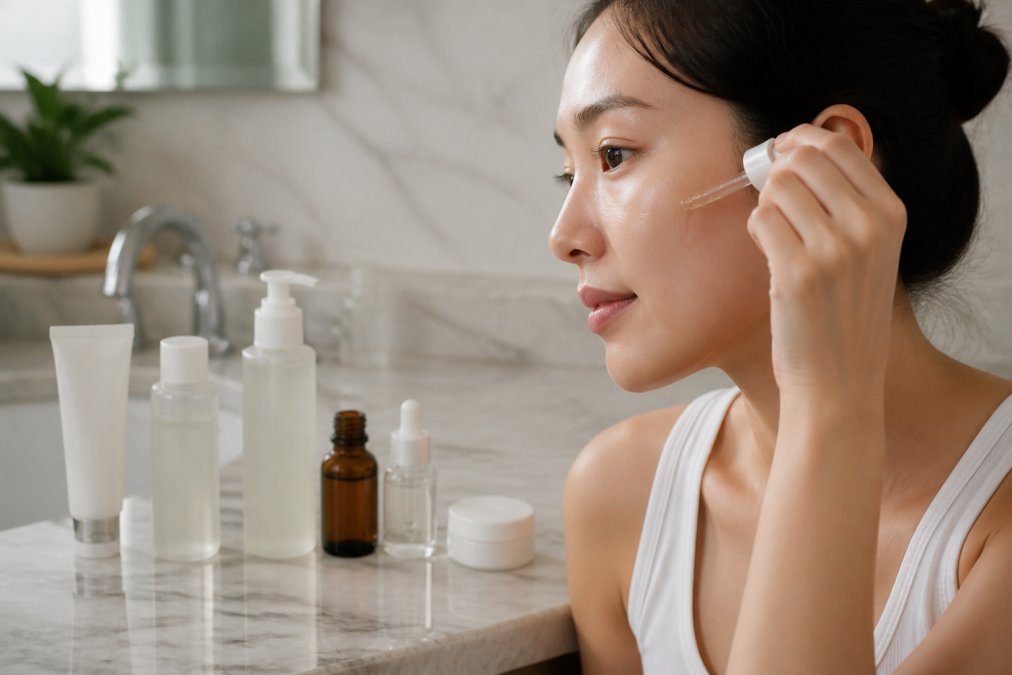
Layering is not about stacking more products. It is about sequencing by viscosity and giving each layer time to settle so the next one can do its job. The general rule is thinnest to thickest: cleanser, toner, essence, serum or ampoule, eye cream, moisturizer, then SPF in the morning.
Timing Between Steps
Wait 30 to 60 seconds between layers. That is long enough for a watery product to absorb and short enough that your skin does not fully dry out. If a product feels tacky after a minute, you used too much, not too little. For actives like vitamin C or retinoids, a slightly longer pause of one to two minutes reduces the chance of pilling and irritation.
Technique for Thinning, Sagging Skin
After 50, the goal is to apply without dragging. Gravity and reduced elasticity mean rough rubbing tugs at skin that no longer snaps back. A few adjustments make a real difference:
Daylisse Peptacell Re-age Hydrogen →
- Warm the product between your fingertips first. It spreads further with less pressure.
- Apply with a gentle upward and outward sweep, following the direction of the muscle, not against it.
- Press and pat with your palms to finish, rather than rubbing in circles.
- Go lightly around the eyes and along the jawline, where skin is thinnest.
- Never pull downward on the neck. Sweep upward from collarbone to jaw.
A Practical Morning and Night Order
Morning: gentle cleanser, hydrating toner, vitamin C or antioxidant serum, eye cream, moisturizer, broad-spectrum SPF 30 or higher.
K-Beauty Sun Protection for Mature Skin: SPF and Beyond
K-beauty sun protection for mature skin goes past a high number. Daily broad-spectrum SPF is the single most effective anti-aging habit, and Korean formulas make it easy to wear every day because they layer well under makeup and rarely leave a white cast. Choose SPF 30 or higher, reapply through the day, and pair it with antioxidant serums that help defend against the same stress.
Ingredient Interactions and Contraindications: What Not to Mix
Not every active plays well together. Retinol and strong acids in the same routine can overwhelm mature, thinner skin, and vitamin C layered directly with retinol often causes irritation. The safer pattern is to alternate: antioxidants in the morning, retinoids at night, and skip the acid on retinoid nights.
Conclusion: Building Your Anti-Aging Routine with Avana Beauty
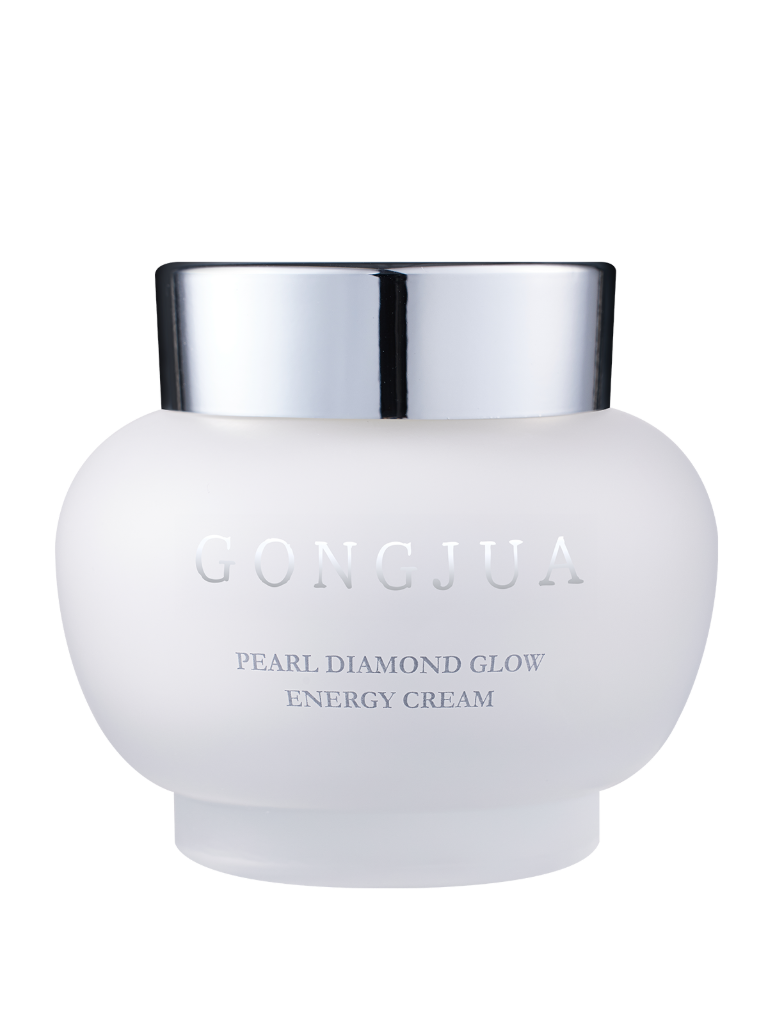
The challenge after 50 is not finding products, it is finding the right ones without wasting money on formulas that irritate thin, dry skin. Avana Beauty Inc curates premium Korean skincare for exactly this, from the Gongjua Pearl Age Turn Over Serum for firmness and fine lines to the Lisse EG-pepta Reage Cream with its 12-peptide complex and Centella asiatica.


Frequently Asked Questions
What is the best Korean skincare for a 50-year-old woman?
The best routine depends on your main concern, but for most women over 50, a gentle cleanser, a peptide-rich serum, a moisturizer with ceramides or hyaluronic acid, and a broad-spectrum SPF 50+ cover the essentials. Products like the Gongjua Pearl Age Turn Over Serum support collagen production and the moisture barrier, while the Daylisse Peptacell Re-age Hydrogen Ampoule targets elasticity and brightness. Start with one or two new products at a time to see how your skin responds.
Is Korean skincare good for older skin?
Yes. K-beauty formulas often prioritize gentle, hydrating ingredients like Centella asiatica, snail mucin, and hyaluronic acid that suit mature skin's thinner, drier texture. The layering approach, applying lightweight essences and serums before heavier creams, helps deliver active ingredients without overwhelming the skin. Look for products described as suitable for sensitive or aging skin, such as the Lisse EG-pepta Reage Cream, which combines peptides with botanical extracts.
Which Korean skincare ingredients are most effective for mature skin?
Peptides, niacinamide, adenosine, hyaluronic acid, and antioxidants like vitamin C and ginseng are among the most researched for mature skin. Peptides support the look of firmness, niacinamide helps with tone and barrier function, and hyaluronic acid draws in moisture. Retinol and bakuchiol can address fine lines, but introduce them slowly. The Revcell Premium Intensive Vita-Collagen Activfilm uses collagen and multivitamins in a film mask format for an at-home treatment.
Can Korean skincare help with loss of elasticity after 50?
Korean skincare can support the look of elasticity through ingredients like peptides, collagen, and adenosine, but results build over weeks of consistent use. The Daylisse Peptacell Re-age Hydrogen Ampoule contains seven peptides and a dual moisture-lock system, while the Gongjua Pearl Age Turn Over Duo pairs a serum and cream to support elasticity and the skin barrier. Pair these with daily sun protection, since UV exposure accelerates collagen breakdown.
How do I layer Korean skincare products correctly?
Apply products from thinnest to thickest: cleanser, toner or essence, ampoule or serum, then moisturizer, and finally SPF in the morning. Wait 30 to 60 seconds between steps so each product absorbs. If you use retinol or vitamin C, apply it after cleansing and before heavier creams. The Gongjua Pearl Age Turn Over Duo is designed to be used serum-first, then cream, to seal in moisture.
Is Korean skincare suitable for sensitive, aging skin?
Many Korean formulas are designed with sensitive skin in mind, using soothing ingredients like Centella asiatica, aloe, and madecassoside. Patch-test new products on your inner forearm for 24 hours before applying to your face. Avoid layering multiple actives at once, and introduce retinol or exfoliating acids gradually. The Lisse EG-pepta Reage Cream includes Centella asiatica and aloe, and is described as suitable for loss of elasticity and visible signs of aging.
How does K-beauty differ from traditional anti-aging skincare?
K-beauty emphasizes hydration, barrier repair, and gentle layering rather than harsh exfoliation or single-ingredient fixes. Traditional anti-aging often focuses on retinol or acids alone, while K-beauty routines combine multiple lightweight layers, such as essences, ampoules, and sheet masks, to deliver moisture and actives gradually. This approach can suit mature skin that is drier and more reactive, though it does require more steps and consistency.