Table of Contents
- Why Korean Sunscreens Excel for Winter Outdoor Activities
- Understanding SPF, Broad-Spectrum Protection, and PA Ratings
- Korean Sunscreen for Skiing and High-Altitude Winter Sports
- Water-Resistant Korean Sunscreen for Snow and Sweat
- How Often to Reapply Sunscreen Outdoors in Winter Conditions
- Korean Mineral Sunscreen vs. Chemical Formulas for Cold Weather
- Selection Criteria and Common Mistakes to Avoid
- Frequently Asked Questions
Last Updated: October 13, 2026
Why Korean Sunscreens Excel for Winter Outdoor Activities
Winter outdoor activities expose your skin to intense UV damage, yet many people skip korean sunscreen winter protection entirely when temperatures drop. This is a critical mistake. Snow reflects up to 80% of the sun's rays back onto your face, effectively doubling your UV exposure compared to summer at sea level. Korean sunscreens are particularly effective for winter conditions because they're formulated to layer smoothly under cold-weather clothing, absorb quickly without leaving a greasy residue, and often include hydrating ingredients that combat the drying effects of winter wind and low humidity.
At Avana Beauty Inc, we've curated a selection of premium Korean skincare products specifically chosen for their performance in harsh seasonal conditions. The best korean sunscreen winter formulas combine lightweight textures with strong UV protection and skin-conditioning ingredients that address both sun damage and winter irritation simultaneously.
What makes Korean formulations stand out is their attention to texture and finish. Western sunscreens often feel heavy and occlusive in cold weather, trapping moisture and creating uncomfortable sensations under layers. Korean sunscreen formulas prioritize a dewy, non-sticky finish that feels comfortable even when you're wearing a balaclava or face mask for hours. This matters more than most people realize: if your sunscreen feels unpleasant, you'll reapply less frequently, which defeats the entire purpose of sun protection.
Understanding SPF, Broad-Spectrum Protection, and PA Ratings
SPF measures protection against UVB rays, which cause sunburn and contribute to skin cancer risk. SPF 50+ blocks approximately 98% of UVB radiation, while SPF 30 blocks about 97%. The difference is small in percentage terms, but for prolonged outdoor activity in winter conditions, that extra 1% compounds significantly over hours of exposure.
Broad-spectrum protection is non-negotiable for winter outdoor activities. This term means the sunscreen defends against both UVB rays (which cause burning) and UVA rays (which penetrate deeper and cause premature aging and cumulative skin damage). Look for the term "broad-spectrum" on the label, it's your guarantee that both types of radiation are addressed.
PA ratings are a Korean and Asian standard that specifically measures UVA protection. The scale ranges from PA+ to PA++++, with more plus signs indicating stronger UVA defense. For winter outdoor activities, PA+++ or PA++++ is essential. This rating system is more precise than the Western "broad-spectrum" label alone, which is why Korean sunscreens often list both standards, giving you clearer visibility into actual UVA coverage.
Korean Sunscreen for Skiing and High-Altitude Winter Sports
Skiing and snowboarding create perfect conditions for UV damage: high altitude means thinner atmosphere and stronger UV rays, snow reflection amplifies exposure, and extended time outdoors means prolonged contact with intense radiation. Your korean sunscreen for skiing needs to withstand sweat, movement, and the friction of goggles or face coverings without breaking down.
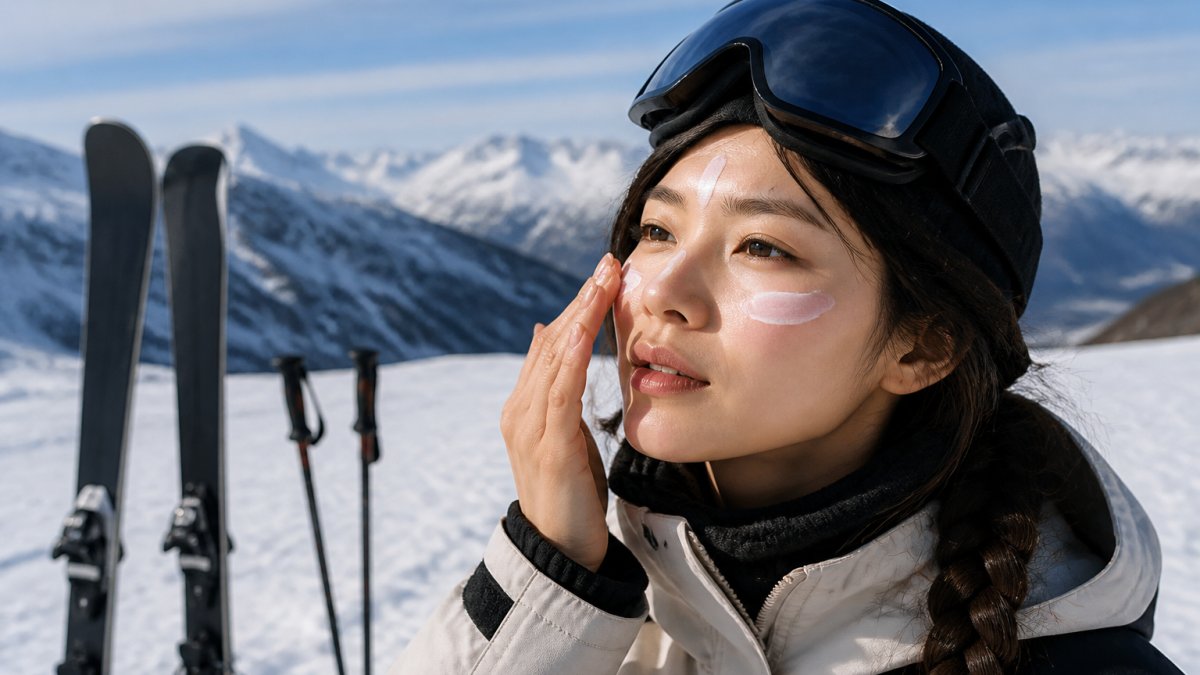
High-altitude winter sports demand water-resistant formulas that won't wash away from perspiration or melt under the physical exertion of activity. Look for products labeled water-resistant for at least 80 minutes.
A practical approach is to apply sunscreen 15 minutes before heading outside, allowing it to set fully. Then reapply every 80 minutes of activity, or immediately after wiping sweat from your face. For skiing specifically, apply extra protection to areas where goggles sit (around the eyes and temples), as these zones often get missed during reapplication.
The Revcell Hidden Sun Patch offers a targeted solution for high-exposure zones on the slopes. These transparent patches contain Centella asiatica and niacinamide, ingredients that soothe wind-irritated skin while providing SPF protection. Apply them to cheekbones, under-eyes, and the bridge of your nose, areas most vulnerable to both sun damage and wind burn during extended skiing sessions.

Water-Resistant Korean Sunscreen for Snow and Sweat
Water resistance is where many sunscreen choices fail in winter conditions. Even though you're not swimming, perspiration from physical activity, melting snow contact, and moisture from breathing create an environment that breaks down non-water-resistant formulas. A korean sunscreen that claims water resistance but isn't actually tested for winter conditions will leave you unprotected mid-activity.
Water-resistant formulas are tested in laboratories to verify they maintain efficacy after water exposure. Look for products that specify "water-resistant for 80 minutes" or "water-resistant for 120 minutes", the longer duration is preferable for extended outdoor activities. Korean brands often exceed these minimums because the formulas are designed for both summer beach use and winter sports.
Sweat is particularly problematic because it contains salt and acids that can degrade sunscreen. When you're active in cold weather, your body still perspires even though you don't feel as sweaty as in summer. The combination of sweat, wind, and cold creates a harsh environment for any topical product. Water-resistant korean sunscreens typically use silicone-based or film-forming ingredients that create a protective barrier resistant to moisture breakdown.
A practical reapplication strategy: after 80 minutes of activity, or whenever you notice moisture on your face, gently pat your skin dry with a clean cloth and reapply sunscreen to high-exposure areas. Don't just add more product on top of existing sunscreen, this creates a thick, uneven layer that may not adhere properly.
How Often to Reapply Sunscreen Outdoors in Winter Conditions
Standard guidance recommends reapplication every two hours, but winter outdoor activities demand more frequent reapplication. The two-hour rule assumes minimal water exposure and low sweat production, conditions that don't apply during skiing, snowboarding, or other active winter sports.
For winter outdoor activities, reapply sunscreen every 80 minutes of activity, or immediately after:
- Wiping sweat or moisture from your face
- Removing and replacing winter headwear or goggles
- Exposure to wind that may have dried or disrupted the protective layer
- Any activity that creates friction on your face (like adjusting a balaclava)
The practical reality is that most people significantly underestimate how often they need to reapply. A full day of skiing typically requires 4-5 applications of sunscreen, not the 2-3 applications many people think sufficient. This is why carrying a portable sunscreen in your jacket pocket or backpack is essential.
Korean sunscreens designed for active use often come in compact formats that fit easily in winter gear. Stick formulas, cushion compacts, and small bottles are all practical options that don't add bulk but ensure you have product available for reapplication mid-activity.
Revcell Hidden Sun Patch (5 Pouches / 10 Patches) →
Korean Mineral Sunscreen vs. Chemical Formulas for Cold Weather
The mineral versus chemical distinction matters in winter conditions because of how each type interacts with cold temperatures and layered clothing.
Mineral sunscreens (also called physical sunscreens) use zinc oxide or titanium dioxide to create a physical barrier that reflects UV rays. They sit on top of the skin and begin protecting immediately upon application.
Chemical sunscreens use organic filters that absorb UV rays and convert them to heat. They integrate into the skin more seamlessly, creating a lightweight feel that many people prefer. Chemical formulas often layer better under makeup and winter skincare products, and they typically don't leave a white cast. However, chemical sunscreens require 15 minutes to become fully effective, whereas mineral sunscreens work immediately.
For winter outdoor activities, the choice depends on your priorities. Mineral sunscreens offer immediate protection and are often gentler for sensitive skin irritated by wind and cold. Chemical sunscreens provide a more elegant texture and better layering under winter clothing and accessories. Many Korean brands offer hybrid formulas that combine both types to balance the advantages of each.
If you have sensitive skin that's already compromised by winter conditions, lean toward mineral formulas or hybrid blends. If you prioritize texture and seamless application, chemical formulas are the stronger choice. Neither option is inherently superior for winter, the best korean sunscreen for your situation depends on your skin sensitivity and personal preference for how the product feels.
Selection Criteria and Common Mistakes to Avoid
Choosing the right korean sunscreen for winter outdoor activities requires evaluating several factors beyond just SPF number. Most people make predictable mistakes that reduce their actual sun protection.
Common Mistake #1: Choosing SPF based on marketing alone. Many sunscreens advertise SPF 70, 80, or even 100, but these numbers provide minimal additional protection compared to SPF 50+.
Common Mistake #2: Underestimating application quantity. Most people apply only 25-50% of the recommended amount of sunscreen. The standard recommendation is 1/4 teaspoon for the face, which feels like much more than people typically use.
Common Mistake #3: Ignoring texture compatibility with winter skincare. Winter requires heavier moisturizers and sometimes occlusive products to combat dryness. If your sunscreen doesn't layer well with these products, you'll either skip the moisturizer or apply sunscreen unevenly.
Common Mistake #4: Forgetting about reapplication logistics. Choosing a sunscreen that's impossible to reapply outdoors (because it requires a sink, or it's too heavy to carry, or it leaves a greasy residue) means you won't actually reapply.
| Selection Factor | What to Prioritize | Why It Matters for Winter |
|---|---|---|
| SPF Rating | SPF 50+ | Blocks 98% of UVB; minimal improvement beyond this |
| Broad-Spectrum | PA+++ or PA++++ | Ensures UVA protection against aging damage |
| Water Resistance | 80+ minutes | Sweat and snow moisture break down non-resistant formulas |
| Texture | Lightweight, non-greasy | Heavy formulas feel uncomfortable under winter layers |
| Reapplication Format | Portable, easy to apply | You'll only reapply if the product is practical to carry |
| Skin Sensitivity | Mineral or hybrid if reactive | Winter wind already irritates skin; avoid additional irritants |
Selection Criteria Checklist:
- Confirm SPF 50+ and broad-spectrum protection on the label
- Check for PA+++ or PA++++ rating (Korean standard for UVA protection)
- Verify water resistance for at least 80 minutes
- Test the texture with your winter skincare routine before committing
- Choose a format that's realistic to reapply during your specific activity
- If you have sensitive skin, prioritize gentle formulas or mineral options
The best korean sunscreens for winter outdoor activities are those you'll actually use consistently and reapply regularly. A theoretically perfect sunscreen that sits in your bathroom unused provides zero protection. Prioritize products that fit your lifestyle and feel comfortable enough that you won't skip application or reapplication.
Protecting your skin during winter outdoor activities requires more than just applying sunscreen once before heading outside. You need a product formulated for the specific demands of cold weather, one that withstands sweat and snow exposure, layers smoothly under winter gear, and remains practical to reapply throughout your activity.
Frequently Asked Questions
Can you wear sunscreen in winter, and do you really need it?
Yes. UV rays penetrate clouds and reflect off snow, intensifying exposure during winter outdoor activities. Even on overcast days, UVA and UVB rays reach your skin and cause damage. Winter conditions, wind, cold, and snow glare, make sun protection especially critical. Korean sunscreens formulated for cold weather provide the hydration and protection your skin needs year-round.
What SPF should I use for skiing or other winter sports?
SPF 50+ broad-spectrum protection is recommended for winter sports. At high altitudes and on snow, UV intensity increases significantly. Look for Korean sunscreens with SPF 50+ and PA++++ ratings to ensure both UVB and UVA protection. Pair this with water-resistant formulas that withstand sweat and snow exposure for extended outdoor time.
How often should you reapply sunscreen when skiing or spending time outdoors?
Reapply every 2 hours during continuous outdoor activity, or immediately after sweating, swimming, or toweling off. Winter sports intensify this need due to sweat under layers and snow glare. Water-resistant Korean sunscreens maintain protection longer but still require regular reapplication. Portable options like the Revcell Hidden Sun Patch make midday reapplication convenient on the slopes.
Is mineral or chemical sunscreen better for winter activities?
Mineral sunscreens (physical blockers) work immediately and suit sensitive, reactive skin common in winter. Chemical sunscreens absorb into skin and feel lighter, ideal if you layer under makeup or moisturizer in cold weather. Korean formulas often blend both for optimal protection and texture. Choose based on your skin sensitivity and preference for feel, both deliver broad-spectrum protection when SPF 50+ and PA++++ rated.