Table of Contents
- Why Counterfeit Skincare Is a Real Risk
- Step 1: Check the Packaging for Authentic K-Beauty Signs
- Step 2: How to Verify Batch Codes on Korean Cosmetics
- Step 3: Do a Sensory Evaluation Before You Apply
- Step 4: Why Buy K-Beauty from Canadian Retailers You Can Verify
- Red Flags: Common Signs of Counterfeit Skincare
- What to Do If You Suspect a Fake: Reporting Counterfeits
- Frequently Asked Questions
Last Updated: September 27, 2026
Why Counterfeit Skincare Is a Real Risk
Counterfeit skincare is a growing problem, and learning how to identify authentic k-beauty products matters more now than ever.
Fake products often skip safety testing entirely. That means unknown ingredients, wrong concentrations, and real harm to your skin.
Hidden Ingredients and Skin Damage
Counterfeit formulas can contain anything. Cheap fillers, banned preservatives, or heavy metals that never passed a safety review.
A common mistake is assuming a bad reaction is just "purging." It usually isn't. Real irritation from a fake product shows up fast: redness, burning, or small bumps within hours.
If you have sensitive or reactive skin, this risk doubles. Your barrier is already working harder, and an unknown ingredient can undo months of progress.
No Recourse If Something Goes Wrong
Buying from an unverified seller leaves you with no path to a refund. No receipt trail, no return address, no one to call.
Authorized sellers stand behind their stock.
Step 1: Check the Packaging for Authentic K-Beauty Signs
Packaging is your first and fastest check. Authentic k-beauty products come from factories with strict quality control, and that shows in the details.
Print Quality and Font Alignment
Real packaging uses sharp, consistent printing. Look for:
- Crisp edges on every letter and logo
- Consistent font weight across the whole label
- Straight, evenly spaced text lines
- No blurry or doubled images
Fakes cut corners on printing. You'll often see fuzzy logos, mismatched fonts, or text that sits slightly crooked.
Tamper-Evident Seals and Packaging Integrity
A real product arrives sealed. Check for a tamper-evident seal on the cap or box flap.
Here's a quick reference for what to inspect:
| Check | Authentic Sign | Counterfeit Sign |
|---|---|---|
| Print quality | Sharp, even, crisp | Blurry, misaligned |
| Seals | Intact tamper seal | Missing or loose |
| Batch code | Laser-engraved or clean inkjet | Smudged or absent |
| Labeling | Matches brand fonts | Font mismatch |
Step 2: How to Verify Batch Codes on Korean Cosmetics
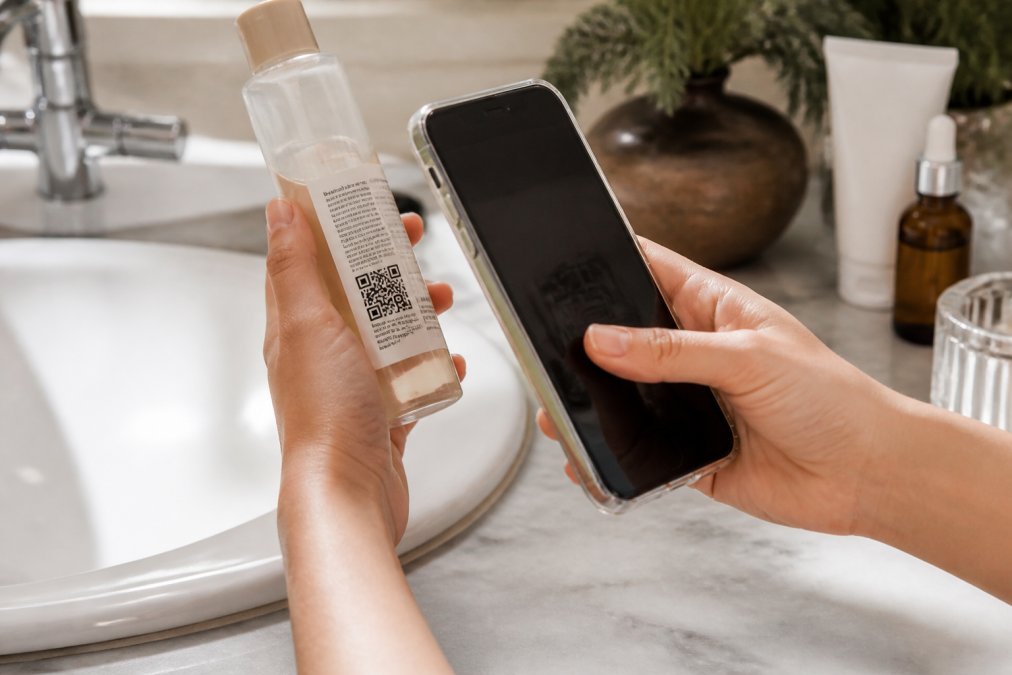
Every legitimate Korean cosmetic carries a batch code and date stamp. Learning how to verify batch codes on korean cosmetics takes about two minutes and catches most fakes.
Where to Find the Batch Code and Expiration Date
Look on the bottom of the bottle or the back of the box. You'll usually find:
- A batch code (letters and numbers mixed)
- A manufacturing date
- An expiration date
Using Verification Apps and QR Codes
Many Korean brands now print a QR code on the label. Scan it with your phone to reach the brand's official verification page.
Step 3: Do a Sensory Evaluation Before You Apply
Sensory evaluation is the check most people skip. It's also the one that catches fakes packaging checks miss, because a counterfeiter can copy a box far more easily than a stable emulsion.
Texture, Viscosity, and Pigmentation
Real formulas have a consistent viscosity, the resistance a liquid has to flowing. A serum should spread in an even film and absorb within a predictable window. A cream should hold its shape on the back of your hand without collapsing into oil.
Watch for:
- Gritty or grainy texture (undissolved filler or poor emulsification)
- Separation or watery layers (a broken emulsion, often from heat damage or a skipped preservative system)
- Uneven pigmentation in tinted products (cheap pigment that wasn't milled fine enough)
- A formula that feels sticky or tacky after it dries
Smell and Formula Consistency
A real product smells the same every time you buy it. Fakes vary batch to batch because the fragrance or preservative blend changes with whatever raw material was cheapest that week.
The Health Risk Behind the Texture Test
This is the part most guides leave out. A counterfeit formula can contain heavy metals like lead or mercury, banned preservatives, or bacteria from an unsterile fill line. Those risks don't show up in a photo comparison, they show up on your skin.
Step 4: Why Buy K-Beauty from Canadian Retailers You Can Verify
Buying from a retailer you can verify is the single best way to avoid fakes. It removes the guesswork entirely.
Authorized Retailers vs. the Gray Market
An authorized retailer buys directly from the brand or its official distributor. The gray market is different: products bought and resold without brand approval.
Consumer Protection and Returns
Local retailers fall under consumer protection rules. That means clear return policies and a real person to contact.
Red Flags: Common Signs of Counterfeit Skincare
Some warning signs show up before you even open the box. Spot these early and you save yourself the trouble.
Price Points That Are Too Good to Be True
If a luxury serum costs a fraction of its normal retail price, question it. Deep discounts on premium brands usually mean gray market or fake stock.
Missing or Mismatched Product Labeling
Check the product labeling closely. Real products list ingredients, volume, and manufacturer details in clear print.
Fakes often have:
- Missing ingredient lists
- Spelling errors on the label
- A brand name spelled slightly wrong
- No manufacturer address
Any one of these is enough to walk away.
What to Do If You Suspect a Fake: Reporting Counterfeits
If you think you've bought a fake, act quickly. Reporting counterfeits protects you and other buyers, and it feeds the data that regulators use to pull unsafe products off the market.
Why Fakes Reach the Market in the First Place
Understanding the supply chain explains why you can't always trust a low price. A legitimate Korean cosmetic moves from the manufacturer to an authorized distributor, then to a retailer, with paperwork at each step. The gray market is different: products bought in one market and resold in another without brand approval.
Gather Evidence Before You Report
A report is only as strong as the evidence behind it. Before you contact anyone, collect:
- Photos of the packaging, batch code, and any tamper seal
- A screenshot of the product listing and the seller's name
- Your receipt or order confirmation
- A photo of the product next to a known-authentic version, if you have one
Where to Report
- Stop using the product immediately. Do not finish the bottle.
- Contact the seller in writing and request a refund. Keep the message factual and reference your evidence.
- Report to the brand's official customer service. Most Korean brands have a global consumer contact and track counterfeit reports by region.
- File a complaint with the Competition Bureau of Canada at Competition Bureau of Canada if the seller won't resolve it. The Bureau handles deceptive marketing and false claims, which covers sellers passing off fakes as authentic.
- Check Health Canada's cosmetic safety resources at Health Canada cosmetic safety database to see whether the product has already been flagged or recalled. Health Canada also publishes recall notices for unsafe cosmetics.
What Regulators Actually Do With Your Report
The Competition Bureau investigates patterns, not one-off complaints. A single report may not trigger action, but it contributes to a file that can. Health Canada, meanwhile, tracks adverse reactions and unsafe products, and can issue recalls or stop-sale orders.
Frequently Asked Questions
Where can I buy authentic Korean beauty products?
Buy from authorized Canadian retailers that source directly from the original manufacturer. Look for clear contact information, a Canadian return policy, and batch codes on every product. Avana Beauty Inc is an authorized retailer of authentic K-beauty products. Avoid third-party marketplace sellers with no traceable supply chain, as they may sell gray market or counterfeit items.
How do I verify the batch code on Korean skincare?
Find the batch code, a short alphanumeric string, printed or laser-engraved on the bottom or back of the packaging. Enter it into the brand's official website or a verification app like Hwahae. Check that the manufacturing date and expiration date match the format used by that brand. If the code is missing, smudged, or doesn't match, treat the product as suspect.
What are the risks of using counterfeit skincare products?
Counterfeit skincare can contain unregulated ingredients, incorrect concentrations, or bacterial contamination. These can cause skin irritation, allergic reactions, or long-term damage. Because fakes bypass quality control, you have no way to know what you're applying. Always buy from authorized retailers to avoid these risks and protect your skin's health.
What is the most trusted Korean skincare brand?
Trust depends on buying from authorized sellers rather than a single brand. Popular authentic brands include Beauty of Joseon, COSRX, and Laneige, but counterfeits exist for all of them. Verify the retailer's supply chain, check for batch codes, and use official brand apps to confirm authenticity. A trusted brand sold by an untrusted seller is still a risk.
Counterfeit skincare costs you money and can cost you your skin barrier. The fix is simple: check the packaging, verify the batch code, run a sensory test, and buy from a seller you can trust. Avana Beauty Inc offers a curated selection of premium Korean skincare, sourced for authenticity and shipped across the country. Browse the collection and get authentic k-beauty products without the guesswork.