Table of Contents
- Understanding Facial Redness and Sensitive Skin
- Centella Asiatica for Redness: The Gold Standard Botanical
- Green Tea Skincare for Sensitive Skin: Antioxidant Protection
- Other Soothing Botanicals: Heartleaf, Aloe Vera, and Calming Extracts
- How to Calm Facial Redness: A Simple Skincare Routine
- Simple Skincare Routine for Redness-Prone Skin: Step-by-Step
- Choosing Products Based on Your Redness Cause
- When to Seek Professional Advice
- Frequently Asked Questions
Last Updated: October 10, 2026
Understanding Facial Redness and Sensitive Skin
Facial redness stems from multiple causes: rosacea, acne inflammation, environmental irritation, or a compromised skin barrier. When your skin looks inflamed and reactive, natural Korean ingredients for soothing facial redness offer a gentler path forward than harsh actives. At Avana Beauty Inc, we recognize that sensitive, redness-prone skin requires targeted botanical support, not aggressive treatment.
The key is matching ingredients to your specific redness trigger. Korean skincare prioritizes barrier repair and inflammation reduction through time-tested botanicals.
| Redness Cause | Primary Trigger | Best Ingredient Focus |
|---|---|---|
| Barrier damage | Dehydration, irritants | Centella, panthenol, hyaluronic acid |
| Rosacea-related | Blood vessel reactivity | Green tea, niacinamide, antioxidants |
| Acne inflammation | Active breakouts | Heartleaf, aloe vera, calming extracts |
| Environmental stress | Weather, pollution | Antioxidants, soothing botanicals |
Centella Asiatica for Redness: The Gold Standard Botanical
Centella asiatica (also called cica or TECA) is the cornerstone of Korean skincare for inflamed skin, reducing redness appearance by supporting skin healing and strengthening the barrier.
Centella calms inflammatory responses, benefits that compound to reduce visible redness. It's gentle enough for daily use on actively irritated skin.
Look for products listing centella asiatica extract or madecassoside (its active compound) in the first five ingredients. Concentration matters. A trace amount won't deliver results; effective formulas contain 5-10% extract or higher.
The DumiDang Mung Bean line features centella asiatica extract across all three products, making it an excellent entry point for those new to this ingredient. The cream ($45.00) combines centella with mung bean extract and barrier-supporting ferments for comprehensive redness relief.

Green Tea Skincare for Sensitive Skin: Antioxidant Protection
Green tea extract is a powerhouse antioxidant that protects skin from environmental stressors by neutralizing free radicals and reducing inflammatory markers, unlike centella, which focuses on barrier repair.
Evidence Strength and What Green Tea Actually Does
Green tea's antioxidant benefits are well-documented in clinical studies, reducing visible redness and supporting barrier function.
For rosacea-prone skin, green tea calms existing inflammation and stabilizes blood vessel reactivity.
However, green tea is not a substitute for medical treatment of rosacea. It reduces the appearance of redness and supports skin comfort. If you have diagnosed rosacea, use green tea as a complementary skincare step alongside any medical recommendations from your dermatologist.
Concentration and Formulation: Why Product Quality Varies
Green tea's effectiveness depends entirely on concentration and formulation stability. Look for products listing "green tea extract," "EGCG" (epigallocatechin gallate, the active compound), or "Camellia sinensis extract" in the first five ingredients. Trace amounts, green tea listed as the tenth ingredient or lower, deliver minimal benefit.
Effective formulas contain 2-5% green tea extract or higher. Many products list green tea but at concentrations too low to produce visible results. Check the ingredient list order: ingredients are listed by concentration (highest to lowest). If green tea appears after humectants or emollients, the product likely contains less than 1% extract.
Green tea's antioxidant compounds degrade when exposed to light, heat, or air. Choose products in opaque, airless packaging to preserve potency.
When Green Tea May Not Be Ideal
Some people experience mild dryness with concentrated green tea serums, particularly if they have naturally dry skin or a compromised barrier.
If redness stems from barrier damage or dehydration, prioritize hydrating ingredients before adding green tea. Layer green tea serum under a nourishing cream to prevent dryness.
Green tea contains caffeine; patch test if you have known caffeine sensitivity, though topical caffeine is generally safe.
Optimal Formulation and Layering
Green tea works best in serums and essences, where antioxidant compounds absorb better. The DumiDang Mung Bean Serum includes green tea extract alongside hyaluronic acid for both antioxidant defense and deep hydration.
Apply green tea serum to clean, slightly damp skin, wait 1-2 minutes, then apply moisturizer. Twice-daily use produces faster results than once-daily, though improvement appears within 4-6 weeks either way.
Other Soothing Botanicals: Heartleaf, Aloe Vera, and Calming Extracts
Beyond centella and green tea, Korean skincare harnesses additional botanicals that calm irritation and support barrier function. However, not all soothing ingredients carry equal evidence, and some pose irritation risks even though they're natural.
Heartleaf (Houttuynia Cordata): Traditional Use vs. Modern Evidence
Heartleaf is a traditional Korean botanical with soothing properties, though the evidence base is smaller than centella or green tea.
Heartleaf works best as a supporting ingredient. Look for it in the first five ingredients if choosing it as a main soothing agent, though expect gentler results than centella. It's valuable for extremely reactive skin that doesn't tolerate stronger botanicals.
Heartleaf pairs well with centella and is an excellent alternative if your skin reacts poorly to green tea.
Aloe Vera: Hydration with Irritation Caveats
Aloe vera is a hydrating botanical that soothes irritation and supports barrier repair.
Choose products listing "aloe barbadensis leaf juice" or "aloe barbadensis gel" rather than "aloe barbadensis leaf extract." The purified versions remove irritating compounds while retaining hydrating polysaccharides. Concentration matters: effective hydrating formulas contain 5-10% aloe vera gel or higher.
Aloe vera excels in sheet masks and treatment serums where it can hydrate without occlusion. If you have extremely sensitive skin or a history of contact dermatitis, patch test aloe vera products for 48 hours before full-face application, even though reactions are uncommon.
Calendula and Chamomile: Anti-Inflammatory with Allergy Risk
Calendula (marigold) and chamomile offer anti-inflammatory compounds and are traditional remedies for irritated skin. Both ingredients reduce redness appearance and support barrier function.
If you have known plant allergies or sensitive skin with a history of botanical reactions, introduce calendula and chamomile cautiously. Patch test for 24-48 hours on your inner arm before applying to your face. These ingredients are generally well-tolerated, but the allergy risk is real and often overlooked in skincare marketing.
Korean formulas often combine calendula and chamomile with centella for layered soothing action. The Revcell Cica Calming Wrapping Mask uses a wrapping fabric to seal in hydrating essence infused with centella, panthenol, and madecassoside, combining multiple soothing pathways in one product. This combination approach reduces the risk of over-relying on a single botanical.
Panthenol and Barrier-Strengthening Ingredients: Concentration and Formulation Matter
Panthenol (provitamin B5) is a humectant that draws water into the skin and strengthens the barrier.
Panthenol's effectiveness depends on concentration; look for it in the first five ingredients at 3-5% or higher. Apply in a serum or essence, then seal with a cream to prevent water loss.
Fermented ingredients like galactomyces ferment filtrate and bifida ferment extract boost hydration by increasing water retention and supporting the skin microbiome.
How to Calm Facial Redness: A Simple Skincare Routine
A calming routine for redness-prone skin follows one principle: hydrate, soothe, and seal. Skip actives, exfoliants, and fragrance.
Simple Skincare Routine for Redness-Prone Skin: Step-by-Step
Introduction and Patch Testing
Patch test any new product on your inner arm or behind your ear for 24 hours before full-face application.
Introduce one new product every 2 weeks to identify which ingredients your skin tolerates and which trigger flares.
Morning and Evening Routine Structure
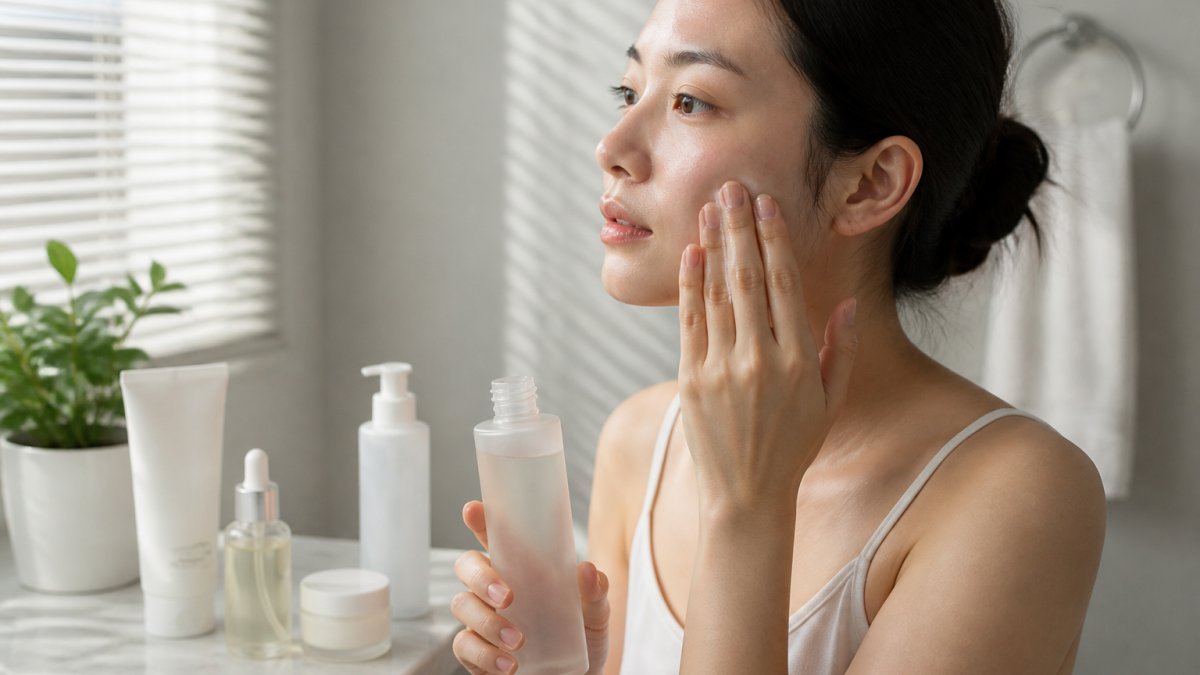
Step 1: Cleanse gently. Use a pH-balanced, non-stripping cleanser. Avoid hot water; lukewarm is best. Pat skin dry gently, don't rub.
Step 2: Apply essence toner. The DumiDang Mung Bean Essence Toner ($25.00) hydrates and prepares skin for serums.
Step 3: Apply serum. The DumiDang Mung Bean Serum ($45.00) delivers concentrated soothing care. Use 2-3 drops, warming between your palms, then press into skin.
Step 4: Apply moisturizer. The DumiDang Mung Bean Cream ($45.00) seals hydration and supports barrier repair. Use a pea-sized amount; a little goes far.

Morning addition: Apply sunscreen (SPF 30+) after your moisturizer. Sun protection prevents rosacea flares and environmental irritation.
Evening addition: Once weekly, use the Revcell Cica Calming Wrapping Mask ($50.00) instead of your serum.
For those wanting a complete starter set, the DumiDang Mung Bean Bundle ($100.00) includes the toner, serum, and cream, everything needed for this foundational routine at a slight savings.
Choosing Products Based on Your Redness Cause
Redness-prone skin isn't one category. Your specific trigger determines which ingredients will help most.
If your redness stems from barrier damage or dehydration: Prioritize hydrating ingredients like hyaluronic acid, panthenol, and galactomyces ferment. The DumiDang Mung Bean line excels here, combining centella with fermented ingredients that boost hydration beyond basic moisturizers.

If rosacea or blood vessel reactivity drives your redness: Focus on antioxidants and anti-inflammatory botanicals. Green tea, centella, and niacinamide are your allies.
If acne-related inflammation causes redness: Choose products with calming botanicals and gentle hydration. Avoid salicylic acid or benzoyl peroxide during flares; they worsen irritation. Centella, aloe vera, and chamomile support healing without harshness.
If environmental stress triggers reactions: Antioxidant serums and protective barriers are essential. Layer green tea serum under a nourishing cream to shield skin from pollution and climate stress.
The International Journal of Dermatology findings show that ingredient matching, choosing botanicals aligned with your specific redness cause, produces faster visible improvement than generic soothing products.
When to Seek Professional Advice
Home skincare addresses irritation and barrier damage, but certain redness requires professional evaluation. Consult a dermatologist if:
Your redness doesn't improve after 8-12 weeks of consistent skincare.
Your skin develops pustules, severe burning, or persistent swelling.
You experience redness only in specific areas and it's accompanied by scaling or crusting.
You suspect an allergy to a skincare ingredient. Patch testing helps, but a dermatologist can perform formal allergy testing if reactions are severe.
A dermatologist clarifies the actual cause of your redness, ensuring you treat the condition rather than just masking symptoms.
Facial redness doesn't require aggressive treatment or complicated routines. A simple approach built on proven Korean ingredients, centella asiatica, green tea, and barrier-supporting botanicals, calms irritation and restores skin comfort. The DumiDang Mung Bean line brings these ingredients together in a complete routine designed specifically for redness-prone skin. Start with the bundle or individual products from Avana Beauty Inc, introduce them slowly, and give your skin time to respond.
Frequently Asked Questions
Which Korean skincare ingredients are best for soothing facial redness?
Centella asiatica (cica) is widely recognized as the most effective natural ingredient for redness. Green tea provides antioxidant support, while heartleaf, aloe vera, and panthenol strengthen the skin barrier and reduce irritation. Korean skincare products often combine these ingredients, mung bean extract, galactomyces ferment filtrate, and chamomile flower extract also appear frequently in formulations designed to calm sensitive, redness-prone skin.
How should I patch test a new product if my skin is sensitive and prone to redness?
Apply a small amount of the new product to a discreet area, such as behind your ear or on your inner arm, and wait 24-48 hours to check for adverse reactions. If no irritation appears, test it on a small patch of your face (like the jawline) for 3-5 days before incorporating it into your full routine. Introduce one new product at a time so you can identify what works for your skin without overwhelming it.
What is a simple Korean skincare routine for redness-prone skin?
Start with a gentle cleanser, followed by a hydrating essence toner (like one with centella asiatica or green tea extract). Apply a lightweight serum to deliver concentrated soothing care, then finish with a calming moisturizer to lock in hydration and support your skin barrier. Use this routine morning and evening. The DumiDang Mung Bean Bundle ($100) provides a complete three-step routine specifically formulated for calming and balancing redness-prone skin.
Can Korean skincare help with rosacea or persistent facial redness?
Korean skincare ingredients like centella asiatica, green tea, and panthenol can help soothe the appearance of redness and support skin comfort. However, if you have diagnosed rosacea or redness that persists despite skincare, consult a dermatologist or healthcare professional. They can rule out underlying conditions and recommend medical treatment if needed alongside your skincare routine.