Table of Contents
- Start With Your Skin, Not the Hype
- Korean Toner Ingredients for Sensitive Skin: What to Look For
- Toner Pads or Liquid Toner: Which Format Suits Your Routine?
- How to Patch Test Skincare Before It Touches Your Whole Face
- How to Use Korean Toner: Layering Without Overloading
- Finding Authentic Korean Skincare in Canada
- Toner Picks for Reactive Skin at Every Price
- Conclusion
- Frequently Asked Questions
Last Updated: October 7, 2026
Start With Your Skin, Not the Hype
The right Korean toner for sensitive skin matches your actual skin concern, not what's trending.
Before you compare bottles, identify what your skin is actually doing.
Sensitivity, Dryness, or Rosacea-Prone: Telling Them Apart
Sensitive skin is a reactivity pattern: skin stings, burns, or turns red quickly when a new product touches it. Dry skin lacks oil and often feels tight and rough. Dehydrated skin lacks water and can feel tight even when it's oily. Rosacea-prone skin involves persistent facial redness, flushing, and sometimes visible blood vessels, and it is a medical condition rather than a cosmetic type.
That distinction changes how you shop. A fragrance-free hydrating toner helps dehydrated skin but will not treat rosacea, which needs a doctor's diagnosis. If redness is persistent rather than occasional, see a physician first. Otherwise, treat sensitivity as a barrier issue first, hydration second.
Korean Toner Ingredients for Sensitive Skin: What to Look For
Look for short, fragrance-free formulas built around soothing and hydrating ingredients. The ingredient list, not the marketing copy, tells you whether a toner suits a reactive complexion, but it's a screening tool, not a guarantee.
What the Evidence Actually Supports
Ingredient claims in K-beauty marketing run ahead of the evidence. A grounded read on the common ones:
- Centella asiatica (cica): Contains madecassoside, asiaticoside, and asiatic acid, studied for calming visible redness and supporting the barrier. Human evidence is small or based on cosmetic formulations, so treat it as a well-tolerated soothing botanical, not a treatment.
- Hyaluronic acid: A humectant that binds water in the upper layers. It improves the look of dehydration quickly, but in dry indoor air it can pull moisture from deeper layers unless sealed in with a moisturizer. Low-molecular-weight forms penetrate further; high-molecular-weight forms sit closer to the surface.
- Ceramides: Lipids that occur naturally in the skin barrier. Topical ceramides help replace what a compromised barrier is missing, which is why they appear in toners for reactive skin. They work best alongside cholesterol and fatty acids, so a ceramide toner is a supporting step, not a standalone fix.
Ingredients and Formulas to Avoid
Skip anything high on the list with fragrance or drying alcohol (denatured alcohol or alcohol denat.). Both are leading triggers for reactive skin and common in oil-control toners.
Other ingredients worth a second look if your skin is reactive:
- Essential oils (lavender, citrus, peppermint, eucalyptus) are natural fragrances and can irritate a compromised barrier even when the label says "no synthetic fragrance."
- High-concentration acids (AHA, BHA, PHA) in a daily toner. A low-percentage PHA is gentler than glycolic acid, but any acid toner is a poor first step for skin that is actively stinging.
- Tea tree extract is often recommended for acne-prone skin and can help blemishes, but it is a known irritant for some. Patch test before committing.
The Limits of Ingredient-List Screening
A short, fragrance-free list is a good filter, not a prediction. Two people can react differently to the same formula, and a reaction can come from a preservative, a botanical, or an unsuitable pH rather than a headline ingredient. Patch testing matters more than any single ingredient rule.
If your skin reacts to almost everything, the issue is more likely your barrier than the products. Strip your routine back to a gentle cleanser and plain moisturizer for two weeks before introducing any toner.
Toner Pads or Liquid Toner: Which Format Suits Your Routine?
Liquid toner in a bottle suits most sensitive-skin routines because you control the amount and skip the friction. Toner pads travel well, but the wiping action can irritate a reactive complexion, and pads often contain preservatives to stay damp.
| Format | Best For | Watch Out For |
|---|---|---|
| Liquid toner | Sensitive, reactive, rosacea-prone skin | Requires clean hands or a soft pad |
| Essence toner | Dry, dehydrated, dull skin | Layering can feel heavy if overdone |
| Toner pads | Travel, oily, acne-prone skin | Friction and added preservatives |
If you choose pads, press them gently onto the skin rather than sweeping. Never scrub.

How to Patch Test Skincare Before It Touches Your Whole Face
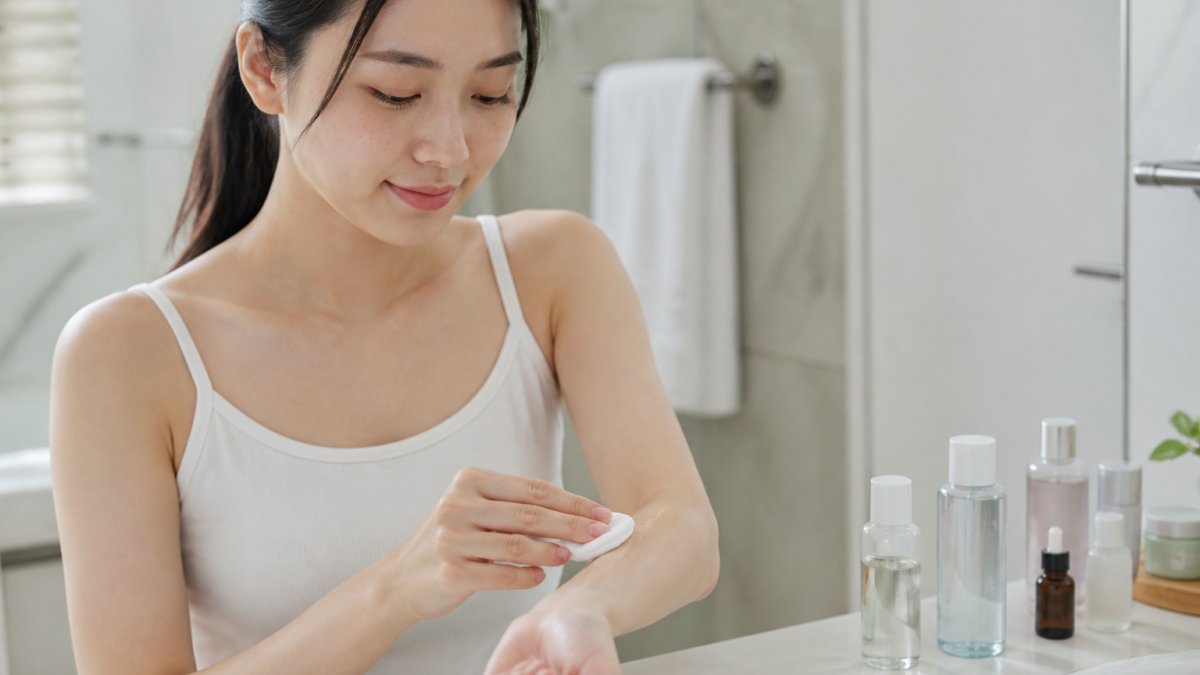
A patch test is a small, controlled trial of a new product on a limited area before you apply it to your face. It is the best way to avoid a full-face reaction, and it takes two days.
Here is the method we recommend:
- Cleanse a small area on your inner forearm or behind your ear.
- Apply a small amount of toner and let it dry. Do not rinse.
- Wait 24 hours. Check for redness, itching, burning, or bumps.
- Repeat the application on the same spot and wait another 24 hours.
- Introduce gradually. If there is no reaction, use the toner every other day for a week before daily use.
Stop immediately if you feel stinging or burning. A mild tingle that fades is different from pain that persists.
How to Use Korean Toner: Layering Without Overloading
Korean toners are usually applied in thin layers, patted in with clean hands rather than wiped with a cotton pad. The goal is absorption, not saturation.
The classic method:
- Pour a few drops into your palm.
- Press and pat gently across your face and neck.
- Repeat for a second thin layer if your skin still feels tight.
Two to three light layers suit dry or dehydrated skin. One is enough for oily or acne-prone skin. More layers do not mean better results; over-layering can leave skin feeling sticky and congested.
Finding Authentic Korean Skincare in Canada
Most guides say "buy from a trusted retailer" and stop there. The practical question is how to compare a domestic seller against an overseas one, because the real cost and risk of a Korean toner depends on where it ships from. Here is a method to apply before you add anything to a cart.
Step 1: Confirm the Seller Can Show You the Label
A legitimate listing shows the full ingredient list, the expiry or manufacture date, and the brand's own product name, not a generic photo with a vague "imported from Korea" claim. If the ingredient list is missing or the price is far below every other seller, treat it as a warning sign; counterfeit and expired K-beauty products circulate online.
DumiDang Mung Bean Essence Toner (200mL) →
Step 2: Work Out the Real Delivered Cost
The sticker price is not the delivered price. When you order from an overseas seller, the total you pay can include:
- Shipping, often free or low from overseas sellers, but slow.
- Duties and taxes, goods shipped into the country can be subject to customs duties and taxes, and couriers may add a brokerage or handling fee on top. Whether you are charged depends on the value and origin of the shipment, so the only reliable way to know is to check the seller's stated terms before you buy.
- Currency conversion, if the seller prices in another currency, your card issuer's exchange rate and any foreign-transaction fee apply.
A domestic seller usually folds shipping and taxes into a higher sticker price, but you get a predictable total, faster delivery, and a real person to contact. That trade-off, lower sticker price and a long wait versus a higher total and a short one, is the actual decision.
Step 3: Check the Return Policy Before You Need It
This matters more for sensitive skin than any other category. If a toner reacts badly, you want to know whether you can return an opened product, who pays return shipping, and how long you have. Overseas sellers frequently exclude opened cosmetics, making a reaction a total loss. Domestic sellers vary too, so read the policy.
Step 4: Know What the Label Must Tell You
Cosmetics sold in the country must carry a label that identifies the product and the responsible party, and lists ingredients in a standard format. Health Canada publishes consumer information on cosmetic safety and labelling that explains what must appear on a product label and how ingredients are declared. If a listing cannot show you a compliant label, that is a reason to keep looking.
Step 5: Match the Seller to Your Priority
There is no single best place to buy. Match the seller to what you actually need:
- Fastest delivery and easiest returns: a domestic retailer that stocks the product.
- Lowest sticker price: an overseas seller, if you accept the wait and the customs uncertainty.
- Hard-to-find or newly released products: often only available overseas, which is a legitimate reason to order internationally.
If you are weighing that trade-off, our guide to why buying K-beauty from Canadian retailers is worth it covers the practical side of duties, timelines, and consumer protection.
Health Canada's consumer information on cosmetic safety is worth bookmarking if you want to verify how a product should be labelled before it reaches your shelf.
Toner Picks for Reactive Skin at Every Price
A good toner for sensitive skin does not need to be expensive.
Here are some we carry, matched to different concerns:
1. DumiDang Mung Bean Essence Toner, $25.00 The most affordable option and the best starting point for combination, oily, or reactive skin. Mung bean extract, galactomyces ferment filtrate, and Centella asiatica extract make it a calming first step. It absorbs quickly with no sticky residue.
2. DumiDang Chickpea Essence Toner, $35.00 Formulated for dry, dehydrated, and sensitive skin, with chickpea extract, chamomile flower extract, and licorice root extract.

3. DumiDang Black Bean Essence Toner, $35.00 The pick for dry, mature, or dull skin.
Health Canada's consumer information on cosmetic safety is worth bookmarking if you want to verify how a product should be labelled before it reaches your shelf.
Conclusion
Choosing a Korean toner for sensitive skin is a process, not a purchase. Identify whether your concern is sensitivity, dryness, dehydration, or something needing a doctor. Read the ingredient list.
If you would rather skip the guesswork, Avana Beauty Inc curates premium Korean skincare with the ingredient transparency sensitive skin demands. Our DumiDang range covers reactive, dry, and dehydrated concerns.
Frequently Asked Questions
How do I choose a Korean toner for sensitive skin?
Match the toner to what your skin is doing, not to the trend. Dry or dehydrated skin does well with essence-style Korean toners built on humectants and ferments, while oily, reactive skin often prefers a lightweight, watery formula. Read the full ingredient list, not just the front label, and favor short lists with centella asiatica, hyaluronic acid, or rice-derived ingredients. Avoid added fragrance and drying alcohol. Patch test before full-face use, and introduce one new toner at a time.
How do I patch test a new Korean toner?
Cleanse a small area behind your ear or on your inner forearm and let it dry completely. Apply a few drops of the toner and wait 24 hours. If there is no redness, itching, or stinging, repeat on a small patch of your jawline for another 24 hours. Only then introduce it to your full face, starting once daily. Stop using it if irritation appears.
Is fragrance-free toner better for sensitive skin?
For reactive or rosacea-prone skin, yes. Fragrance is one of the most common triggers for redness, stinging, and contact irritation, and it is not always obvious on a label. Look for terms like parfum, fragrance, and essential oils such as limonene or linalool. Fragrance-free formulas are not automatically gentle, so still check for drying alcohol and strong exfoliating acids before you buy.
How can I check whether a Korean skincare product is authentic?
Buy from retailers that stock sealed products with intact batch codes and expiry dates, and check that the packaging matches the brand's official imagery. Reputable sellers will answer questions about sourcing and offer a return policy if a product does not work for you. Counterfeit toners often have misspelled labels, thin or off-color packaging, or prices far below what the brand normally charges. When in doubt, contact the brand directly with the batch code.
Canadian Dermatology Association skin health resources