Table of Contents
- How Long Does a K-Beauty Sheet Mask Take to Work? The Short Answer
- How Long to Leave a Korean Sheet Mask On (And Why 10 to 20 Minutes Matters)
- How to Use a Korean Sheet Mask: A Step-by-Step Routine
- What to Do After a Sheet Mask: Sealing In the Serum
- Can You Leave a Sheet Mask on Overnight?
- Timelines by Skin Benefit and Ingredient
- How to Measure Whether Your Sheet Mask Is Working
- When a Sheet Mask Causes Stinging, Redness, or Breakouts
- Frequently Asked Questions
Last Updated: October 8, 2026
How Long Does a K-Beauty Sheet Mask Take to Work? The Short Answer
A K-beauty sheet mask starts working the moment you press it onto clean skin. You will see the first results, a plumper, more hydrated look, as soon as you peel it off. So how long does a K-beauty sheet mask take to work? For instant hydration, about 15 minutes of wear time. For lasting changes to your skin, weeks of consistent use.
Here at Avana Beauty Inc, we get this question a lot from customers building their first Korean skincare routine. The honest answer has two parts, and most guides only give you one.
Wear Time vs. Result Time: Two Different Clocks
This is the part most people get wrong. Wear time and result time are not the same thing.
Wear time is how long the mask sits on your face. That is 10 to 20 minutes. Result time is how long the benefits last or take to build. That is hours for hydration, and weeks for firmness or brightness.
Think of it like a glass of water. One glass quenches your thirst today. Drinking water every day is what changes your skin over a season. A sheet mask works the same way.
How Long to Leave a Korean Sheet Mask On (And Why 10 to 20 Minutes Matters)
Leave a Korean sheet mask on for 10 to 20 minutes. That is the sweet spot most formulas are built around. The mask is designed to hold serum against your skin so it can absorb, and the sheet itself keeps the serum from drying out too fast.
So why not leave it on for an hour? Two reasons.
First, once the sheet starts to dry, it can pull moisture back out of your skin instead of feeding it. Second, a soaked sheet can lift away from your face and stop making contact, which is where the transfer happens.
A common mistake is falling asleep with a mask on or leaving it on "to get more out of it." More time does not mean more benefit here. It usually means the opposite.
Here is the timing at a glance:
| Situation | Wear Time | Why |
|---|---|---|
| Standard hydrating mask | 10-20 minutes | Matches most formula instructions |
| Thicker essence or wrapping mask | 15-20 minutes | More serum needs a little more time |
| Sheet starting to dry or lift | Remove now | Dry sheets can pull moisture back |
| Overnight mask | Follow the label | Only if made for overnight use |
How to Use a Korean Sheet Mask: A Step-by-Step Routine
A good sheet mask routine is simple, but the order matters. Follow these steps and the serum has the best chance to absorb.

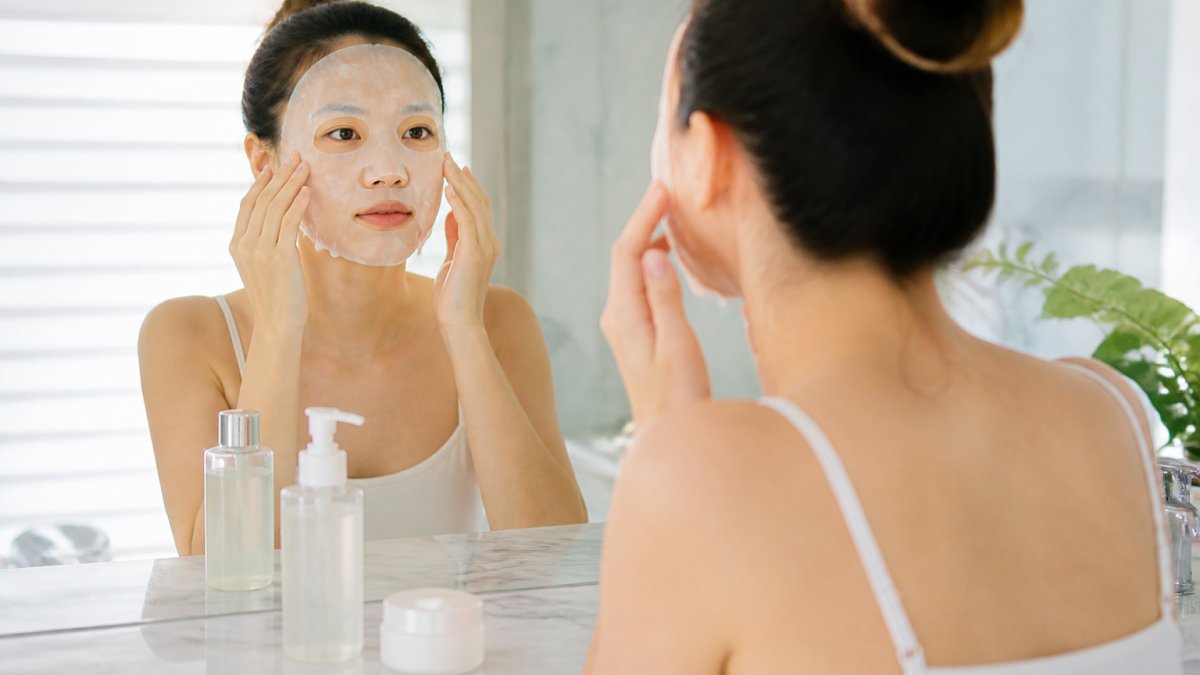
- Wash your hands and cleanse your face.
- Pat skin dry, then apply toner while skin is still slightly damp.
- Open the packet and unfold the mask.
- Smooth it over your face, starting at the forehead and working down.
- Press gently so the sheet makes full contact. Avoid the eye and lip areas.
- Leave it on for 10 to 20 minutes. Relax.
- Peel the mask off from the bottom up.
- Pat the leftover serum into your skin. Do not rinse it off.
Skin Preparation Before You Mask
Clean skin absorbs better. That is the whole point of prep.
A quick cleanse removes oil and makeup that would otherwise sit between the serum and your skin. A light layer of toner adds a little moisture, which helps the serum spread evenly. If you have sensitive skin, patch test a new mask on your inner arm first.
What to Do After a Sheet Mask: Sealing In the Serum
Do not rinse your face after a sheet mask. The leftover serum is the point. Pat it in gently with clean fingertips and let it absorb.
Then seal it. A moisturizer or face cream on top acts as a barrier that helps hold the hydration in place. Without that step, some of the serum can evaporate before it does much good. This is the "cream seal," and it is the step beginners skip most often.
If your skin feels tacky, wait a minute before applying your cream. If it feels dry, add a little more serum from the packet first.
- Pat, do not rub, the residual serum in
- Follow with moisturizer to lock in moisture
- Skip heavy actives right after, especially if skin is sensitive
- Use the mask as the last step before cream in your routine
Can You Leave a Sheet Mask on Overnight?
You can leave a sheet mask on overnight only if the label says it is made for overnight use. A standard sheet mask is not built for that. Left on too long, it dries out and can irritate your skin.
Overnight masks are a different product. They are usually a leave-on cream or gel you apply as the last step of your routine and wash off in the morning. They are not the same as a sheet mask.
The rule is simple: read the label. If it says 10 to 20 minutes, that is your answer. If it says leave on overnight, you are fine.
Lisse Real Hydrogen Rejuvenate Mask (1 Box / 5 Sheets) →
Timelines by Skin Benefit and Ingredient
Different ingredients deliver on different clocks, and that is why "how long does it take to work" has more than one honest answer. A sheet mask does two things at once: it delivers water-binding humectants to the surface almost immediately, and it gives actives a concentrated window of contact time to work on the outer layers of skin.
Here is a realistic timeline by benefit, with the mechanism behind each one.
| Benefit | Ingredients to Look For | Mechanism | When You'll See It |
|---|---|---|---|
| Hydration | Hyaluronic acid, glycerin, panthenol | Humectants pull water into the stratum corneum and hold it there | Within minutes, lasts a few hours |
| Soothing | Centella asiatica, madecassoside, panthenol | Calms the look of reactivity and supports the skin barrier | Same day, often within an hour |
| Glow | Niacinamide, vitamin C derivatives | Supports the look of even tone and reflects light better when skin is hydrated | After a few uses, more visible with weekly masking |
| Firmness | Collagen, adenosine, peptides | Surface hydration plumps fine lines; peptides support the look of elasticity over time | Weeks of consistent use |
| Brightness | Niacinamide, vitamin C, licorice root | Interferes with the look of uneven pigment over repeated applications | Weeks of consistent use |
A few honest caveats. Hydration is the one benefit you can count on from a single mask, because it is a surface effect. Soothing is close behind, especially with Centella asiatica or panthenol. Glow, firmness, and brightness are cumulative.
Concentration matters too. A mask with a high percentage of niacinamide may show tone benefits faster than one with a trace amount, but it is also more likely to sting sensitive skin. That trade-off is why patch testing matters, and why a gentler formula used consistently often beats a strong one used once.
Our Revcell Cica Calming Wrapping Mask is built around Centella asiatica, panthenol, and madecassoside for the look of soothed, balanced skin. The Revcell Vita Collagen Firming Wrapping Mask leans on low-molecular collagen, niacinamide, and adenosine for a firmer, smoother look over time. Neither is a one-use fix, and that is the point.

How to Measure Whether Your Sheet Mask Is Working
Judge a mask by how your skin looks and feels a few hours later, not just in the mirror right after. The instant glow can fade. The real test is whether your skin still feels comfortable by evening.
Here is a simple way to check:
- Take a photo in the same light before you start.
- Note how your skin feels right after removing the mask.
- Check again 3 to 4 hours later.
- Track results over 4 to 6 weeks of consistent use.
If skin feels soft, calm, and comfortable hours later, the mask is doing its job. If nothing changes after several weeks, the formula may not match your skin goals.
When a Sheet Mask Causes Stinging, Redness, or Breakouts
Most sheet mask guides stop at "stop using it if you react." That is not enough to actually help you. Here is what to do, why reactions happen, and how to tell the difference between a normal tingling sensation and a genuine problem.
Stop using the mask immediately if you feel burning, sharp stinging, or pain. Mild tingling for the first minute or two can happen with some active ingredients, especially acids and high-concentration niacinamide. Pain, heat, or a sensation that gets worse instead of fading is not normal.
A few common causes and what they usually mean:
- Stinging: a strong active, a low pH formula, or a compromised skin barrier. If your skin stings with products that normally feel fine, your barrier may need a break from exfoliants and retinoids.
- Redness: irritation from an ingredient your skin does not tolerate, or from leaving the mask on past the recommended time. Fragrance and essential oils are frequent culprits.
- Breakouts: a heavy or occlusive formula clogging pores, or masking so often that skin stays over-hydrated and congested. One to two times per week is a common ceiling for most skin types.
- Itching or hives: a possible allergy. Do not reapply. If it spreads or comes with swelling, seek medical attention.
Patch test every new mask before it goes on your face. Apply a small amount of the serum to your inner forearm, cover it with a bandage, and wait 24 hours. If there is no redness, itching, or swelling, the mask is likely safe to try.
If a reaction does not settle within a few days, or if you develop blistering, spreading redness, or swelling, see a doctor or dermatologist. We cannot diagnose your skin, but we can help you pick a gentler formula.
For reactive skin, a calming option like our Revcell Cica Calming Wrapping Mask is a safer starting point than a strong brightening mask. For a hydration-first pick, the Lisse Real Hydrogen Rejuvenate Mask is described as suitable for dryness, sensitivity, or loss of firmness.

Frequently Asked Questions
How soon can you see results from a K-beauty sheet mask?
You'll notice temporary hydration and a plumper look within 15 to 30 minutes after removing the mask. For lasting changes like improved firmness or brightening, consistent use one to two times per week over four to six weeks is typical. Results depend on the ingredients and your skin type.
What happens if you leave a sheet mask on for too long?
Leaving a sheet mask on longer than the recommended 10 to 20 minutes can cause the sheet to dry out and start pulling moisture back from your skin. This may lead to irritation or redness. Stick to the time on the packaging, and remove the mask while it's still damp.
Should you use a sheet mask before or after your shower?
Applying a sheet mask right after a warm shower is ideal. The steam and warmth open your pores and soften dead skin cells, which helps your skin absorb the serum more effectively. Cleanse first, then mask while your skin is still slightly damp for best results.
How often can you use a Korean sheet mask?
Most skin types can use a sheet mask one to two times per week without issue. If your skin is dry or you're using a gentle hydrating formula, you can mask up to three times weekly. Daily masking is generally not necessary and may overwhelm sensitive skin. Always patch test new masks first.