Table of Contents
- What Is the 10 Step Korean Skincare Routine?
- The 10 Steps in Order: A Step-by-Step Breakdown
- The Benefits of Double Cleansing
- How to Layer Skincare Products Correctly
- Korean Skincare Routine for Dry Skin
- Korean Glass Skin Tips for a Dewy Complexion
- Morning vs. Evening: Adapting the 10 Steps
- Common Mistakes to Avoid and How to Simplify
- Frequently Asked Questions
Last Updated: September 16, 2026
What Is the 10 Step Korean Skincare Routine?
The 10 step Korean skincare routine is a layered approach to daily skin care that moves from cleansing through hydration to protection, with each step preparing skin for the next. This guide from Avana Beauty Inc breaks down every stage, the order that matters, and how to adapt it for dry, sensitive, or combination skin.
The 10 Steps in Order: A Step-by-Step Breakdown
The ten steps run in a fixed order: oil cleanser, water cleanser, exfoliator, toner, essence, serum, ampoule, sheet mask, eye cream, and moisturizer, with sunscreen as the final morning step.
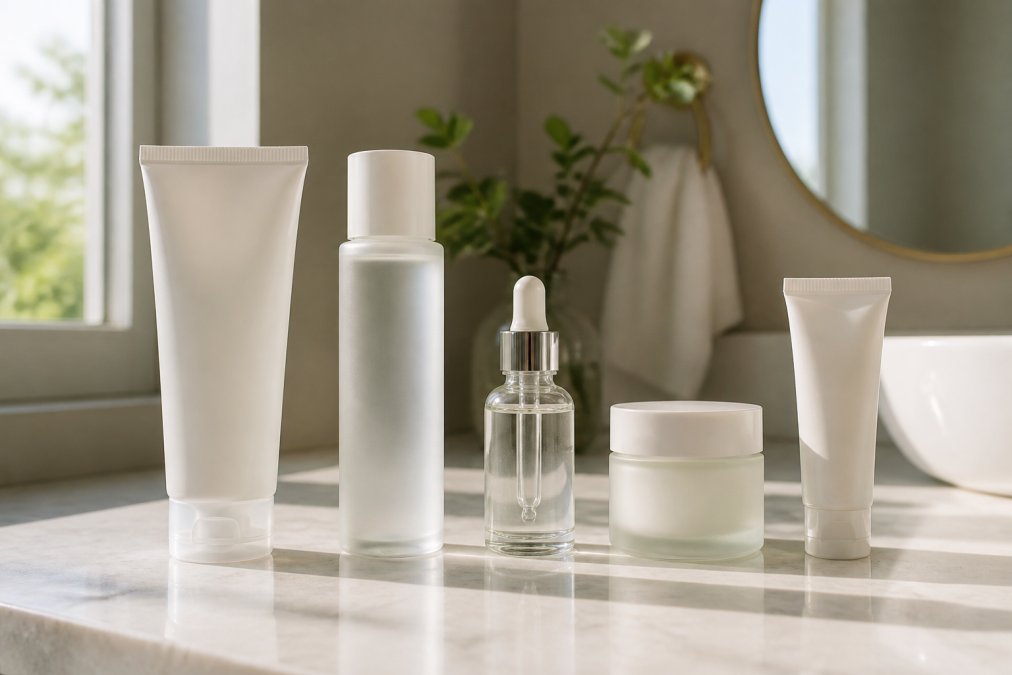
Steps 1-5: Cleansing to Serum
- Oil-based cleanser. Dissolves sunscreen, sebum, and makeup. Massage onto dry skin, then emulsify with water.
- Water-based cleanser. Removes sweat, dirt, and residue the oil step leaves behind.
- Exfoliator. Used two or three times a week, not daily. Chemical exfoliants are gentler than scrubs.
- Toner. Rebalances pH and adds the first layer of hydration. Pat in, don't wipe.
- Essence. A watery hydrator that sits between toner and serum. This is the step Western routines tend to skip entirely.
Steps 6-10: Ampoule to SPF
- Serum. A concentrated treatment aimed at one concern, such as texture or dullness.
- Ampoule. A more potent, more targeted version of a serum, used in shorter bursts.
- Sheet mask. An occasional intensive hydration step, not a daily one.
- Eye cream. A thinner formula for the delicate skin around the eyes.
- Moisturizer and SPF. Moisturizer seals everything in. Sunscreen closes the morning routine.
A common mistake is treating steps 6 and 7 as interchangeable. An ampoule is not a stronger serum you use forever; it is a short course. Run it for a few weeks, then step back to your serum.
The Benefits of Double Cleansing
Double cleansing is the practice of removing the day's buildup in two passes: an oil-based cleanser first, then a water-based one. Its main benefit is that it clears sunscreen and sebum without forcing you to scrub, which protects the skin barrier.
How to Layer Skincare Products Correctly
Layering follows one rule: thinnest texture first, thickest last, with a short pause between each. Wait roughly 30 seconds to a minute so each product can settle before the next goes on. If you apply a watery toner over a heavy cream, the toner sits on top and evaporates instead of absorbing.
The practical sequence looks like this:
| Layer | Product | Texture | Wait Time |
|---|---|---|---|
| 1 | Toner | Watery | 30 seconds |
| 2 | Essence | Watery-light | 30 seconds |
| 3 | Serum | Light gel or fluid | 60 seconds |
| 4 | Ampoule | Concentrated fluid | 60 seconds |
| 5 | Moisturizer | Cream | None, final step |
| 6 | SPF (mornings) | Lotion or fluid | None, final step |
The interaction problem most guides skip
Texture order tells you what goes on first. It does not tell you what should never go on together. That second question is where most irritation happens, and it is the part of layering that gets left out of step-by-step lists.
A few pairings to keep apart:
- Retinoids and exfoliating acids (AHA/BHA). Both accelerate cell turnover. Stacked in the same evening, they over-exfoliate the barrier. A common pattern is acids two nights a week and a retinoid on two or three other nights, never the same night.
- Vitamin C and retinoids. Vitamin C works best at a low pH; retinoids work best at a skin-friendly pH. Layering them in one sitting can blunt both and irritate skin. Most practitioners suggest vitamin C in the morning and retinoids at night.
- Benzoyl peroxide and retinoids. Benzoyl peroxide can degrade some retinoid formulas, so they are usually separated into different times of day.
- Niacinamide and strong acids. Not a hard conflict, but some people flush or tingle when a high-percentage niacinamide serum sits under an acid. Introduce one at a time to see which is responsible.
- Multiple exfoliating acids in one routine. An AHA toner plus a BHA serum plus an exfoliating cleanser is three exfoliation events, not one. Count them.
How to sequence actives across a week
Rather than fitting every active into one evening, spread them:
- Morning: vitamin C (if you use it), moisturizer, sunscreen.
- Evening A: retinoid, moisturizer.
- Evening B: exfoliating acid, moisturizer.
- Evening C: hydration only, toner, essence, serum, cream. No actives.
A note on pH and wait times
Some actives need a low pH to work, and some need time to settle before the next layer. You do not need to chase exact pH numbers at home, but the practical takeaway is: apply low-pH actives (vitamin C, AHA, BHA) to clean, dry skin, wait a minute or two, then continue with hydrating layers. Do not buffer them under a rich cream and expect the same result.
Korean Skincare Routine for Dry Skin
A Korean skincare routine for dry skin leans harder on hydration layers and skips anything that strips. The core change is simple: add more watery layers, reduce exfoliation, and finish with a richer cream.
Korean Glass Skin Tips for a Dewy Complexion
Glass skin describes a complexion that looks smooth, even, and lit from within. It comes from consistent hydration and a healthy barrier, not from a single product.
Revcell Vita Capsule Foam Cleanser →
Morning vs. Evening: Adapting the 10 Steps
Mornings need four steps, evenings need the full set. The full ten-step routine belongs at night, when skin is not defending against sun and pollution and when you have time to let layers settle.
A trimmed morning looks like this:
- Water-based cleanser, or just water if your skin is dry
- Toner or essence
- Moisturizer
- Sunscreen
Common Mistakes to Avoid and How to Simplify
The biggest mistake is doing all ten steps from day one. Start with four and add one product at a time, so you can tell what is actually working. Everything else on this list follows from that one.
Other mistakes worth naming:
- Exfoliating daily instead of two or three times a week
- Applying a sheet mask every night rather than as an occasional treatment
- Skipping sunscreen because the rest of the routine feels thorough
- Mixing strong actives in the same sitting (see the layering section above)
- Buying ten products before knowing your skin type
- Replacing a product that is working because a new one went viral
Skinimalism: fewer steps, same result
The ten-step routine is a framework, not a quota. The steps exist to deliver three things: gentle cleansing, layered hydration, and barrier protection. Once those are covered, additional products are refinement, not requirement.
A minimal routine that still hits the same goals:
- Gentle cleanser, removes the day without stripping.
- Hydrating toner or essence, the first water layer.
- Treatment serum, one active aimed at one concern.
- Moisturizer, seals hydration in.
- Sunscreen (mornings), non-negotiable.
Building it on a budget
A full ten-step stack from premium brands adds up fast. The good news is that the routine's logic does not depend on price. A few principles that keep costs down without gutting results:
- Spend on the treatment step, save on the cleanser. A cleanser rinses off; a serum stays on skin. Put more of your budget into the product that has contact time.
- One active at a time. Buying three actives you cannot layer is more expensive than buying one you can use consistently.
- Buy the format that fits your use. A sheet mask used weekly costs more per year than a hydrating toner used daily. If budget is tight, the toner is the better buy.
- Finish what you own before replacing it. The most common waste in K-beauty is a shelf of half-used products, not a missing step.
- Refill and larger formats. Where a brand offers a refill or a larger size of a product you already use, the per-use cost usually drops.
The barrier-health angle
Glow is a symptom, not the goal. The goal is a skin barrier that holds water in and irritants out. Every simplification above serves that: fewer actives means less irritation, fewer products means you can actually tell what helps, and a consistent minimal routine does more for barrier health over a year than an ambitious ten-step routine you abandon in three weeks.
Frequently Asked Questions
What is the ideal Korean 10 step skincare regimen?
The ideal Korean 10 step skincare routine follows a specific order: oil-based cleanser, water-based cleanser, exfoliator, toner, essence, serum, ampoule, sheet mask, eye cream, and moisturizer, with sunscreen added in the morning. Each step layers from thinnest to thickest consistency to maximize absorption. You can adapt the routine by skipping steps that don't suit your skin type, such as exfoliation for sensitive skin or sheet masks for oily skin.
Do I really need all 10 steps in a Korean skincare routine?
No, you don't need all 10 steps every day. The 10 step Korean skincare routine is a framework, not a strict rule. Many people simplify to 5 or 6 core steps: double cleanse, toner, serum, moisturizer, and SPF. Steps like exfoliators, sheet masks, and ampoules can be used 1-3 times a week. Focus on consistency with the essentials rather than completing every step daily.
What order should I apply Korean skincare products?
Apply products from thinnest to thickest consistency: oil-based cleanser, water-based cleanser, exfoliator, toner, essence, serum, ampoule, sheet mask, eye cream, and moisturizer. Sunscreen is the final step in the morning. This layering order ensures lighter water-based products absorb first without being blocked by heavier creams. Wait 30-60 seconds between steps to let each product settle.
Can the 10-step routine be adapted for dry skin?
Yes, the 10 step Korean skincare routine works well for dry skin with a few adjustments. Choose a hydrating oil-based cleanser, use a gentle water-based cleanser, and don't skip toner or essence. Look for ingredients like hyaluronic acid, ceramides, and squalane. A hydrating toner such as Gongjua Pearl Hyaluronic Deep Toner ($40.00) and a rich cream like DumiDang Black Bean Cream ($45.00) help lock in moisture and support the skin barrier.