Table of Contents
- What Snail Mucin Is and How It's Collected
- Why Snail Mucin Works for Sensitive Skin
- How to Patch Test Snail Mucin Before Full Use
- How to Use Snail Mucin in Your Skincare Routine
- Understanding Snail Mucin Side Effects and Irritation Risks
- Snail Mucin vs Retinol: Which Works Better for Sensitive Skin
- Choosing a Low-Irritation Snail Mucin Formula
- What to Do If You Experience a Reaction
- Frequently Asked Questions
Last Updated: October 18, 2026
What Snail Mucin Is and How It's Collected
Snail mucin, or snail secretion filtrate, is a popular Korean skincare ingredient collected through a process that doesn't harm the snails.
Its key components, proteins, hyaluronic acid, and glycoproteins, work together to support skin hydration and comfort.
Snails release this mucus naturally as a protective layer; manufacturers filter it into a lightweight essence or serum that absorbs quickly.
For snail mucin sensitive skin, this ingredient offers benefits without the heaviness of traditional creams, and it layers well under other products.
Why Snail Mucin Works for Sensitive Skin
Snail mucin suits sensitive skin because it soothes and hydrates without stripping or irritating the skin barrier, helping calm irritation and support moisture retention.
The ingredient works through several mechanisms:
- Hyaluronic acid in snail mucin draws water into the skin
- Proteins help repair the skin barrier
- Natural peptides support skin cell function
Sensitive skin often struggles with dryness and inflammation; snail mucin addresses both, and its lightweight formula rarely clogs pores.
With no harsh actives like retinol or acids, snail mucin suits skin that's already compromised or inflamed. Many people with dehydrated skin see improvement within two to three weeks of consistent use (pubmed.ncbi.nlm.nih.gov).
It also supports natural healing, helping with acne scars and fine lines over time. For sensitive skin, consistency matters more than powerful actives.
How to Patch Test Snail Mucin Before Full Use
Patch testing is essential before any new product on sensitive skin, since even gentle ingredients can trigger reactions.
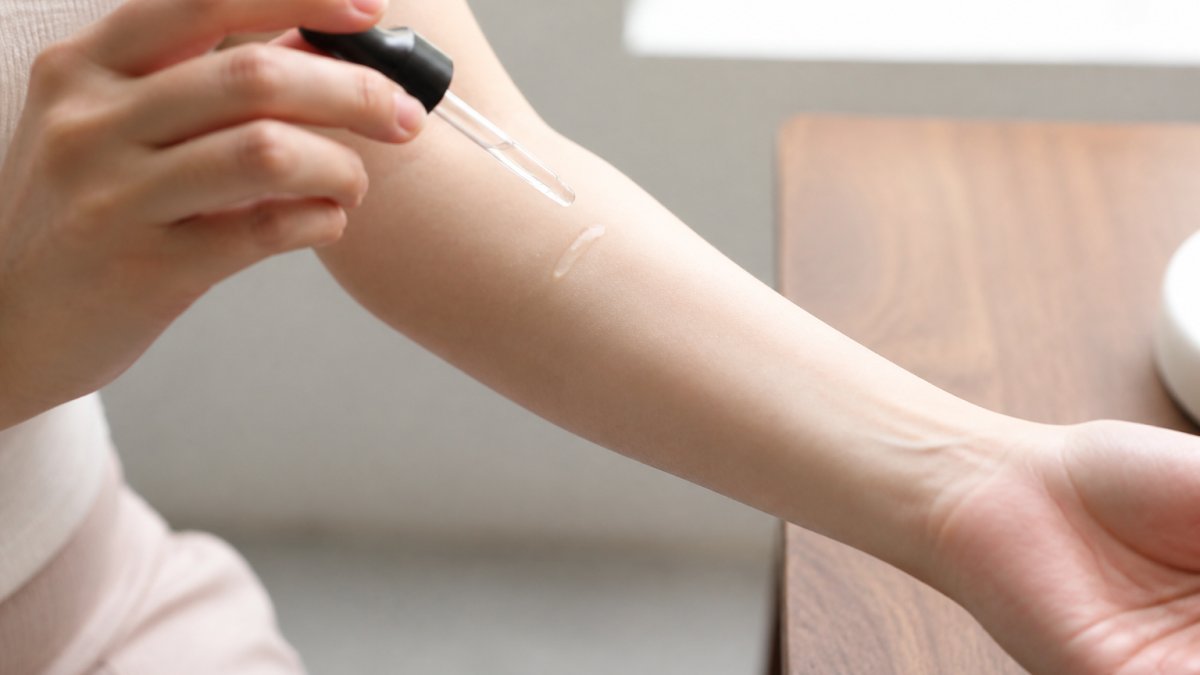
Here's how to patch test snail mucin properly:
- Choose a small, inconspicuous area like your inner arm or behind your ear
- Apply a dime-sized amount of the product
- Leave it untouched for 24-48 hours
- Watch for redness, itching, swelling, or burning
- If no reaction occurs, you can safely use it on your face
If irritation occurs, wash the area with cool water and stop using the product immediately. Wait a few days before trying anything else new.
For sensitive skin, patch testing isn't optional, it's the best way to prevent reactions and irritation.
How to Use Snail Mucin in Your Skincare Routine
Snail mucin fits into your routine as an essence or serum.
Your basic routine order should be:
- Cleanser (removes dirt and oil)
- Toner (prepares skin for absorption)
- Snail mucin essence or serum (hydration and soothing)
- Moisturizer (locks in hydration)
- Sunscreen (morning only)
Apply to damp skin for better penetration. Use gentle patting motions rather than rubbing; a few drops cover your entire face.
Most people use it once or twice daily, morning for hydration before makeup, evening to support repair overnight.
Snail mucin layers well with most products. The Avana Beauty Inc team recommends pairing it with calming toners and gentle moisturizers; Centella asiatica or mung bean extract complement it beautifully.

Wait a minute between layers so each product can absorb; rushing reduces effectiveness.
Understanding Snail Mucin Side Effects and Irritation Risks
Most reactions to snail mucin are mild and short-lived, but "sensitive" and "allergic" are not the same. Sensitivity is temporary irritation that often settles as skin adjusts; allergy is an immune response that can worsen with repeated exposure. Treating them as one category is the most common mistake.
Sensitivity reactions: what they look like
A sensitivity reaction typically appears within minutes to a few hours and stays confined to where you applied the product. Common patterns include:
- Mild redness or flushing that fades within a few hours
- Slight itching, tingling, or a faint stinging sensation
- Temporary tightness or dryness
These usually resolve within 24 to 72 hours once you stop using the product. If they persist beyond a week, pause and simplify your routine.
Allergy warning signs: stop and seek advice
A true allergy behaves differently. Watch for:
- Swelling of the lips, eyelids, or face
- Hives or a raised, spreading rash
- Persistent itching that intensifies rather than fades
Who should be especially cautious
Some people carry a higher baseline risk and should speak with a dermatologist or pharmacist before trying snail mucin:
- Anyone with a known allergy to dust mites, shellfish, or other mollusks, because cross-reactivity is plausible even though it is not well documented
- People with a history of contact dermatitis or multiple cosmetic allergies
- Those with active eczema flares, open skin, or a compromised barrier
A common pattern is that people with known mollusk or dust mite sensitivity are advised to patch test twice, spaced a week apart, before any facial use.
Why reactions get misattributed
Irritation is often blamed on snail mucin when the real trigger is something else in the formula, fragrance, essential oils, alcohol, or a preservative, or layering too many new products at once. Introducing one product at a time, with one to two weeks between changes, is the only reliable way to know what your skin is reacting to.
Sun sensitivity, clarified
Snail mucin does not cause photosensitivity on its own, but well-hydrated skin can feel more reactive to heat and sun, and any exfoliation or active used alongside it can increase sensitivity. Daily broad-spectrum sunscreen remains essential.
DumiDang Mung Bean Essence Toner (200mL) →
If you have a history of severe allergic reactions or an autoimmune skin condition, raise snail mucin with your dermatologist before use.
Snail Mucin vs Retinol: Which Works Better for Sensitive Skin
Snail mucin supports skin repair without aggression, hydrating and soothing rather than forcing change, making it safer for reactive skin and usable immediately without a transition period.
The real answer is that you don't have to choose. Many people use both ingredients in different phases:
- Start with snail mucin to build a healthy skin barrier
- Once your skin is strong, introduce retinol slowly
- Use snail mucin on non-retinol nights for hydration and recovery
For sensitive skin, this works better than jumping straight to retinol. Snail mucin supports tolerance-building by keeping skin hydrated and calm.
If you have active inflammation or barrier damage, snail mucin is the better choice now. Save retinol for when your skin is healthier.
Choosing a Low-Irritation Snail Mucin Formula
For sensitive skin, the formula matters as much as the ingredient. Two products can both list snail secretion filtrate first and behave completely differently on reactive skin. Use this checklist on any bottle.
Step 1: Read the first five ingredients
Ingredient lists are ordered by concentration up to the 1% mark, so the top five tell you most of what you need.
- Snail secretion filtrate should appear first or second. If it sits near the bottom, you are paying for a trace amount.
- Water, butylene glycol, and glycerin are common, generally well-tolerated carriers. Butylene glycol can sting a small minority of sensitive users, so note it if you have reacted to it before.
- Watch for alcohol denat. or ethanol high on the list. Small amounts can be fine, but a high placement signals a drying formula.
Step 2: Screen for common irritants
Fragrance is the most common cause of cosmetic contact reactions. Look for "fragrance," "parfum," or allergens such as limonene, linalool, citronellol, and geraniol. Essential oils like lavender, citrus peel, peppermint, and eucalyptus are natural but still common triggers.
Other flags for reactive skin:
- Essential oils and plant extracts marketed as "natural" scent
- High concentrations of exfoliating acids (AHA, BHA, PHA) in a product marketed as a hydrating essence
- Added actives such as retinol or vitamin C, which turn a soothing step into a treatment step
Step 3: Check the preservative system
Preservatives are necessary, but some irritate sensitive skin more than others. Phenoxyethanol and ethylhexylglycerin are generally well tolerated; methylisothiazolinone and methylchloroisothiazolinone are stronger sensitizers best avoided in leave-on products. If you react to a specific preservative, scan for it by name.
Step 4: Match texture to your skin
Texture is not cosmetic preference; it affects how the product behaves on a compromised barrier.
- Watery essences absorb quickly and layer well under moisturizer, making them the easiest starting point for reactive skin.
- Gel serums suit combination and oily sensitive skin.
- Creamier formulas work as a moisturizer step but can feel occlusive on acne-prone skin.
If your barrier is currently compromised, start with the lightest texture and add a separate, bland moisturizer on top rather than choosing a rich all-in-one.
Step 5: Prefer short, focused formulas
A shorter ingredient list gives you fewer variables to react to. A formula built around snail secretion filtrate, a humectant or two, a soothing agent such as allantoin or Centella asiatica, and a simple preservative system is easier to troubleshoot than a 40-ingredient "miracle" serum.
Step 6: Buy a small size first
Even a well-formulated product can disagree with your skin. A mini size lets you complete a patch test and a two-week trial without committing to a full bottle. Keep the batch code and receipt in case you need to report a reaction.
A note on concentration claims
Marketing language like "96% snail mucin" usually refers to the filtrate's concentration in the formula, not how much penetrates skin. Higher concentration isn't automatically better for sensitive skin; a slightly lower concentration paired with a bland, fragrance-free base is often safer.
If you are comparing two products and cannot decide, choose the one with fewer known irritants and a lighter texture, then patch test. That approach will serve you better than any ranking list.
What to Do If You Experience a Reaction
Reactions to snail mucin are uncommon but can happen. Knowing how to respond protects your skin.
If you experience mild irritation:
- Stop using the product immediately
- Cleanse gently with cool water
- Apply a calming moisturizer
- Avoid other new products for several days
- Wait before reintroducing anything new
Mild reactions often resolve within 24-48 hours as your barrier adjusts.
For moderate reactions with persistent redness or swelling:
- Use only gentle, fragrance-free products
- Apply cool compresses to calm inflammation
- Skip actives and focus on hydration
- Contact your dermatologist if symptoms worsen
Severe allergic reactions require immediate attention.
After a reaction, your skin needs recovery time. Focus on hydration and barrier support.
Finding the right hydrating ingredient for sensitive skin takes patience and careful testing.
Frequently Asked Questions
Is snail mucin suitable for sensitive skin?
Yes, snail mucin can work well for sensitive skin when introduced carefully. The secretion filtrate contains soothing compounds like allantoin and hyaluronic acid that support hydration and calm irritation. However, sensitive skin varies widely, some people tolerate it immediately, while others experience initial redness or itching. Always patch test first on a small area of skin for 24-48 hours before applying to your full face. Start with the lowest concentration and increase gradually over 1-2 weeks to allow your skin barrier to adjust.
How should you patch test snail mucin?
Apply a small amount of snail mucin serum or essence to a discrete area behind your ear or on your inner forearm. Leave it unwashed for 24-48 hours and monitor for redness, itching, swelling, or burning. If no reaction occurs, you can test it on a small facial area (like the jawline) for another 3-5 days before incorporating it into your full routine. If any irritation develops during testing, stop immediately, rinse with cool water, and wait several days before trying again or consulting a dermatologist.
What are the main side effects of snail mucin?
Most people tolerate snail mucin well, but sensitive skin can react with redness, itching, swelling, or mild breakouts, especially during the first week of use. Allergic reactions are rare but possible, particularly if you're sensitive to shellfish or have a history of allergies. Some formulations contain additional ingredients like tea tree oil or fermented extracts that may cause irritation independently of the snail mucin itself. Overuse can also lead to over-hydration or temporary congestion. If irritation persists beyond 5-7 days, discontinue use and allow your skin to return to baseline before trying again.
Can you use snail mucin and retinol together?
Snail mucin and retinol serve different purposes, snail mucin hydrates and soothes, while retinol accelerates cell turnover and addresses fine lines. You can use both in the same routine, but introduce them separately over several weeks. Start with snail mucin first to establish tolerance, then add retinol gradually. If using both, apply snail mucin serum to clean, damp skin first, then layer retinol on top. Snail mucin's hydrating properties can actually help buffer retinol irritation on sensitive skin. Avoid using them on consecutive nights initially; alternate every other night until your skin adapts.