Table of Contents
- Why Skin Type Matters Before You Buy Any K-Beauty Product
- How to Identify Your Skin Type: Two Tests You Can Do Tonight
- What Each Skin Type Looks and Feels Like
- Skin Condition vs Skin Type: Why Dehydration Is Not Dryness
- How Your Skin Type Shifts With Seasons and Environment
- Matching Ingredients to Your Skin Type
- Building a Korean Skincare Routine for Dry Skin
- Common Mistakes When Typing Your Skin
- Frequently Asked Questions
Last Updated: October 1, 2026
Why Skin Type Matters Before You Buy Any K-Beauty Product
Knowing your skin type is the single most useful thing you can do before spending money on Korean skincare. It tells you which textures to buy, which ingredients to avoid, and how to layer products without irritation.
The catch is that most people guess wrong.
A common mistake is typing your skin once, years ago, and treating that label as permanent. Skin shifts with age, hormones, medication, travel, and the weather. If you want to know how to identify your skin type for k-beauty properly, you need a repeatable method, not a one-time quiz. This guide gives you two tests you can run tonight, a clear breakdown of what each type looks and feels like, and the ingredient matches that actually work.
One more thing before we start: the K-beauty aisle is built around layering. Thin hydrating toners, essences, serums, and creams are designed to be stacked. That system only works when it's aimed at the right target. Buy for someone else's skin and you'll blame the products. Buy for yours and the routine does the work.
How to Identify Your Skin Type: Two Tests You Can Do Tonight
You can identify your skin type at home with two simple tests: the wash test and the blotting sheet method. Both take under an hour, need no special tools, and work best on a bare face. Run them on a normal day, not right after a workout or a long flight.
The Wash Test Method
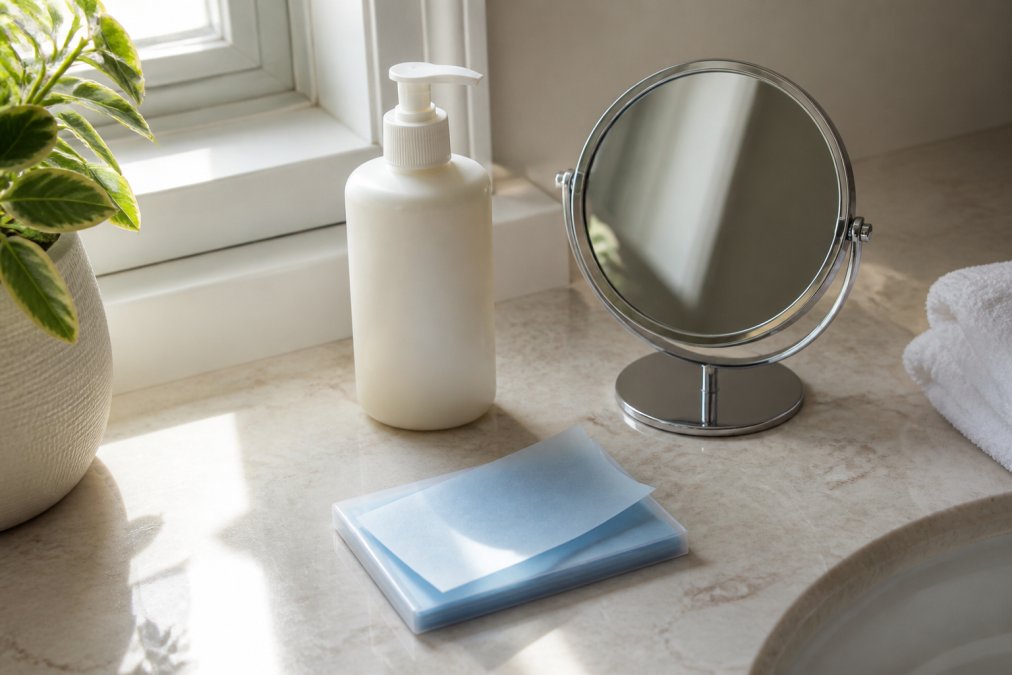
The wash test shows how your skin behaves when nothing is added to it. Cleanse with a gentle, non-stripping face wash, then pat dry and change nothing else. Skip toner, serum, and moisturizer.
Wait 30 to 60 minutes. Then check in:
- Shiny all over → oily skin
- Tight and flaky → dry skin
- Shiny down the center, normal on the cheeks → combination skin
- Comfortable and calm → normal skin
- Red, itchy, or stinging → you're likely sensitive, which is a separate question from type
The T-zone, the strip across your forehead, nose, and chin, is the key zone to watch. Combination skin almost always shows up there first.
The Blotting Sheet Method
The blotting sheet method maps where your skin produces oil. Wait two hours after cleansing with no products on. Press a blotting sheet against different areas of your face and hold it up to the light.
- Oil across the whole sheet → oily skin
- Oil only in the center panel → combination skin
- Barely any oil → dry skin
- No oil, no tightness → normal skin
For best results, use a separate sheet per zone. One sheet pressed across the whole face tells you almost nothing.
What Each Skin Type Looks and Feels Like
Each skin type has a distinct pattern of shine, texture, and comfort. Learn the pattern and you can type your skin in a mirror in under a minute. Here's what to look for.
Oily Skin: Enlarged Pores and Midday Shine
Oily skin shows visible shine by midday, especially on the forehead and nose. Pores look larger, and makeup tends to slide or break down. Blackheads and congestion are common because sebum production runs high.
The upside: oily skin often ages more slowly, since natural oil supports moisture retention.
Dry Skin: Tightness, Flakiness, and Dullness
Dry skin feels tight after cleansing and can look dull or flaky by afternoon. Rough patches and a lack of radiance are typical. This is a skin type, meaning it's your baseline, not a temporary state.
Combination, Sensitive, and Normal Skin
Combination skin is oily in the T-zone and normal or dry on the cheeks. It's the most common type and the most annoying to shop for, because one product rarely suits the whole face.
| Skin Type | What You Notice | Main Need |
|---|---|---|
| Oily | Midday shine, large pores | Balance oil, stay light |
| Dry | Tightness, flakiness, dullness | Add and seal in moisture |
| Combination | Shiny T-zone, dry cheeks | Zone-by-zone care |
| Sensitive | Redness, stinging, reactions | Gentle, minimal formulas |
| Normal | Comfortable, even tone | Maintain and protect |
Skin Condition vs Skin Type: Why Dehydration Is Not Dryness
A skin type is your skin's permanent baseline. A skin condition is a temporary state layered on top of it. This distinction matters more than almost anything else in skincare, because the two get treated the same way and shouldn't be.
How Your Skin Type Shifts With Seasons and Environment
Your skin type is not fixed. It moves with the seasons, the climate, and your daily environment, and treating it as static is one of the most common reasons a routine that worked in July fails in January.
Other things that move the needle:
- Air conditioning dries skin out year-round
- Long flights and low-humidity cabins strip moisture fast
- Hormonal changes can raise sebum production
- Age tends to reduce oil production over time
- Medications for acne or other conditions can dry skin significantly
Matching Ingredients to Your Skin Type
Ingredient matching is where K-beauty gets specific, and where a little knowledge pays off fast. The same three categories show up in nearly every product, and each one does a different job.
Humectants, Emollients, and Occlusives
Humectants pull water into the skin (The Role of Moisturizers in Addressing Various Kinds of Dermatitis: A Review). Look for glycerin, hyaluronic acid, and panthenol. They're the first step of hydration and work for every skin type.
Actives and the Patch Test
Actives like vitamin C, niacinamide, and exfoliating acids can transform skin texture, fade hyperpigmentation, and boost radiance. They can also cause sensitization if you start too fast.
Building a Korean Skincare Routine for Dry Skin
A Korean skincare routine for dry skin follows a simple rule: layer water in, then seal it. Thin hydrating products go first, richer ones go last. That's the whole system.
- Oil cleanser to break down sunscreen and makeup
- Gentle water cleanser as the second step of double cleansing
- Hydrating toner, patted in with your palms
- Essence or ampoule for a concentrated layer of moisture
- Serum targeted at your main concern
- Moisturizer to lock everything in
- Sun protection every morning, no exceptions
Common Mistakes When Typing Your Skin
Most skin typing goes wrong for the same handful of reasons. Avoid these and your results will be far more accurate.
- Testing on a day you used actives. Acids and retinoids change how your skin behaves. Test on a plain day.
- Confusing a reaction with a type. A breakout from a new product isn't your skin type. It's a reaction.
- Typing once and never again. Skin changes with seasons, age, and hormones. Retest regularly.
- Judging from a photo. Filters, lighting, and phone cameras distort texture and shine.
- Skipping the wait time. The wash test needs a full 30 to 60 minutes to mean anything.
- Assuming oily skin doesn't need moisturizer. It does. Skipping it can push oil production higher.
- Ignoring the eye area. It's often drier than the rest of your face and needs its own care.
Frequently Asked Questions
How do I tell which skin type I am?
Wash your face with a gentle cleanser, pat dry, and wait 30 minutes without applying anything. Then press blotting sheets on your forehead, cheeks, and chin. If every sheet shows oil, you have oily skin. If none do and your face feels tight, it is dry. Oil only on your T-zone points to combination skin. Sensitivity shows up as redness or stinging rather than oil level, so note that too.
What are the common signs of dehydrated skin compared to dry skin?
Dehydrated skin lacks water, not oil. Signs of dehydrated skin include dullness, sudden fine lines, tightness after cleansing, and a rough texture that still produces some oil. Dry skin lacks oil, so it feels tight all day, flakes, and rarely shines. Dehydration is a temporary condition you can fix with humectants and barrier repair, while dry skin is a type that needs emollients and occlusives long term.
Can my skin type change over time due to seasonal weather?
Yes. Cold outdoor air and dry indoor heating pull moisture from your skin, so many people who are combination in summer feel dry by January. The reverse happens in humid months, when sebum production rises and pores look larger. Track your skin each season instead of assuming your type is fixed, and adjust your Korean skincare routine for dry skin in winter by adding a cream with occlusives.
How do I identify if I have combination skin?
Combination skin is the most common pattern: an oily T-zone across the forehead, nose, and chin, with normal or dry cheeks. The blotting sheet test confirms it when only the T-zone sheets show oil. For K-beauty, this means layering differently, using lighter hydrating layers like essences and serums on the T-zone and a richer cream on the cheeks, rather than one product across your whole face.
Figuring out your skin type is the easy part. The hard part is finding products that match it without guessing, overpaying, or waiting weeks for a package to arrive. Avana Beauty Inc curates premium Korean skincare for exactly that problem, with authentic brands, clear product details, and routines built around real skin needs. Browse the collection to find your match, or start with a complete three-step bundle and let the layering do the work.