Table of Contents
- What Fermented Skincare Is and How Fermentation Works
- How Fermented Skincare Enhances Absorption and Bioavailability
- Fermented Skincare Ingredients and Their Specific Effects
- Skin Barrier Support and Hydration Benefits
- Fermented Skincare for Sensitive Skin
- Fermented Skincare for Dry Skin
- How to Use Fermented Skincare in Your Routine
- Anti-Aging, Brightening, and Collagen Support
- Frequently Asked Questions
Last Updated: October 5, 2026
What Fermented Skincare Is and How Fermentation Works
Fermented skincare refers to beauty products made with ingredients that have undergone fermentation, a biochemical process where microorganisms break down compounds into smaller, more bioavailable forms, the foundation of fermented skincare benefits. The fermentation process transforms plant extracts, botanicals, and other raw materials into nutrient-dense concentrates that your skin can absorb more efficiently than their non-fermented counterparts.
Beneficial microorganisms like lactobacillus produce enzymes, amino acids, vitamins, and peptides that break down active compounds into smaller, more bioavailable forms your skin can recognize and use more easily.
Unlike standard ginseng extract, fermented ginseng has been partially processed by microorganisms, allowing it to penetrate deeper and work faster. Fermentation also creates postbiotics, beneficial compounds that support your skin's microbiome and barrier function.
How Fermented Skincare Enhances Absorption and Bioavailability
The primary advantage of fermented ingredients is enhanced absorption, bioavailability measures how much of an ingredient your skin can actually use.
What the Research Actually Shows
Laboratory studies show fermentation reduces molecular size; some report peptide chains reduced to 1,000 daltons or smaller, which should theoretically improve skin penetration.
However, in-vitro evidence doesn't automatically translate to measurable skin benefits in real people. The skin barrier is complex, and factors like pH, formulation, and individual variation affect whether smaller molecules penetrate and produce visible results.
Human clinical studies on fermented skincare are limited. Most measure hydration, elasticity, or fine lines after 4-12 weeks and show modest results, typically 10-20% improvement compared to placebo, with small study sizes (under 50 participants).
Postbiotics: Stable but Still Emerging
Postbiotics (fermentation metabolites like short-chain fatty acids and organic acids) are shelf-stable and appear in many fermented products. Laboratory evidence suggests they support barrier function and reduce inflammation, but human clinical evidence is limited. Most postbiotic claims extrapolate from gut health research.
The Absorption Question: What We Know and Don't Know
Fermented ingredients likely absorb more efficiently than non-fermented versions, but "more efficient" doesn't mean "dramatically better" in real-world use. The final product's absorption depends on the entire formulation, not just the fermented component.
Fermented skincare delivers active ingredients more effectively than non-fermented extracts, but the difference is incremental. For sensitive skin, the gentler nature may matter more than absorption advantage.
Fermented Skincare Ingredients and Their Specific Effects
Not all fermented ingredients work the same way. Understanding what each fermented extract does helps you choose products aligned with your skin goals.
Black Bean Fermented Complex
Black bean fermentation produces amino acids, vitamins, and antioxidants that break down into peptides, building blocks your skin uses for elasticity and renewal.
Black bean fermented extracts are particularly effective for dry and mature skin because peptides signal your skin to maintain moisture while amino acids support collagen structure. The DumiDang Black Bean Bundle combines a toner, serum, and cream for barrier support and moisture retention.

Black bean fermented products reduce the appearance of fine lines by supporting elasticity and hydration, making them valuable for loss of firmness or dullness.
Ginseng Extract and Other Fermented Botanicals
Fermented ginseng is a K-beauty cornerstone because fermentation breaks down ginsenosides (large antioxidant compounds) into smaller, more absorbable forms (pubmed.ncbi.nlm.nih.gov).
Fermented ginseng penetrates deeper, delivering stronger antioxidant defense and soothing effects. It's particularly valuable for sensitive skin because it reduces irritation while strengthening the barrier, and supports skin renewal and brightening.
Other fermented botanicals like fermented rice bran, fermented soybean, and fermented yeast extracts follow the same principle: fermentation makes their beneficial compounds more bioavailable, more stable in formulas, and more effective on skin.
Skin Barrier Support and Hydration Benefits
Your skin barrier, the outermost layer of dead skin cells and lipids, defends against irritation, dehydration, and damage (pubmed.ncbi.nlm.nih.gov). A compromised barrier leads to sensitivity, dryness, and accelerated aging. Fermented skincare supports barrier function through multiple mechanisms.
Postbiotics signal healthy bacteria to strengthen barrier lipids and maintain optimal pH. Amino acids and peptides reinforce barrier integrity, while fermented ingredients' lower pH supports barrier function better than alkaline products.
Hydration benefits come from barrier support and fermented extracts that draw moisture into skin cells. Many people notice plumper, more resilient skin because the barrier functions optimally.
Fermented Skincare for Sensitive Skin
Sensitive skin reacts to many ingredients because the barrier is compromised and the microbiome is imbalanced. Fermented skincare addresses both issues.
Postbiotics support beneficial bacteria, restoring microbiome balance and reducing the inflammatory cascade that causes redness and irritation. Smaller molecular size means less irritation and lower reaction risk.
Fermented skincare is also naturally gentler because the fermentation process removes harsh compounds and creates a more stable, pH-balanced formula. Many people with sensitive skin find that fermented products cause fewer reactions than their non-fermented equivalents.
Fermented Skincare for Dry Skin
Dry skin needs hydration, barrier support, and ingredients that won't strip residual moisture. Fermented skincare excels in all three areas. The amino acids and peptides in fermented extracts support barrier lipids, preventing moisture loss. The postbiotics maintain microbiome balance, which is essential for barrier function. And fermented ingredients are typically less drying than their non-fermented counterparts because they're gentler and more efficiently absorbed.
For very dry skin, layering fermented skincare products maximizes hydration. A fermented toner preps the skin, a fermented serum delivers concentrated benefits, and a fermented cream locks everything in. This approach, using multiple fermented products in sequence, is particularly effective because each layer works synergistically with the others.
How to Use Fermented Skincare in Your Routine
Fermented skincare fits into your routine much like any other skincare product, but introduction method, layering order, and compatibility with active ingredients all matter for both efficacy and safety.
Starting Fermented Skincare: Patch Testing and Introduction
Even though fermented products are generally gentler than harsh actives, they are not universally tolerated. If you have reactive, sensitized, or allergy-prone skin, patch test before full-face application.
Choose a small area, inner arm or behind the ear, and apply a small amount of the fermented product once daily for 3-5 days. Watch for redness, itching, burning, or swelling. If no reaction occurs, you can proceed to full-face use. If irritation appears, wait 1-2 weeks before trying again, or skip that product.
When introducing a new fermented product to your full routine, start with the lowest frequency: 2-3 times per week for the first week, then gradually increase to daily use over 2-3 weeks. This allows your skin microbiome and barrier to adjust without overwhelming them. Some people, especially those with very reactive skin, may need to introduce fermented products even more slowly, once or twice weekly for a full month.
If you are introducing multiple fermented products at once (e.g., a toner and serum together), you cannot isolate which product caused a reaction if one occurs. Introduce one product at a time, waiting at least 1 week before adding the next.
Layering Order and Application Tips
Apply fermented products in order of texture, from lightest to heaviest: essence or toner first, then serum, then cream. This ensures each product absorbs fully before the next layer is applied, maximizing efficacy.
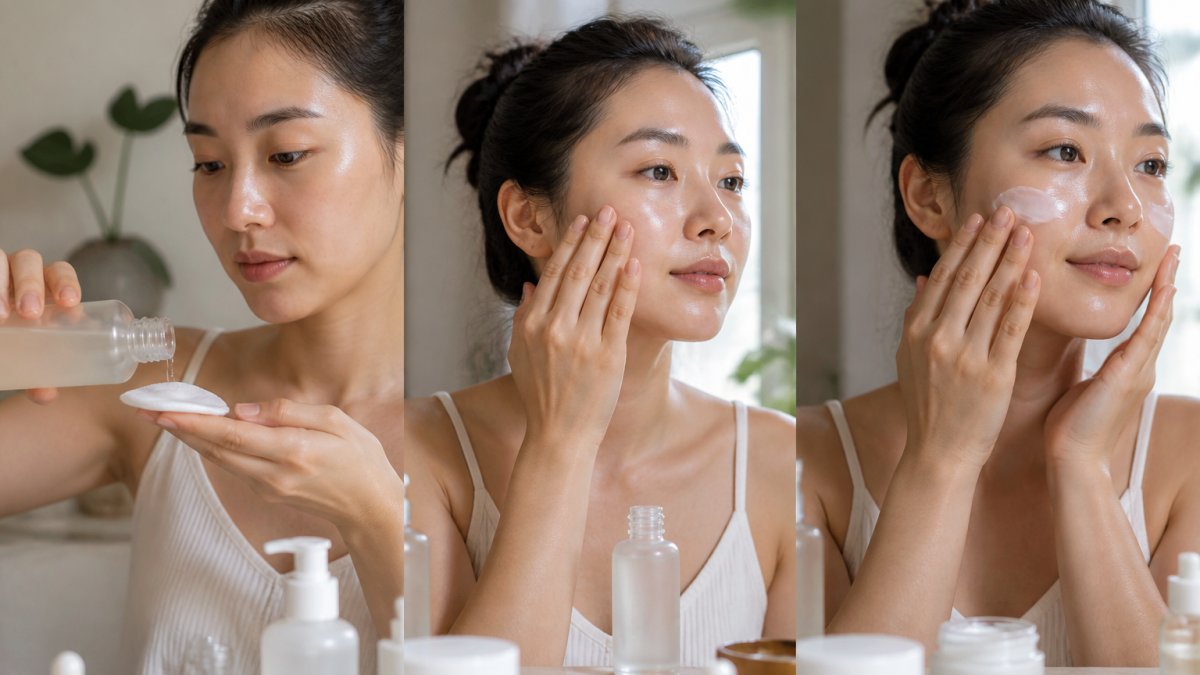
Start with a fermented essence or toner to hydrate and prep your skin. Pat it in gently with your hands or a cotton pad until fully absorbed. Follow with a fermented serum, which are typically more concentrated and should be applied to damp skin so they absorb efficiently. Finish with a fermented cream to lock in hydration and provide occlusion.
For best results, use fermented skincare morning and evening. Many people see visible improvements in hydration, elasticity, and skin tone with consistent use.
Compatibility with Active Ingredients and Timing
Fermented skincare plays well with most active ingredients, but timing and sequencing matter to avoid irritation and maximize efficacy.
With Vitamin C, Niacinamide, and Other Hydrating Actives: Apply water-soluble actives (vitamin C serums, niacinamide) to clean, dry skin first, allow them to absorb fully (5-10 minutes), then layer fermented products on top.
With Exfoliating Acids (AHAs, BHAs) and Enzymes: Fermented skincare complements gentle exfoliants well. If you use an exfoliating acid 2-3 times per week, apply it on those nights, then use fermented products on non-exfoliation nights and every morning.
With Retinoids and Retinol: Retinoids are potent and can irritate, especially when combined with other actives.
With Peptides and Collagen-Support Ingredients: Many fermented products already contain peptides. Layering multiple peptide products is not harmful but is redundant; choose one peptide-rich product per routine step rather than stacking them.
With Sunscreen: Apply fermented products in the morning, allow them to set (2-3 minutes), then apply sunscreen as the final step. Fermented products do not interfere with sunscreen efficacy.
Frequency and Long-Term Use
Unlike actives that can cause irritation with overuse, fermented skincare is generally safe for daily, twice-daily use indefinitely. However, if you notice your skin becoming dependent (feeling uncomfortable without the product) or if hydration becomes excessive, reduce frequency to once daily or every other day. Most skin types benefit from consistent daily use, with visible improvements in barrier function and hydration appearing within 2-4 weeks.
Anti-Aging, Brightening, and Collagen Support
Among the key fermented skincare benefits are visible anti-aging results delivered through multiple pathways. The peptides and amino acids in fermented extracts support collagen structure directly, helping maintain skin elasticity and reduce the appearance of fine lines. Antioxidants from fermented botanicals protect against free-radical damage, which accelerates visible aging.
Brightening effects come from fermented ingredients' ability to support cell renewal and reduce the appearance of dark spots and uneven skin tone. Fermented ginseng and other botanicals contain compounds that inhibit melanin overproduction, leading to a more even, luminous complexion over time.
For collagen support specifically, fermented extracts containing peptides work synergistically with your skin's natural collagen-building processes. They signal fibroblasts to maintain collagen production and support the structural integrity of existing collagen. Combined with consistent use and sun protection, fermented skincare can visibly reduce fine lines and improve skin firmness.
At Avana Beauty Inc, we've curated a selection of fermented skincare products designed to deliver these benefits. The DumiDang Black Bean Serum combines black bean fermented complex with vegetable collagen and hyaluronic acid to support elasticity and hydration, while the DumiDang Black Bean Cream locks in moisture and supports the appearance of skin renewal with adenosine, which is known to support skin elasticity.


Fermented skincare represents a meaningful shift in how K-beauty formulates for efficacy and skin health. We recommend starting with a complete fermented routine like the DumiDang Black Bean Bundle to experience barrier support, hydration, and visible improvements in skin texture and tone.
Frequently Asked Questions
What is the difference between fermented skincare and probiotic skincare?
Fermented skincare refers to products made with ingredients that have been fermented by microorganisms, creating smaller molecular compounds and enzymes. Probiotic skincare contains live beneficial bacteria, while postbiotics are the metabolic byproducts left after fermentation. Fermentation filtrates (the liquid remaining after fermentation) contain enzymes, peptides, and vitamins without live organisms. Most fermented skincare products on the market use fermentation filtrates rather than live probiotics, as they're more stable and shelf-stable.
Can fermented skincare help with dry skin?
Yes. Fermented skincare products are particularly effective for dry skin because fermentation breaks down ingredients into smaller molecules that penetrate deeper, delivering hydration more efficiently. The fermented compounds help strengthen the skin barrier, which is essential for moisture retention. Products with fermented black bean extract, for example, combine hydration with barrier support. Pairing a fermented essence toner with a serum and cream, like the DumiDang Black Bean Bundle, creates a layered approach that locks in moisture throughout the day.
Is fermented skincare safe for sensitive skin?
Fermented skincare can be suitable for sensitive skin because the fermentation process breaks down ingredients into gentler, less irritating forms. However, sensitivity varies by individual. Start with a patch test on a small area of skin before full application. Fermented ingredients like ginseng extract and black bean are known for soothing properties, but if you have a history of reactions to specific ingredients, check the full ingredient list. If you experience irritation, discontinue use and consult a dermatologist.
How does fermented skincare improve skin texture and fine lines?
Fermentation produces peptides, amino acids, and enzymes that support collagen production and cell renewal. These compounds help improve skin elasticity and reduce the appearance of fine lines over time. Fermented extracts also enhance moisture retention, which plumps the skin and makes fine lines less visible. Consistent use of fermented serums and creams containing hydrating compounds and collagen-supporting ingredients can smooth skin texture and improve overall skin resilience.