Last Updated: November 2, 2026
Quick Summary
Choose sun protection patches by scoring candidates on seven points: UV rating basis, test method, material, fit, wear time, ingredients and seller verification, eliminating any that fail on rating basis, test method or seller verification first. Treat patches as targeted coverage for cheekbones, nose bridge and under-eyes, not a replacement for full-face sunscreen.
- A patch protects only the skin it covers, so it supplements rather than replaces broad-spectrum sunscreen.
- Look for a tested finished-product SPF and PA grade, not just a UV-filtering ingredient on the label.
- Apply patches to clean, dry skin and let skincare absorb first, or the film will slide off.
- Sensitive skin does best with minimal-ingredient films and a patch test on the inner arm.
- The Revcell Hidden Sun Patch comes in five pouches of two patches for $40.00 CAD.
Table of Contents
- What K-Beauty Sun Protection Patches Actually Do
- How to Compare Patch Specifications Before You Buy
- Korean UV Patches for Face: Coverage, Placement and Fit
- How to Use Sun Patches Correctly
- Sun Patches vs Sunscreen: What Each One Covers
- Matching Patches to Skin Type and Real-World Conditions
- Buying Authentic Korean Skincare Online
- Picking Your First Sun Patch Pair
- Frequently Asked Questions
What K-Beauty Sun Protection Patches Actually Do
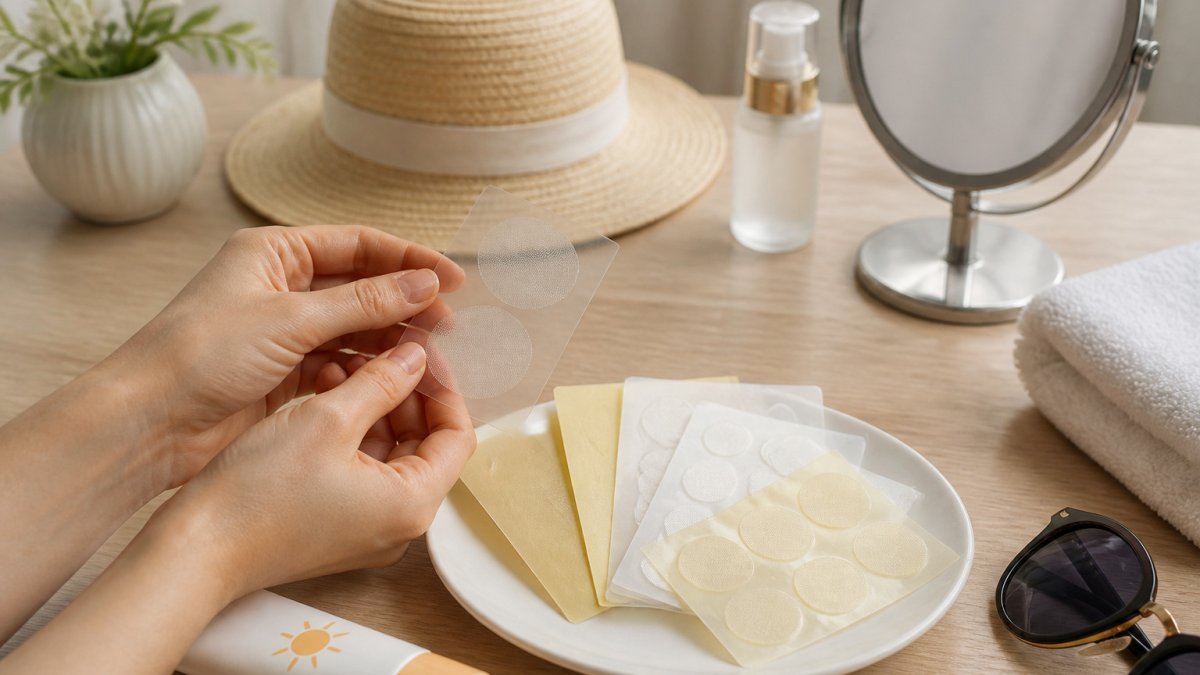
Sun protection patches are small, transparent adhesive patches that sit directly on the skin to shield a targeted area from UV exposure. This guide explains what they can and cannot do, so you can decide whether choosing the best K-beauty sun protection patches makes sense for your routine.
Here's the honest answer up front: patches are a supplement, not a replacement. The best way to think about sun protection patches is as extra coverage for small, high-risk zones, not as your primary SPF. A patch covers a few square centimeters. A sunscreen covers your whole face, neck and ears.
That distinction matters because UV exposure is cumulative. Sunburn, premature aging and pigmentation all build over years of small, repeated exposures, especially on the cheekbones, nose bridge and under-eye area where skin is thin. Patches concentrate protection exactly there.
The Evidence Behind Patch UV-Protection Claims
Patch makers market their products with SPF numbers and PA grades, but the evidence base is thinner than the packaging suggests. Dermatologists quoted in HuffPost's reporting on facial sun patches note both benefits and downsides to facial patches marketed as an extra layer of sun protection.
What we can say with confidence is this: a patch only protects the skin it covers. It does not shade the surrounding area, and it does not replace a broad-spectrum sunscreen applied to the rest of your face. If you want to understand how UV damage accumulates and which skincare ingredients address it, our guide to the best Korean skincare for sun damage covers that ground.
How to Compare Patch Specifications Before You Buy
Most patch labels are not written to a single shared template, so comparing two products side by side takes more than scanning for the biggest SPF number. Use the checklist below to evaluate what a label actually tells you, and treat missing information as a reason to keep looking rather than a neutral detail.
1. UV rating and what it is based on. A stated SPF or PA grade is only meaningful if the label says how it was determined. Look for language indicating the patch was tested as a finished product, not just that it contains a UV-filtering ingredient. A patch that lists an ingredient with known UV absorption but gives no finished-product rating is making a weaker claim than one that states a tested SPF and PA grade together.
2. Test method and standards referenced. Korean sunscreens are typically rated using in vivo SPF testing and in vitro or in vivo UVA methods aligned with international standards, and a reputable patch label will at least name the standard or method behind its number. If a product shows an SPF value with no method, treat the number as marketing until the seller can confirm how it was measured.
3. Material and construction. The film type determines breathability, transparency and how the patch behaves under makeup. Check whether the patch is described as breathable and whether the adhesive is listed as skin-friendly, since facial skin is thinner and more reactive than the inner arm.
4. Fit and coverage shape. Compare the dimensions and shape against the zone you plan to cover. A patch sized for the cheekbone will not wrap the nose bridge cleanly, and an oversized patch will lift at the edges.
5. Wear-time claim. Note the stated wear time and whether the product is single-use. A patch marketed for all-day wear needs an adhesive that survives movement and sebum; a short-wear patch is better suited to a commute or a lunchtime errand.
6. Ingredient list. Patches that sit on the skin for hours are, in effect, a leave-on product. If your skin is sensitive, scan for fragrance and known irritants, and prefer shorter ingredient lists.
7. Seller verification. Because counterfeit and expired Korean skincare circulates online, confirm the seller's sourcing and batch-code checks before trusting any specification printed on a listing.
A practical way to use this list is to score each candidate on the seven points and eliminate any product that fails on rating basis, test method or seller verification before you compare price or fit. That order prevents a well-designed patch with an unverifiable SPF claim from winning on aesthetics alone. For background on how Korean sunscreens are tested and compared, Consumer Reports' 2026 sunscreen testing is a useful reference point on finished-product testing.
Korean UV Patches for Face: Coverage, Placement and Fit
Placement decides how much a Korean UV patch for the face actually helps. The highest-value spots are the cheekbones, the nose bridge and the under-eye area, where skin is thin and pigmentation shows first.
Fit matters as much as placement. A patch that's too large will wrinkle and lift. One that's too small leaves the edges of a high-exposure zone bare. Apply to clean, dry skin, press from the center outward, and avoid stretching the film as you place it.
If you wear makeup, apply patches first, then build light coverage around them. Heavy foundation over a patch tends to shift it.
Revcell Hidden Sun Patch (5 Pouches / 10 Patches) →
How to Use Sun Patches Correctly
Using sun patches correctly means applying them to clean, dry skin before sun exposure, pressing them flat, and replacing them once the adhesive weakens or the wear time on the package runs out. Most patches are designed for single use.
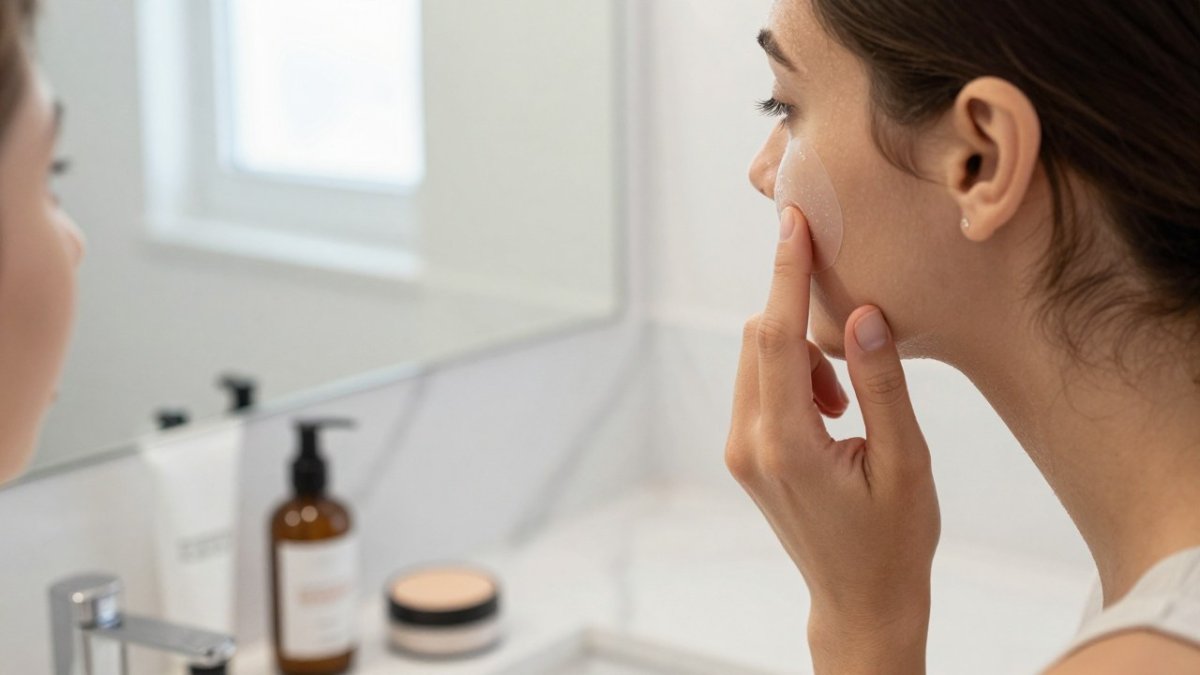
A simple routine:
- Cleanse and fully dry the area
- Apply any serum or moisturizer and let it absorb
- Peel the patch from its backing without touching the adhesive
- Press from the center outward for a few seconds
- Remove gently at the end of the day and cleanse the area
Watch out: applying a patch over wet skincare is the most common mistake. The film won't bond, and it will slide off within the hour.
Sun Patches vs Sunscreen: What Each One Covers
| Feature | Sun Patch | Sunscreen |
|---|---|---|
| Coverage area | Small, targeted zones | Full face, neck, ears |
| Reapplication | Replace the patch | Reapply every few hours |
| Best for | Cheekbones, under-eyes | Everyday full-face protection |
| Under makeup | Sits flat, minimal disruption | Needs careful layering |
| Convenience outdoors | No rubbing in, no residue | Requires clean hands to reapply |
If you spend long stretches outdoors, sunscreen remains the foundation. For cold-weather outdoor days, our roundup of Korean sunscreens for winter outdoor activities covers formulas built for that kind of exposure.
Matching Patches to Skin Type and Real-World Conditions
Skin type changes which patch suits you. Sensitive or reactive skin does best with minimal-ingredient films and a patch test on the inner arm first. Dry skin benefits from patches formulated with hydrating ingredients. Oily skin needs a lighter adhesive that won't trap sweat.
Sport, Sweat and Water Exposure
Sweat is the real test. A patch that holds through a desk day can lift during a run or a round of golf. Look for patches described as breathable and suited to outdoor activity.
For sport, apply to clean, dry skin with no moisturizer underneath, and skip the patch on areas that flex heavily, like the outer corners of the eyes.
Buying Authentic Korean Skincare Online
Authenticity is the biggest risk when buying Korean skincare online. Counterfeit and expired products circulate widely, and a fake patch with a printed SPF number offers no reliable protection.
Check the seller's sourcing and verification process before you order. Our guides on how to identify authentic K-beauty products and how to identify authentic Korean skincare walk through the checks step by step, from packaging details to batch codes.
At Avana Beauty, we offer a curated selection of premium Korean skincare and beauty products.
Picking Your First Sun Patch Pair
Start with one product and one placement before buying in bulk. A transparent, breathable patch with a stated SPF and PA grade, applied to the cheekbones or under-eyes, tells you quickly whether patches fit your routine.
Our pick for a first pair is the Revcell Hidden Sun Patch, sold in five pouches of two patches for $40.00 CAD. It's infused with Centella asiatica, niacinamide and allantoin, and it's described as a breathable, non-greasy alternative to traditional sunscreen for the cheeks, under-eyes and pigmentation-prone zones.

Best for: daily wear and outdoor activity where you want targeted coverage without residue. Skip if: you expect a patch to replace full-face sunscreen.
Frequently Asked Questions
Do sun patches replace sunscreen?
No. Treat sun protection patches as targeted, supplementary coverage, not a full replacement for sunscreen. A patch covers a small area such as the cheek or under-eye zone, while the rest of your face, ears and neck still need broad-spectrum sunscreen. The practical approach is to apply sunscreen first, then add a patch over the areas that burn or pigment most easily.
Can you wear sun patches while swimming or exercising?
Check the product listing before you commit. The Revcell Hidden Sun Patch is described as suitable for outdoor activities and daily wear. For sport, apply to clean, dry skin, avoid touching the edges once placed, and plan to swap the patch if it lifts. Pair it with sunscreen rather than relying on the patch alone.
Are Korean sun patches suitable for sensitive skin?
The Revcell Hidden Sun Patch contains Centella asiatica, niacinamide and allantoin. Sensitivity still depends on the adhesive, so test a single patch on your jawline for a few hours before wearing one on your cheek or under-eye area all day. If you have reactive skin, remove the patch at the first sign of itching or redness.
Where can you buy authentic Korean sun patches?
Buy from a retailer that names the brand, lists the full ingredient panel and shows the product packaging clearly. Avana Beauty carries the Revcell Hidden Sun Patch as a five-pouch set (10 patches total) for $40.00 CAD,
The trick with sun protection patches is treating them as precision coverage, not a shortcut. If you want a transparent, breathable patch formulated for the cheekbones and under-eye area, Avana Beauty Inc carries the Revcell Hidden Sun Patch with Centella asiatica, niacinamide and allantoin in a five-pouch pack. Get started with Avana Beauty Inc and build targeted UV protection into your daily routine.