Last Updated: November 1, 2026
Quick Summary
Gentle essence toners are not required, so they are worth it only if your skin needs extra hydration and the formula is simple and fragrance-free. A routine of gentle cleanser, moisturizer, and sunscreen can be complete without one. Patch test any new essence before using it daily.
- Gentle essence toners are not a required step in a sensitive-skin routine.
- Choose fragrance-free or lightly scented formulas, since added fragrance can irritate sensitive skin.
- Avoid drying alcohols like denatured or SD alcohol high on the ingredient list.
- Patch test a new toner on the inner forearm or behind the ear for several days.
- Introduce a new essence every other day for the first week before moving to daily use.
Table of Contents
- What a Gentle Essence Toner Actually Does
- Toner Versus Essence: How They Differ
- How to Choose Toner for Sensitive Skin
- Ingredients and Fragrance Triggers to Watch For
- How to Patch Test Skincare Products
- DumiDang Essence Toners Compared
- Hydrating Toner for Sensitive Skin: Which DumiDang Fits Your Routine
- Choosing Your Next Essence Toner
- Frequently Asked Questions
Gentle essence toners sit in an awkward spot in most sensitive-skin routines. They promise hydration and calm without the stripping effect of harsh toners, yet many people with reactive skin are unsure whether they need one at all.
Gentle essence toners are not a required step. Dermatology-focused sources also caution that some toner formulas may irritate sensitive skin, particularly those that are heavily fragranced or use many dyes and preservatives Cleveland Clinic guide on what toner does for your face. For a dedicated walkthrough of choosing a toner for this skin type, see our guide to selecting Korean toner for sensitive skin.
What a Gentle Essence Toner Actually Does
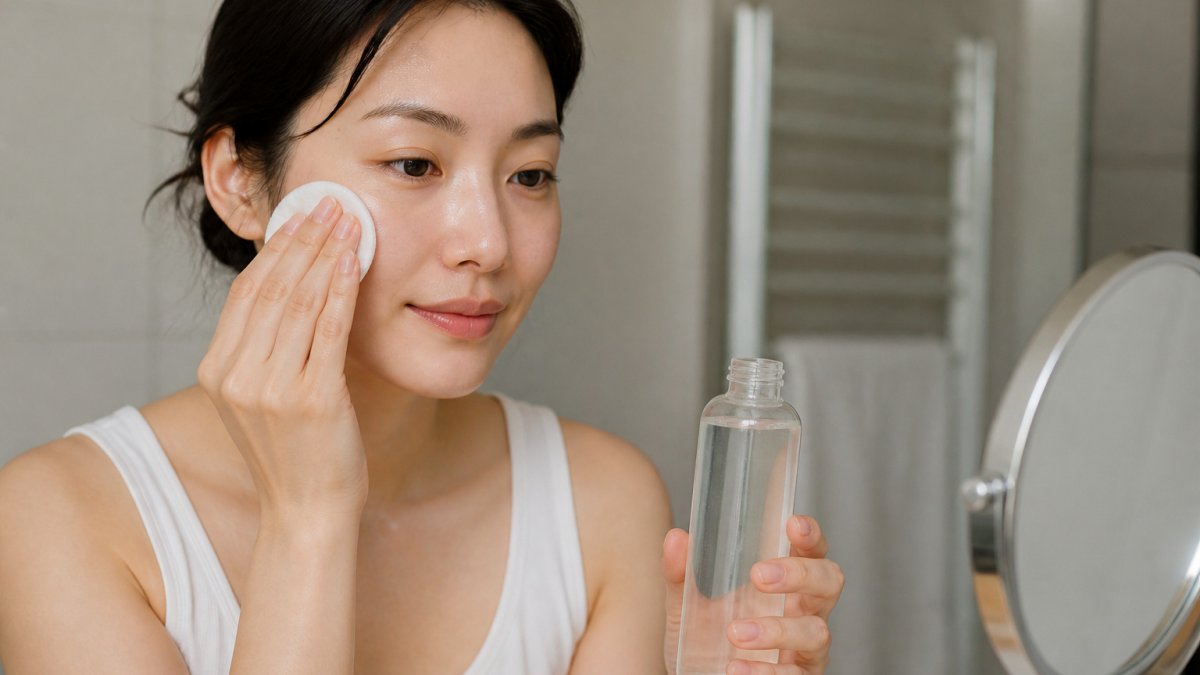
A gentle essence toner is a lightweight, water-based liquid applied after cleansing and before serums or moisturizers.
For sensitive skin, the value comes from what the formula leaves out. Watch for gentle, soothing botanical ingredients and a lack of heavy fragrance.
Results will vary. A toner supports hydration and comfort but does not treat underlying conditions, so keep expectations realistic.
Toner Versus Essence: How They Differ
Traditional toners are often thin, sometimes alcohol-based, and aimed at removing leftover residue after cleansing. Essences are typically more concentrated in hydrating ingredients and have a slightly richer, watery texture that sinks into the skin.
For sensitive skin, the distinction matters. Alcohol-based toners can irritate or dry sensitive or post-treatment skin ZenSa Skincare article on whether toner is really necessary.
How to Choose Toner for Sensitive Skin
Start with your skin's current state. Dry, dehydrated, and tight skin tends to benefit from hydrating formulas, while combination or oily sensitive skin may prefer something lighter.
Use these checks when you compare options:
- Fragrance: Choose fragrance-free or lightly scented products.
- Alcohol: Look for alcohol-free formulas if your skin reacts easily.
- Ingredient count: Shorter ingredient lists can make it easier to troubleshoot if a reaction occurs.
- Skin type match: Check whether the product is labelled for sensitive, dry, or dehydrated skin.
Narrowing your choices to two or three products before buying, then testing one at a time, is a practical approach.
Ingredients and Fragrance Triggers to Watch For
Reading a toner's ingredient list is more useful than trusting a front-label claim like "gentle" or "for sensitive skin." Labels describe marketing positioning; the ingredient list describes what is actually in the bottle. For reactive skin, the goal is to identify likely irritants before they reach your face and to recognize soothing ingredients that may offset mild formula stress.
Common irritation triggers in toners
- Added fragrance and parfum: Fragrance mixes can contain dozens of undeclared compounds, and "fragrance" on a label does not tell you which ones. For reactive skin, fragrance-free is the safer default. If you want scent, look for products where a named botanical oil or extract provides it, and patch test that specific product.
- Essential oils: Lavender, citrus, peppermint, eucalyptus, and tea tree oils are natural but can still sting or sensitize, especially on compromised skin. "Natural" does not mean non-irritating.
- Drying alcohols: Denatured alcohol (alcohol denat.), SD alcohol, and isopropyl alcohol can strip the skin barrier when they appear high on the list. Fatty alcohols such as cetyl, stearyl, and cetearyl alcohol are different and are generally emollient, not drying.
- Dyes and colorants: CI numbers and "may contain" colorants add no skincare benefit and are a common avoidable trigger for sensitive skin.
- Preservatives: Some people react to specific preservatives such as methylisothiazolinone or certain parabens. If you have reacted to a product before, compare its preservatives against the new product's list.
- Exfoliating acids and high-activity actives: AHAs, BHAs, and high percentages of vitamin C can be too much for a toner step if your skin is already reactive. A gentle essence toner should not double as a strong exfoliant.
Soothing ingredients worth looking for
- Centella asiatica (cica): Associated with calming and barrier-supportive properties; common in essence toners positioned for redness-prone skin.
- Chamomile (bisabolol): A classic soothing botanical often paired with licorice root.
- Licorice root extract: Used for comfort and tone support; generally well tolerated in leave-on formulas.
- Panthenol (provitamin B5) and allantoin: Humectant and soothing ingredients that appear in many sensitive-skin formulas.
- Green tea and mugwort: Antioxidant-rich botanicals common in Korean-style essences.
- Ferments (galactomyces, bifida, lactobacillus): Popular in essences for hydration and texture; most users tolerate them, but a minority of reactive skin types find ferments triggering, so patch test.
How to assess a full ingredient list
- Scan the first five ingredients. These make up most of the formula. If a drying alcohol, fragrance, or a strong acid appears there, treat the product with caution.
- Check for "fragrance" or "parfum" anywhere on the list. It does not need to be at the top to cause a reaction.
- Look for named soothing ingredients. A formula that lists centella, chamomile, panthenol, or allantoin is signaling a comfort-focused design, though the concentration still matters.
- Compare against your personal trigger list. Keep a note of products that have reacted on your skin and the ingredients they contained; patterns emerge over time.
- Prefer shorter lists when you are troubleshooting. Fewer ingredients make it easier to isolate a cause if irritation appears.
A common mistake is adding several new products at once. When a reaction happens, you cannot tell which one caused it. Introduce one new toner at a time and keep the rest of your routine stable for at least a week before judging the result.
How to Patch Test Skincare Products
Patch testing is the simplest way to catch a reaction before it spreads across your face.
DumiDang Mung Bean Essence Toner (200mL) →
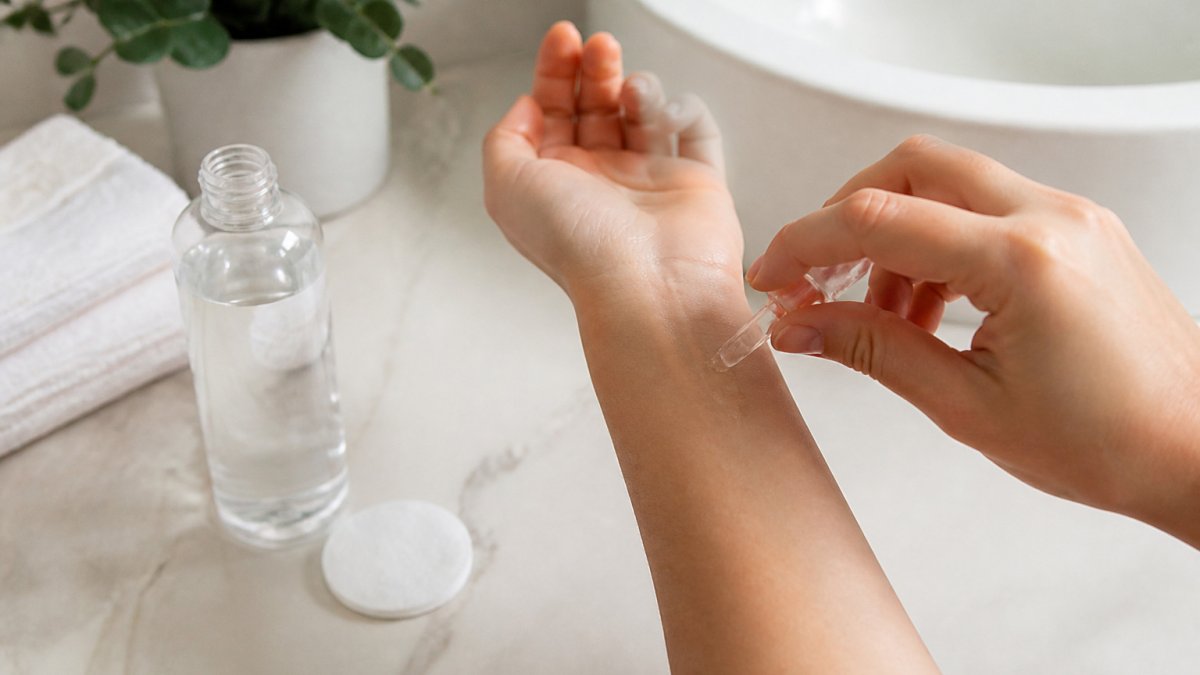
Introduce the toner gradually after a successful patch test. Use it every other day for the first week, then move to daily use if your skin stays calm. Stop immediately if irritation develops (Use cosmetics safely).
Keep the rest of your routine stable during testing so you can identify the cause of any change.
DumiDang Essence Toners Compared
All four DumiDang essence toners come in 200 mL bottles, so the headline price differences are easy to compare. What the price alone does not tell you is how each formula feels, what skin state it is designed for, and which one is the most economical per milliliter. The table below adds those dimensions so you can match a formula to your skin rather than to the label alone.
| Product | Price (CAD) | Cost per 100 mL (CAD) | Texture and format | Skin types named in listing | Key ingredients named in listing | | --- | --- | --- | --- | --- | --- | --- | | DumiDang Mung Bean Essence Toner | $25.00 | $12.50 | Watery essence toner | Sensitive, combination, oily, dehydrated | Mung bean extract, galactomyces ferment filtrate, bifida ferment extract, Centella asiatica extract | | DumiDang Chickpea Essence Toner | $35.00 | $17.50 | Lightweight hydrating essence | Dry, dehydrated, sensitive, tired-looking | Chickpea extract, chamomile flower extract, licorice root extract, 8-bean fermented complex | | DumiDang Black Bean Essence Toner | $35.00 | $17.50 | Nourishing essence toner | Dry, mature, dehydrated, dull | Black bean extract, carrot extract, cypress extract, 8-bean fermented complex | | DumiDang Red Bean Essence Toner | $35.00 | $17.50 | Fermented botanical essence | Dry, sensitive, dull | Fermented botanical extracts, probiotic ingredients |


What the comparison shows
- Price per volume: The Mung Bean essence is priced at $12.50 CAD per 100 mL. The other three sit at $17.50 CAD per 100 mL.
- Sensitive-skin positioning: The Mung Bean and Red Bean listings both name sensitive skin, but the Mung Bean is the only one that pairs that positioning with Centella asiatica, a botanical commonly associated with calming. The Red Bean relies on fermented botanicals and probiotics, which suit many sensitive users but are a patch-test priority for reactive skin.
- Hydration depth: The Chickpea and Black Bean formulas lean toward drier or more mature skin, with chamomile, licorice root, and 8-bean fermented complex. If your skin feels tight after cleansing, these are the richer options.
- Texture expectations: All four are essence toners rather than traditional astringent toners, so expect a watery-to-lightly-milky liquid rather than a stripping finish. The Mung Bean is described as leaving no sticky residue, which matters if you layer serums on top.
How to choose between them
- Reactive skin with redness or flushing: Start with the Mung Bean essence for its sensitive-skin positioning and centella content, and patch test for several days.
- Dry, tight skin that needs richer hydration: The Chickpea essence is the most direct match, with chamomile and licorice root supporting comfort.
- Mature or dull-looking dry skin: The Black Bean essence is positioned for barrier support and comfortable moisture.
- Dry and sensitive skin with dullness: The Red Bean essence offers fermented botanicals and probiotics, but introduce it slowly because ferments do not suit every reactive skin type.
Watch out: if you use a new essence alongside other active products such as exfoliants, introduce them one at a time so you can spot any reaction.
Hydrating Toner for Sensitive Skin: Which DumiDang Fits Your Routine
If your main concern is hydration without irritation, we recommend starting with the Mung Bean essence. If you want to understand which soothing and irritating ingredients to look for in products like this, read our complete guide to snail mucin for sensitive skin.
If your skin feels dry and tight, the Chickpea essence is described as lightweight yet deeply hydrating, with chamomile and licorice root extracts.
The Black Bean essence suits drier, mature, or dull-looking skin, with its listing emphasizing barrier support and comfortable moisture.
Watch out: if you use a new essence alongside other active products such as exfoliants, introduce them one at a time so you can spot any reaction.
Choosing Your Next Essence Toner
Gentle essence toners are worth trying if your skin needs extra hydration and you can keep the formula simple and fragrance-free. Skip them if your routine already feels comfortable and adding a step would only complicate testing.
Before you buy, check the ingredient list against your known triggers, patch test for several days, and introduce the product gradually. Shop the DumiDang Mung Bean Essence Toner first if you want a calming, sensitive-skin-focused option, or compare the DumiDang Chickpea Essence Toner if you need richer hydration.
Frequently Asked Questions
Is essence toner suitable for sensitive skin?
It can be, provided the formula is fragrance-free and built around calming ingredients rather than harsh alcohol or many dyes. Heavily fragranced toners or those with many dyes and preservatives can irritate skin. Among the Avana Beauty options, the DumiDang Mung Bean Essence Toner ($25.00 CAD) is formulated for sensitive, combination, oily, and dehydrated skin and includes Centella asiatica extract. Always patch test a new toner before applying it to your whole face.
Do I need a toner if I have sensitive skin?
No. A routine of a gentle cleanser, moisturizer, and daytime sunscreen can be complete without a toner. A toner is an optional step, so if your skin reacts easily, skipping it is a reasonable choice. If you do want the hydration and layering benefits, choose a simple, gentle formula and introduce it slowly so you can see how your skin responds.
How do I patch test a new toner?
Apply a small amount to a discreet area such as the inner forearm or behind the ear once a day for several days. Watch for redness, stinging, itching, or bumps during that time. If nothing develops, you can start using it on the face, beginning with every other day for the first week. Stop using it at the first sign of irritation.
What is the difference between a toner and an essence?
Traditional toners are typically used to remove leftover residue and rebalance the skin after cleansing. Essence toners are lighter, water-based formulas that deliver hydration and active ingredients in a thin layer before serums and moisturizers. The DumiDang Chickpea Essence Toner ($35.00 CAD) is described as lightweight and essence-like, designed as a first step before its matching serum and cream.