Quick Summary
The most effective Korean skincare tips for teenage hormonal acne start with a gentle routine: a non-stripping cleanser twice a day, a lightweight moisturizer, daily non-comedogenic sun protection, and actives introduced one at a time. Hormonal shifts increase oil production, so harsh or overly numerous products often make acne worse.
- Wash your face twice a day at most, since over-washing triggers more oil production.
- Patch test any new product on your jaw for three nights before using it on your whole face.
- Introduce one active at a time, starting with two nights a week for two weeks.
- Start salicylic acid at around 0.5% to 2%, two nights a week.
- Do not combine a retinoid and an exfoliating acid on the same night.
Table of Contents
- Why Hormonal Acne in Teens Needs a Simple Routine
- The Teenage Hormonal Acne Skincare Routine, Step by Step
- Choosing a Gentle Cleanser for Teenage Acne
- Korean Skincare Ingredients for Acne and How to Use Them Safely
- Choosing a Korean Sunscreen for Acne-Prone Skin
- Simple Routine Tips for Teens on a Budget
- When to See a Doctor About Teen Acne
- Starting Your Routine This Week
- Frequently Asked Questions
Acne in teenagers is rarely caused by one thing. Hormonal shifts during puberty increase oil production, and the skin can react strongly to products that are too harsh or too numerous. Avana Beauty Inc has put together this guide to help you build a practical Korean skincare routine.
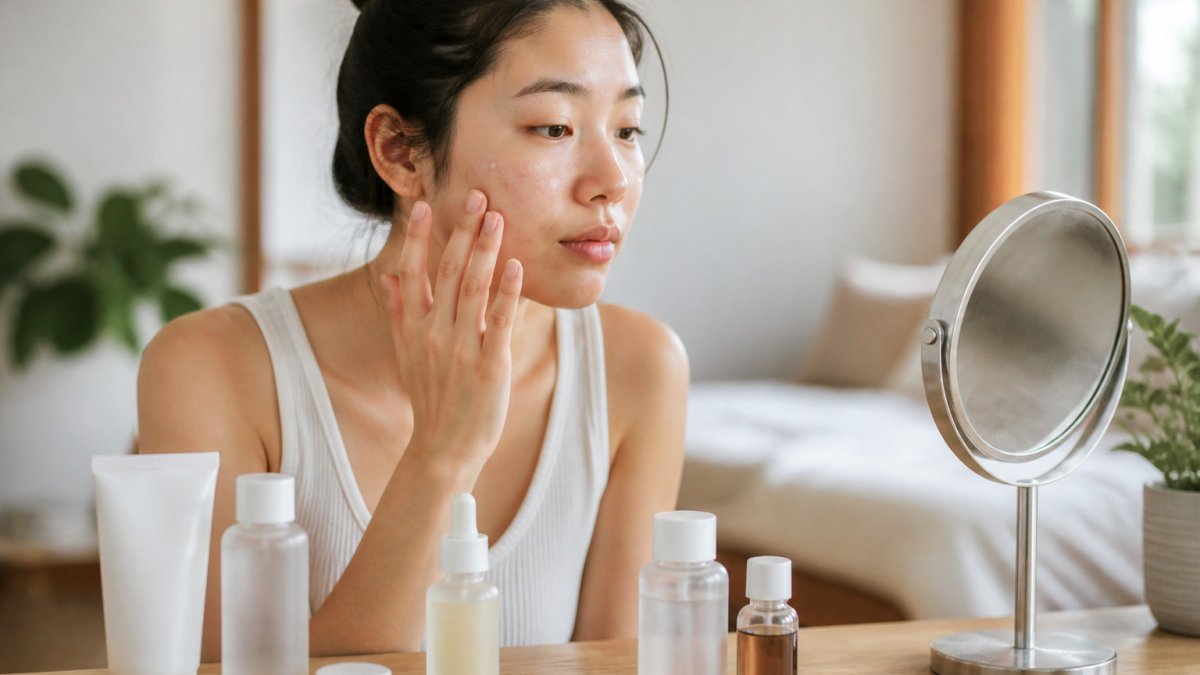
Korean skincare tips for teenage hormonal acne can include cleansing, moisturizing, sun protection, and introducing products gradually.
Why Hormonal Acne in Teens Needs a Simple Routine
Hormonal acne is associated with oil glands responding to androgens, which rise during adolescence.
The Teenage Hormonal Acne Skincare Routine, Step by Step
Our pick for the moisturizing step is the DumiDang Mung Bean Cream, a lightweight daily moisturizer formulated for sensitive, combination, oily, and dehydrated skin. It is listed with mung bean extract, galactomyces ferment filtrate, bifida ferment extract and Centella asiatica extract. You can pair it with the DumiDang Mung Bean Essence Toner ($25.00 CAD) after cleansing.


Choosing a Gentle Cleanser for Teenage Acne
The cleanser is the step that does the most daily work. Look for a formula that removes oil and sunscreen without leaving skin tight.
Signs a cleanser is too harsh:
- Skin feels squeaky or stripped right after washing
- Redness or stinging that lasts more than a few minutes
- Flaking or a rough texture within a week of starting
Wash twice a day at most. Over-washing triggers more oil production, which is the opposite of what you want.
Korean Skincare Ingredients for Acne and How to Use Them Safely
Many Korean acne products use ingredients that also appear in Western routines. The difference is often in formulation, Korean products tend to pair actives with soothing and barrier-supporting ingredients, but the safety rules are the same. Knowing what each ingredient does, and how to introduce it, helps you avoid the irritation that comes from stacking too many actives at once.
- Niacinamide is a form of vitamin B3 used to calm redness, support the skin barrier, and help regulate oil. It is generally well tolerated, but some people notice stinging at higher concentrations. Start with a product that lists it in the middle of the ingredient list rather than at the top.
- Tea tree leaf oil has antibacterial properties and appears in some listed formulas, including the DumiDang Mung Bean Serum ($45.00 CAD). It can be irritating at full strength, so use it only in formulated products and patch test first.
- Centella asiatica (often listed as cica) is included in soothing products for irritated skin. It does not treat acne directly, but it can reduce the redness and discomfort that come with flares.
- Salicylic acid (BHA) is oil-soluble, which lets it move into pores. It is a common choice for blackheads and oily skin. Start with a low concentration (around 0.5% to 2%) two nights a week.
- Retinoids (including adapalene and retinol) regulate skin-cell growth and reduce acne-related processes. A 2024 review by Y. Li and colleagues on acne treatment research describes retinoids as commonly used, though that review does not measure outcomes for teenagers specifically. Treat it as background, not a promise.
How to Introduce Actives Without Irritation
Patch test any new product on a small area of your jaw for three nights before using it on your whole face. Stop if you notice burning or swelling.
Introduce one active at a time. Use it two nights a week for two weeks, then three nights a week for two weeks, and only then consider nightly use if your skin is calm. If you start a retinoid, expect some dryness and flaking in the first few weeks, this is common and usually settles. Moisturizer helps.
Do not combine a retinoid and an exfoliating acid on the same night. Do not use a scrub with active ingredients. Do not layer two products that both contain salicylic acid without checking the labels.
AHAs versus BHAs: Starting Slowly
Alpha hydroxy acids (AHAs), such as glycolic and lactic acid, work on the skin surface and help with texture and dullness. Beta hydroxy acids (BHAs), such as salicylic acid, can move into pores, which makes them a common choice for oily, acne-prone skin.
DumiDang Mung Bean Cream (50g) →
Start with one exfoliating product, two nights a week at most. Avoid using an acid and a retinoid on the same night until you know how your skin handles each one. Over-exfoliation can cause redness, dryness and post-inflammatory hyperpigmentation (dark marks left after a pimple heals), which can take months to fade.
The article's main ingredients and how to introduce them, at a glance:
| Ingredient | Role | Introduction note |
|---|---|---|
| Niacinamide | Calms redness, supports barrier, regulates oil | Stinging possible at higher concentrations |
| Tea tree leaf oil | Antibacterial | Can irritate at full strength; patch test first |
| Centella asiatica | Soothes irritated skin | Does not treat acne directly |
| Salicylic acid (BHA) | Moves into pores; suits oily skin | Start at 0.5% to 2%, two nights a week |
| Retinoids | Regulates skin-cell growth | Expect dryness in first few weeks |
Choosing a Korean Sunscreen for Acne-Prone Skin
Sun protection matters because sun exposure can darken acne marks and make them last longer. Choose a sunscreen labelled non-comedogenic, which means it is formulated not to clog pores, and wear it every morning, even on cloudy days.
Light, gel-based or fluid textures tend to sit well under makeup and feel less heavy on oily skin. Apply about a quarter-teaspoon for the face and reapply if you spend extended time outdoors.
Simple Routine Tips for Teens on a Budget
For the mask step, the Revcell Cica Calming Wrapping Mask (five individually packaged masks, $50.00 CAD) is described as suitable for all skin types, especially skin that looks sensitive or stressed by environmental factors.

When to See a Doctor About Teen Acne
Many teens improve with a simple routine, but some situations need professional care. Book a visit with a family doctor or dermatologist if you notice:
- Deep, painful cysts or nodules
- Acne that spreads across the back or chest and does not respond to care after several months
- Scarring or dark marks that are not fading
- Acne that is affecting your mood, sleep or confidence
A doctor can discuss prescription options and explain whether hormonal changes need checking. Do not wait years to ask for help.
Starting Your Routine This Week
If you want a fuller step-by-step walkthrough, read our guide to the 10-step Korean skincare routine. For beginners, the Korean skincare routine guide for beginners explains the basics in more detail. You can also explore our range of products on the Avana Beauty website.
Frequently Asked Questions
What is the best skincare routine for teenage hormonal acne?
A simple routine works best for most teens: a gentle cleanser morning and night, a lightweight moisturizer, and a daily sunscreen. Add one active ingredient at a time, such as a low-strength BHA or AHA, and wait several weeks before adding another. Introducing many actives at once makes it hard to tell what is helping and raises the risk of irritation. Hormonal acne often takes several months to respond, so consistency matters more than adding products.
How often should a teenager use exfoliating skincare products?
Most teens with acne-prone skin should start with exfoliating products two or three times a week, then adjust based on how their skin feels. Signs of over-exfoliation include stinging, redness, tightness, flaking and a shiny but raw look. If irritation appears, reduce frequency or pause the active until the skin settles. Patch testing a new product on a small area of skin before full use also helps avoid reactions.
Which Korean skincare ingredients may help acne-prone skin?
Ingredients often used for acne-prone skin include salicylic acid (a BHA), which helps clear pores, and gentle AHAs for surface texture. Centella asiatica and panthenol are calming ingredients often included in products for irritated skin. Niacinamide and hyaluronic acid are commonly used to support the skin barrier. Start with one active at a time and watch for irritation, since strong actives can make acne look worse during the first weeks.
When should a teenager see a healthcare professional about acne?
A teen should see a doctor or dermatologist if acne is painful, leaves scars, spreads across the body, causes deep cysts, or does not improve after several months of consistent home care. Acne that affects mood, sleep or self-esteem is also a reason to get help. A healthcare professional can recommend evidence-based treatments and advise on safe use of retinoids and other prescription options.