Table of Contents
- Why Local Retailers Matter for Skincare Shopping
- Buying Skincare Online vs In Store: Key Differences
- Ensuring You Get Authentic Korean Skincare Products
- How to Choose Skincare Products for Your Skin Type
- Product Freshness and Supply-Chain Transparency
- K-Beauty Shipping to Canada and Local Availability
- Supporting Local Business and Community Impact
- Common Mistakes When Buying Skincare Locally
- Frequently Asked Questions
Last Updated: October 15, 2026
Why Local Retailers Matter for Skincare Shopping
When you walk into a local skincare retailer, you're not just browsing shelves. You're accessing expertise, authenticity, and personalized guidance that online shopping simply cannot replicate. The benefits of buying skincare from local retailers extend far beyond convenience, they address fundamental concerns every skincare enthusiast faces.
Local retailers specializing in Korean beauty products employ staff trained to understand skin types, ingredient profiles, and product interactions. This matters because skincare is deeply personal. A moisturizer that transforms one person's skin can irritate another's.
The ability to see, touch, and test products before committing your money eliminates a major source of buyer's remorse. You can examine packaging quality, check ingredient lists under proper lighting, and sometimes even sample formulations. This tactile confidence is something you cannot get from product photos and descriptions alone.
Buying Skincare Online vs In Store: Key Differences
The choice between online and in-store shopping involves real trade-offs that affect both your skincare results and your wallet.
Total cost, not sticker price. A local purchase carries no shipping fee and no customs or brokerage charges, so the shelf price is usually the final price. An overseas order adds shipping, possible duty and handling fees, and the risk of a parcel being held.
Time to product. In-store means same-day access. Overseas shipping commonly runs two to four weeks, and customs processing can extend that unpredictably. If you are replenishing a daily-use product, that gap matters more than a small price difference.
Selection depth. Online wins on breadth. You can compare dozens of brands and formulations without leaving home, including niche lines a small store cannot justify stocking.
Guidance and trial. This is the biggest practical difference. In store, you can ask questions, examine texture and scent, request a sample, and get a recommendation tied to your skin concerns.
Returns and recourse. Local returns are typically simple: bring the product back, explain the issue, resolve it in person. Online returns can involve return shipping, restocking conditions, and longer timelines, and cross-border returns are often impractical enough that buyers simply absorb the loss.
A quick decision framework.
- New to a product or ingredient? Buy locally so you can ask questions and patch test.
- Replenishing a proven favorite? Compare landed cost online versus local, then choose.
- Chasing a specific niche brand? Online is often the only realistic option.
- On a tight timeline? Local, unless you already have a buffer supply.
Most skincare enthusiasts end up using both channels deliberately rather than defaulting to one. The goal is not loyalty to a channel but matching each purchase to what you actually need from it.
Ensuring You Get Authentic Korean Skincare Products
Counterfeit skincare is a genuine problem in the K-beauty market. Fake products circulate through unauthorized channels, and online marketplaces can be difficult to police.
1. Ask about sourcing, and listen to the answer. A reputable retailer can tell you which authorized distributor or importer supplied a product. Vague answers like "we get it from overseas" are a yellow flag.
2. Check the packaging against the brand. Authentic Korean skincare products typically feature precise printing, consistent labeling, and clear batch codes. Look for smudged text, inconsistent fonts, misspellings, or missing batch information.
3. Look for a manufacturing or expiry date. Many Korean brands print these clearly.
4. Examine the seal and outer box. Tampered or resealed packaging, missing inner seals, or a box that does not match the product inside are all reasons to pause.
5. Ask how the product was stored. Active ingredients like vitamin C, retinol, and peptides degrade with heat and light (pubmed.ncbi.nlm.nih.gov). A retailer with climate-controlled storage and reasonable turnover is protecting the product's efficacy.
6. Verify claims, not just authenticity. Authenticity does not guarantee suitability. Read the label for allergens, fragrance, and alcohol content, and check whether marketing claims are supported by the ingredient list.
7. Keep your receipt and know the return policy. If a product turns out to be counterfeit or simply unsuitable, a clear return path is your protection. Local retailers usually offer this in person; online sellers vary widely.
A note on local advantage. Local retailers are not automatically more authentic, but they are more accountable. You can look someone in the eye, ask a follow-up question, and return a product if something is wrong.
How to Choose Skincare Products for Your Skin Type
Selecting the right product starts with understanding your skin. This is where local expertise becomes invaluable. A knowledgeable staff member can assess your skin concerns, discuss your current routine, and recommend products specifically suited to your needs.
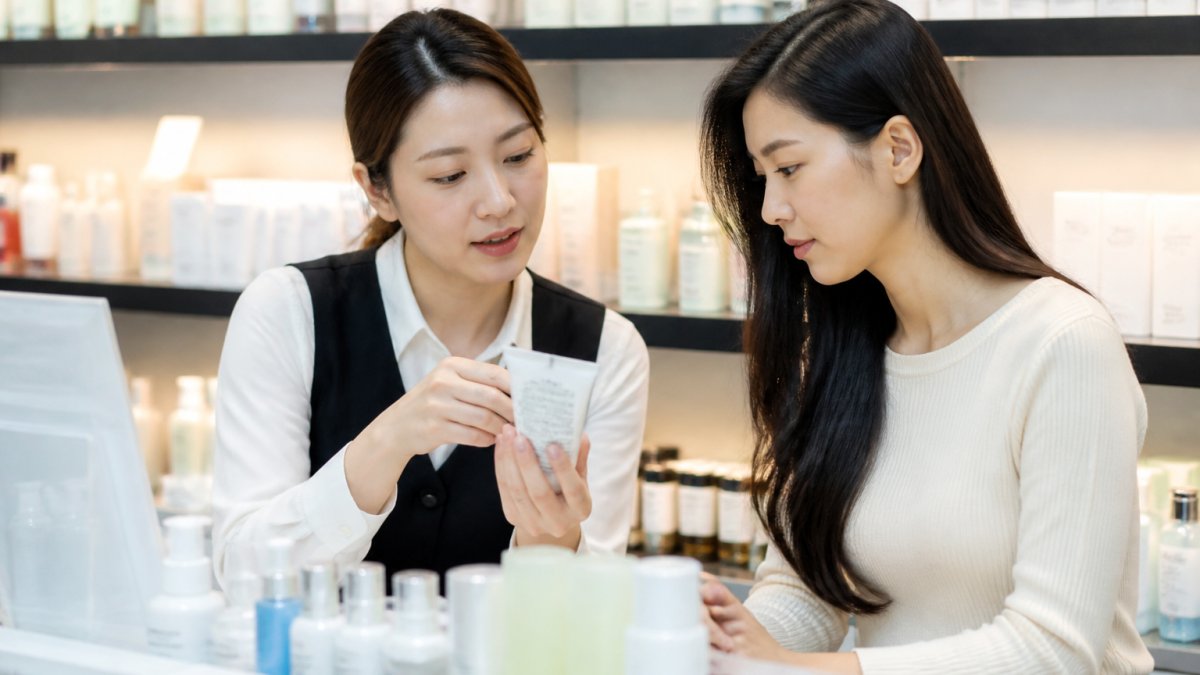
Begin by identifying your primary skin concern: dryness, sensitivity, acne, aging, or oiliness. Most people have combination skin with multiple concerns. A local retailer can help you prioritize.
Ingredient research is essential. Korean skincare emphasizes gentle, effective ingredients like niacinamide, hyaluronic acid, peptides, and botanical extracts. If you have reactive skin, you'll want to avoid certain ingredients, parabens, synthetic fragrances, or alcohol denat might trigger irritation.
Ask about patch testing. Responsible retailers recommend applying a small amount of new products to a discrete area first, waiting 24 to 48 hours, then assessing how your skin responds. This prevents full-face reactions to products that don't suit you.
Consider your climate and season. Winter dryness requires different products than summer humidity. A retailer familiar with local weather patterns can recommend products formulated for your specific seasonal challenges. This is particularly valuable if you live in regions with harsh winters or extreme temperature swings.
Product Freshness and Supply-Chain Transparency
Product freshness directly impacts efficacy. Skincare ingredients degrade over time, especially when exposed to light, heat, or humidity. When you buy from a local retailer, you can verify how long a product has been in stock and confirm it was stored properly.
Ask your retailer about their inventory turnover. Busy stores with consistent customer traffic typically stock fresher products than retailers with slower sales. Check the manufacturing date on packaging when available. Korean brands often print dates clearly. A product manufactured within the last six months offers better stability than one manufactured a year ago.
Supply-chain transparency matters. Where did the retailer source this product? Did it come directly from the distributor, or through a middleman? How long did it sit in warehouses before reaching the store? Local retailers who can answer these questions are taking quality seriously.
Temperature control during storage and transit affects product stability. Products containing active ingredients like vitamin C, retinol, or peptides are especially sensitive to heat. A local retailer's climate-controlled storage is superior to overseas shipping containers that may experience temperature swings.
K-Beauty Shipping to Canada and Local Availability
International shipping adds complexity and cost to K-beauty purchases. Products ordered directly from Korea typically take two to four weeks to arrive, with shipping costs ranging from $15 to $40 depending on package weight and carrier. Customs delays can extend timelines further.
Local retailers eliminate these friction points. You get products immediately, with no shipping costs, no customs delays, and no risk of packages being lost or damaged in transit. This is especially valuable if you're running low on a product you use daily.
However, local retailers cannot stock every K-beauty product on the market. They curate based on customer demand and available shelf space. If you're seeking a specific niche product with limited distribution, online ordering may be your only option. This is where many skincare enthusiasts use both channels strategically: they buy bestsellers and staples locally and order specialty items online.
Availability varies by region. Urban areas with larger Korean communities typically have more extensive local K-beauty selection. Smaller cities may have limited options, making online shopping more necessary. Understanding your local retail landscape helps you plan accordingly.
Supporting Local Business and Community Impact
When you buy skincare from a local retailer, your money stays in your community. Local businesses reinvest revenue into local employment, local suppliers, and community initiatives. This economic multiplier effect strengthens your neighborhood in ways that online purchases to distant corporations do not.
Local retailers also build community knowledge and relationships. Regular customers develop familiarity with staff, who learn their skin concerns and preferences over time. This ongoing relationship often leads to better recommendations and more effective skincare outcomes than one-time online purchases from strangers.
Supporting local businesses preserves retail diversity. When communities lose local shops to online-only competition, they lose gathering spaces and local expertise. A thriving local retail sector means more choices, more competition, and better service for consumers.
Many local retailers source from independent distributors and smaller suppliers. This creates a network of small businesses supporting each other. By shopping locally, you're supporting not just the retailer but their entire supply chain.
Common Mistakes When Buying Skincare Locally
The most common mistake is buying without a clear understanding of your skin. Walking into a store and grabbing products because the packaging looks appealing or a friend recommended them leads to wasted money.
Another frequent error is ignoring ingredient lists. Just because a product is K-beauty and marketed as premium does not mean it suits your specific skin. Read the ingredients. Research what they do. If you have sensitive skin, this step is non-negotiable.
Buying too many products at once is a setup for problems. New skincare routines should introduce one or two products at a time, with at least two weeks between additions. This allows you to identify which product causes any reaction.
Failing to ask questions is a missed opportunity. If a staff member cannot explain why they're recommending a product or what makes it suitable for your concerns, that's a red flag. Good retailers educate.
Assuming higher price equals better results is another trap. Korean skincare offers excellent quality at various price points. A $15 toner can outperform a $50 alternative if it matches your skin better. Price reflects brand positioning and packaging, not always efficacy.
Choosing where to buy skincare depends on what you value most: expertise and immediate access, or vast selection and competitive pricing. Explore our curated selection of premium Korean skincare when you're ready for convenient online access to verified, authentic products.

Frequently Asked Questions
What are the main benefits of buying skincare from local retailers instead of ordering online?
Local retailers offer immediate access to products without waiting weeks for overseas shipping, expert staff who can assess your skin type and recommend suitable items, the ability to test or sample products before committing to a full purchase, and the confidence that products are fresh and properly stored. You also support your community and can return items easily if they don't work for your skin.
How can I tell if a skincare product is authentic when buying from a local retailer?
Verify that the retailer sources directly from official distributors or brands. Check packaging for consistent fonts, accurate ingredient lists, and proper labeling in English or the brand's original language. Ask the retailer about their verification process and supply chain. Authentic Korean skincare products should have clear expiration dates, proper batch codes, and professional packaging. Reputable local retailers maintain relationships with verified suppliers and can provide documentation.
Can a local skincare retailer actually help me choose products for my skin type?
Yes, local retailers employ trained staff who can assess your skin type, discuss your concerns, and recommend products tailored to your needs. They can perform basic skin analysis, ask about your climate and lifestyle, and explain how specific ingredients address your concerns. Many offer patch testing or samples so you can try products before buying full sizes. This personalized guidance significantly reduces the risk of purchasing products that won't work for your skin.
Is K-beauty shipping to Canada faster when buying from local retailers compared to overseas sites?
Yes. Local retailers stock products in-country, so you receive items within days rather than 3-4 weeks from overseas. You avoid international shipping delays, customs clearance, and potential damage during long transit. This is especially valuable if you need products quickly or live in areas with limited access to specialty retailers. You also eliminate surprise duties or handling fees that sometimes apply to international orders.