Last Updated: October 26, 2026
Quick Summary
To repair your skin barrier after acne treatments, pause all actives such as retinoids, benzoyl peroxide, and exfoliating acids for one to two weeks, then follow a short routine of gentle cleanse, hydrate, moisturize, and protect. Skin barrier repair takes one to two weeks for mild damage and four to six weeks for stubborn cases.
- Pause leave-on retinoids, benzoyl peroxide, salicylic acid toners, and physical scrubs for one to two weeks.
- A barrier repair routine has four parts: cleanse, hydrate, moisturize, and protect with sunscreen each morning.
- Look for ceramides, niacinamide, hyaluronic acid, centella asiatica, panthenol, and squalane on labels.
- Reintroduce one active at a time, twice a week over moisturizer, and patch-test on the forearm for 48 hours.
- See a dermatologist if symptoms do not improve after four to six weeks of gentle care.
Table of Contents
- 7 Steps to Repair Your Skin Barrier After Acne Treatments
- How to Tell Acne Treatment Irritation From Barrier Damage
- Step 1: Pause the Actives That Are Causing Irritation
- Step 2: Build a Skin Barrier Repair Routine That Fits Acne-Prone Skin
- Step 3: Choose Skincare Ingredients for Skin Barrier Repair
- Step 4: Know What to Avoid With a Damaged Skin Barrier
- Step 5: Understand How Long Does Skin Barrier Repair Take
- Step 6: Reintroduce Acne Actives Without Starting Over
- Step 7: Know When to See a Dermatologist
- What matters most when repairing your barrier
- Frequently Asked Questions
7 Steps to Repair Your Skin Barrier After Acne Treatments
Your acne cream worked. Then your face started stinging, flaking, and turning red in places that never used to bother you. That is not a new breakout.
A 2024 review by Y. Deng and colleagues found that barrier damage in acne goes beyond what any single repair method can fix, which is why a careful, staged approach matters more than one hero product.
Skin barrier damage is a disruption of the outer layer that lets moisture escape and irritants in. It shows up as redness, tightness, stinging, and flaking.
How to Tell Acne Treatment Irritation From Barrier Damage
Irritation is expected in the first week or two of a new acne treatment.
Watch for these signs:
- Stinging when you apply water or plain moisturizer
- Tightness that lasts hours after cleansing
- Flaking and peeling in patches, not just one spot
A 2025 review by J. Q. For more on sensitive, reactive skin, see this Korean skincare for sensitive reactive skin guide.
It is also worth ruling out an allergy or infection. If you have swelling, oozing, or pain, see a doctor rather than adjusting your routine.
Step 1: Pause the Actives That Are Causing Irritation
Stop the actives first. That means benzoyl peroxide, salicylic acid, retinoids, and any exfoliating acids. Give your skin a break for one to two weeks.
This feels wrong when you are worried about breakouts. But continuing actives on damaged skin usually makes redness and peeling worse, and it slows recovery.
Here is what to pause:
- Leave-on retinoids and adapalene
- Benzoyl peroxide washes and spot treatments
- Salicylic acid toners and pads
What to pause depends on which treatment caused the irritation
A blanket "stop everything" rule is easy to write and hard to follow, because the right move differs by treatment. Use this treatment-by-treatment guide to decide what to pause, what to reduce, and what to keep.
Retinoids (tretinoin, adapalene, tazarotene, retinol)
- Pause completely for 7 to 14 days if you have stinging, spreading redness, or visible peeling.
- If the irritation is mild (tightness and light flaking only), reduce to twice a week and apply over moisturizer rather than cutting it out.
- Do not layer a retinoid with benzoyl peroxide or exfoliating acids during recovery; that combination is a common cause of the setback you are trying to fix.
Benzoyl peroxide (washes, gels, spot treatments)
- Pause leave-on benzoyl peroxide and spot treatments first. They are among the most drying actives and are a frequent cause of raw, tight skin.
- A short-contact wash (lather, leave 30 to 60 seconds, rinse) is gentler than a leave-on gel if you need to keep some acne control.
- Benzoyl peroxide can bleach fabric, so pause it on towels and pillowcases too while skin recovers.
Salicylic acid (toners, pads, cleansers)
- Pause toners and pads entirely. They are the highest-irritation format because they stay on the skin.
- A salicylic acid cleanser that rinses off is the lowest-risk option if you must keep something in the routine, but even that should wait until stinging stops.
Prescription treatments (topical antibiotics, combination creams, oral medication)
- Do not stop a prescription on your own. Call your prescriber or pharmacist before changing the dose or frequency.
- Ask specifically whether the treatment can be buffered (applied over moisturizer), reduced in frequency, or short-contacted rather than stopped.
- If you use a combination product, ask whether the ingredients can be separated so you can pause the irritating one and keep the rest.
How to pause without losing acne control
Pausing actives does not mean doing nothing for your acne. A common pattern is to keep a gentle cleanser and a non-comedogenic moisturizer, add a spot treatment only on active blemishes rather than the whole face, and accept that a short pause is cheaper than a month of irritated skin.
Write down the date you paused each product. You will need it when you reintroduce actives, because the reintroduction schedule depends on how long the skin has been calm.
Step 2: Build a Skin Barrier Repair Routine That Fits Acne-Prone Skin
A skin barrier repair routine for acne-prone skin has four parts: cleanse, hydrate, moisturize, protect. Keep it short. Fewer products means fewer chances to irritate skin that is already struggling.
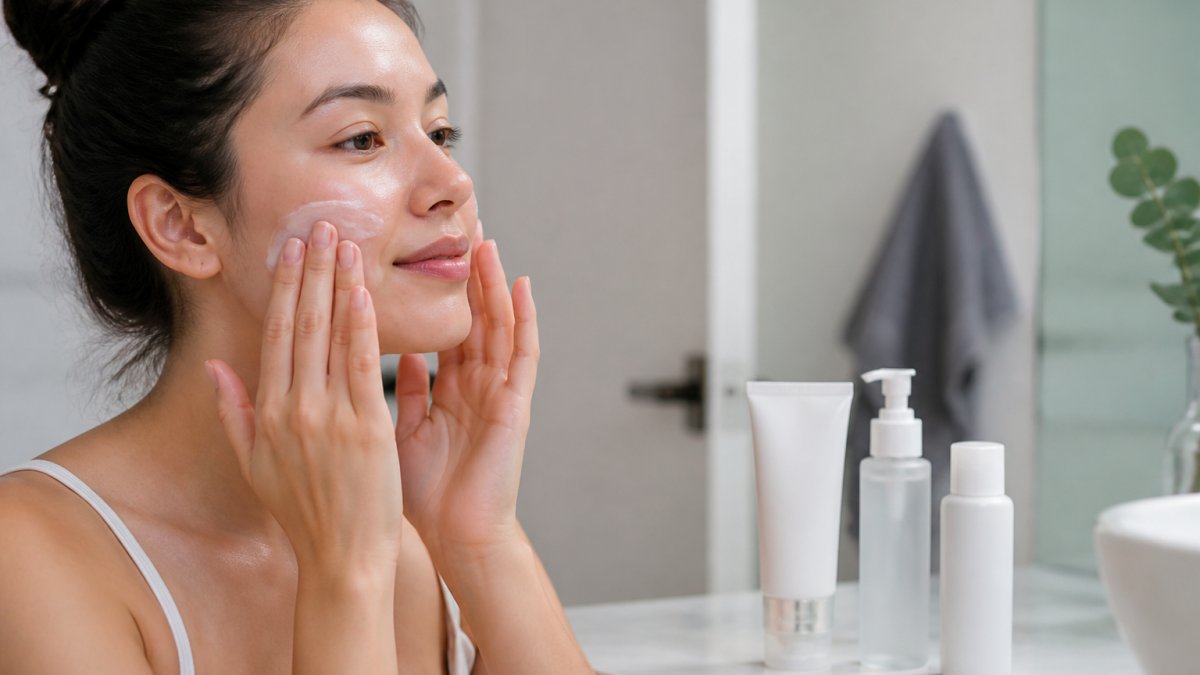
Cleanse, Hydrate, Moisturize, Protect
- Cleanse with a creamy, non-foaming cleanser. Lukewarm water only.
- Hydrate with a simple, alcohol-free toner or essence.
- Moisturize with a cream that supports the barrier. Apply while skin is still damp.
- Protect with a broad-spectrum sunscreen every morning.
Skip toners with alcohol, essences with fragrance, and anything with a strong scent.
A 2023 review by L. A. Schachner and colleagues recommends gentle skin care with ceramide-containing cleansers and moisturizers as part of acne maintenance (pubmed.ncbi.nlm.nih.gov). That is the backbone of this routine.
Step 3: Choose Skincare Ingredients for Skin Barrier Repair
The right skincare ingredients for skin barrier repair do three jobs: replace lost lipids, pull in water, and calm redness. Look for these on the label.
- Ceramides rebuild the lipid layer
- Niacinamide supports the barrier and evens tone
- Hyaluronic acid and glycerin hold water in the skin
Our collection is built around these ingredients. The Daylisse PeptaRegeno Oint Cream ($70.00) pairs Ceramide NP with Centella asiatica and a four-peptide complex in a rich, ointment-like texture.
For oily or combination skin, the DumiDang Mung Bean Cream ($45.00) is lightweight and includes Centella asiatica and mung bean extract.
Daylisse PeptaRegeno Oint Cream (20g) →
Step 4: Know What to Avoid With a Damaged Skin Barrier
Knowing what to avoid with a damaged skin barrier matters as much as what you add. A short list of culprits causes most setbacks.
Avoid these while your skin recovers:
- Physical scrubs and cleansing brushes
- High-percentage acids and daily exfoliation
- Alcohol-based toners
Also skip layering multiple new products at once. Add one item, wait a week, then add the next.
Step 5: Understand How Long Does Skin Barrier Repair Take
How long does skin barrier repair take? For mild damage, most people see calmer skin in one to two weeks.
The timeline depends on how long you used the irritating product and how damaged the barrier became. Younger skin often rebounds faster.
Signs you are improving:
- Stinging fades when you apply moisturizer
- Flaking stops within a week
- Redness slowly fades
Measure progress weekly, not daily. Take a photo in the same light each Sunday. Small changes add up, and this keeps you from panicking on a bad day.
Step 6: Reintroduce Acne Actives Without Starting Over
Add actives back slowly, and start lower than you think you need to. This is where most people undo their progress.
- Wait until your skin has been calm for at least a week.
- Pick one active, not three.
- Use it twice a week at first, at a lower strength.
- Apply it over moisturizer to buffer it.
- Bump up frequency only if skin stays calm.
If you use a retinoid, apply it after your moisturizer for the first few weeks. For soothing support as you ease actives back in, a gentle serum for irritated skin helps calm redness between applications.
Patch-test before you put it back on your face
Before reintroducing any active, patch-test it. Apply a small amount to the inner forearm or along the jawline, once, and wait 48 hours. If you see redness, itching, or swelling in that spot, the product is not ready to go back on your face. This is especially important for products you have not used since the irritation started, because a damaged barrier can make a product you once tolerated suddenly sting.
Reintroduce in the right order
Not all actives are equally irritating, and the order you bring them back matters. A common sequence is:
- Salicylic acid cleanser (rinse-off) first, because short contact limits exposure.
- Benzoyl peroxide wash next, again as a rinse-off rather than a leave-on.
- Retinoid last, because it is the most likely to cause peeling and redness.
- Leave-on exfoliating acids only after everything else has been stable for at least two weeks.
If you use a prescription retinoid, ask your prescriber whether a lower strength or a different vehicle (cream versus gel) is available before you restart at the same dose.
A realistic reintroduction schedule
| Week | What to do | What to watch for |
|---|---|---|
| 1 | One active, twice a week, over moisturizer | Stinging that lasts more than a few minutes |
| 2 | Same active, three times a week if calm | New flaking or tightness |
| 3 | Same active, every other night | Redness that spreads beyond application area |
| 4 | Add a second active at twice a week | Any return of raw or burning skin |
Treat the table as a ceiling, not a target. If week 2 brings back stinging, drop to week 1 for another week rather than pushing forward.
Stop signs: when to pause again
Pause the active and return to gentle care if you notice:
- Stinging when you apply plain moisturizer
- Flaking in patches rather than a single spot
- Redness that spreads beyond where you applied the product
If you cannot stop a prescription
Some prescription treatments should not be paused without guidance. If your prescriber wants you to continue, ask about buffering (applying over moisturizer), reducing frequency, short-contact application, or separating a combination product so you can pause only the irritating ingredient. Managing irritation safely is better than abandoning a treatment that is working.
Step 7: Know When to See a Dermatologist
See a dermatologist if symptoms do not improve after four to six weeks of gentle care, or if they get worse. Some cases need medical help, not another product.
Book an appointment if you notice:
- Swelling, oozing, or crusting
- Pain that gets worse
- A rash that spreads
A dermatologist can tell barrier damage apart from eczema, rosacea, or an allergic reaction. That distinction changes the treatment. Do not keep guessing with new products if your skin is not settling.
What matters most when repairing your barrier
Repairing your skin barrier after acne treatment comes down to patience and a short routine. Pause the actives, cleanse gently, moisturize with barrier-supporting ingredients, and protect your skin from the sun.
The hardest part is doing less when you want to do more. Your skin needs time, not more products.
If you are rebuilding a routine for sensitive, acne-prone skin, Avana Beauty curates premium Korean skincare chosen for exactly this situation.
Frequently Asked Questions
How can you tell if acne treatments have damaged your skin barrier?
Look for stinging or burning when you apply products that used to feel fine, plus tightness, redness, flaking, and peeling that show up alongside your acne rather than instead of it. A 2024 review by Deng and colleagues notes that barrier damage in acne-prone skin contributes to secondary skin sensitivity, so products become less tolerable over time. If your skin reacts to almost everything, that reaction pattern is the signal to pause actives and start barrier repair.
How long does skin barrier repair take after stopping acne treatments?
Most people notice less stinging and tightness within one to two weeks of simplifying their routine, with more visible improvement in redness and flaking over four to six weeks. Recovery speed depends on how long the barrier was compromised and how many actives you were using. The 2024 review by Deng and colleagues stresses that barrier damage involves factors beyond any single repair method, so give your skin consistent gentle care rather than expecting a fast fix.
Can I use hyaluronic acid on a damaged skin barrier?
Yes. Hyaluronic acid and sodium hyaluronate are humectants that draw water into the skin, and the 2025 review by Del Rosso and colleagues notes that stratum corneum hydration is fundamental to barrier function. Apply them to slightly damp skin and seal with a moisturizer containing ceramides, otherwise the hydration can evaporate. Avoid layering them with acids or retinoids until the stinging stops.
Should I stop my prescribed acne treatment while repairing my skin barrier?
Do not stop a prescribed treatment on your own. Contact the prescriber and describe your symptoms, since some treatments can be reduced in frequency rather than stopped. A 2023 review by Schachner and colleagues describes maintenance with topical agents alongside gentle skin care, including ceramide-containing cleansers and moisturizers, as a workable strategy. Your prescriber can decide whether to adjust the schedule while you rebuild tolerance.